SPALDING STUDIES LIBRARY -- SPECIAL  COLLECTIONS

Sp. Col. Index   |   Mormon Classics   |   Bookshelf   |   Newspaper Articles   |   History Vault


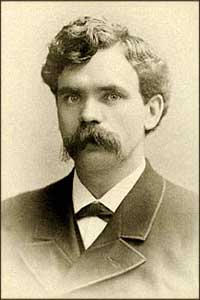
Brigham H. Roberts
(1857-1933)
Defense of the Faith... II
(SLC: Deseret News, 1907)
  • Title   Contents   Volume I
  • 011   Mr. Schroeder's Essay
  • 093   B.H. Roberts' Reply
  • 367   Smith's Doctrines
  • 419   Miscellaneous Discourses

  • Transcriber's Comments


  • 1909 New Witnesses  |  1888 Contributor  |  1905 YMMIA Manual  |  1908 Am. Hist. Mag.

    Note: Footnotes and pagination for this text will be corrected in a forthcoming update)


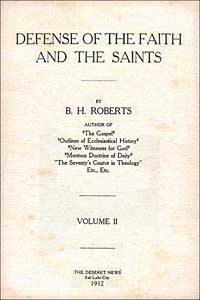
    DEFENSE  OF  THE  FAITH
    AND  THE  SAINTS.


    BY

    B.  H.   R O B E R T S


    AUTHOR  OF

    "The Gospel"
    "Outlines of Ecclesiastical History"
    New Witnesses for God
    Mormon Doctrine of Deity
    "The Seventies Course in Theology
    Etc. Etc.


    VOLUME  II.


    THE DESERET NEWS
    Salt Lake City.
    1912.


    CONTENTS.

    iii  General Foreword

    001  Origin of the Book of Mormon.

    011  The Origin of the Book of Mormon. (Schroeder)

    093  The Origin of the Book of Mormon. (Roberts)

    233  Recent Discussion of Mormon Affairs.

    256  Review of Address to the World.

    289  Answer to Ministerial Association's Review.

    367  Joseph Smith's Doctrines Vindicated.

    370  The First Message of Mormonism Vindicated.

    393  Other Doctrines of Joseph Smith Vindicated by Colleges.

    421  The Spirit of Mormonism; a Slander Refuted.

    447  Erroneous Impressions About the LDS -- What They Do Not Believe.

    463  The Things of God Greater Than Man's Conception of Them.

    489  Mormonism as a Body of Doctrine.

    517  Peace.

    529  The Mysterious Harmonies.


    [ iii ]


    General  Foreword.

    No word of Preface is necessary to this Volume, except to say that in presenting it to his readers, the author feels that he is fulfilling a promise made to them when Volume I of the series was issued.

    A word of explanation will be found as an introduction to each subdivision of the book, which excludes the necessity of making any reference to such subdivisions in this General Forward.

    THE AUTHOR.
    Salt Lake City, January, 1912.


    [ 1 ]


    PART  I.

    Origin of the Book of Mormon.
    __________

    SCHROEDER-ROBERTS DEBATE.
    __________

    Published with the consent and by courtesy of the
    NATIONAL AMERICAN SOCIETY,
    David I. Nelke, President.


    [ 3 ]


    F O R E W O R D.


    The following debate on the "Origin of the Book of Mormon," came about in the following manner: The writer saw in the Salt Lake Tribune two numbers of Mr. Schroeder's article and observing the general trend of the argument felt that a prompt reply should appear in the same publication, that it might be read by the same people who would read Mr. Schroeder's article. A letter was accordingly addressed to the Tribune, to ascertain if that paper would publish a reply to Mr. Schroeder. The Editor answered that the Tribune was reproducing the article from the American Historical Magazine, published in New York, and that perhaps its publishers would be pleased to receive a reply to Mr. Schroeder. If the publishers of the Historical Magazine accepted such an article, the Tribune would then be willing to reproduce it, if the Deseret News, the Mormon Church organ, would agree to publish Mr. Schroeder's article.

    This suggested a too complicated arrangement to suit the writer, hence he dropped the matter with the Tribune, and took it up with the publishers of the American Historical Magazine, who gave place to his answer to Mr. Schroeder in current numbers of that publication, 1908-9. And the writer has heard nothing from the Tribune or Mr. Schroeder since.

    At the conclusion of the article on the "Origin of the Book of Mormon," the Historical Magazine Company, Mr. David I. Nelke, President, announced their willingness to publish in Americana, -- which in the meantime had succeeded the American Historical Magazine a detailed history of the "Mormon Church," if the writer would prepare it.


    4                         DEFENSE  OF  THE  FAITH.                        


    The History has been running in Americana now for more than two and a half years, and will continue until the History of the Church is completed up to date.

    *   *   *   *   *   *

    And now a word as to the origin of the Book of Mormon before presenting the discussion. It will be an advantage to the reader if he has before him Joseph Smith's account of the origin of the Book of Mormon. For our present purpose the account the Prophet gives in his statement to Mr. John Wentworth, of Chicago, of the origin of the Book of Mormon is, on account of its brevity and comprehensiveness, most suitable. After detailing the events of his first vision, received in the Spring of 1820, and the intervening three years, the Prophet comes to the Book of Mormon part of his narrative:

    THE  APPEARING  OF  MORONI.

    "On the evening of the 21st of September, A. D. 1823, while I was praying unto God and endeavoring to exercise faith in the precious promises of scripture, on a sudden a light like that of day, only of a far purer and more glorious appearance and brightness, burst into the room,--indeed the first sight was as though the house was filled with consuming fire; the appearance producing a shock that affected the whole body; in a moment a personage stood before me surrounded with a glory yet greater than that with which I was already surrounded. This messenger proclaimed himself to be an angel of God, sent to bring the joyful tidings that the covenant which God made with ancient Israel was at hand to be fulfilled; that the preparatory work for the second coming of the Messiah was speedily to commence; that the time was at hand for the gospel in all its fulness to be preached in power unto all nations, that a people might be prepared for the Millennial reign. I was informed that I was chosen to be an instrument in the hands of God to bring about some of His purposes in this glorious dispensation.


    [ 5 ]


    "I was also informed concerning the aboriginal inhabitants of this country and shown who they were, and whence they came; a brief sketch of their origin, progress, civilization, laws, governments; of their righteousness and iniquity, and the blessings of God being finally withdrawn from them as a people, was made known to me; I was also told where were deposited some plates on which were engraven an abridgment of the records of the ancient prophets that had existed on this continent. The angel appeared to me three times the same night and unfolded the same things. After having received many visits from the angels of God unfolding the majesty and glory of the events that should transpire in the last days, on the morning of the 22d of September, A. D. 1827, the angel of the Lord delivered the records into my hands.

    Description of the Nephite Record.

    "These records were engraven on plates which had the appearance of gold; each plate was six inches wide and eight inches long, and not quite so thick as common tin. They were filled with engravings, in Egyptian characters, and bound together in a volume as the leaves of a book, with three rings running through the whole. The volume was something near six inches in thickness, a part of which was sealed. The characters on the unsealed part were small, and beautifully engraved. The whole book exhibited many marks of antiquity in its construction and much skill in the art of engraving With the records was found a curious instrument, which the ancients called 'Urim and Thummim,' which consisted of two transparent stones set in the rim of a bow fastened to a breastplate. Through the medium of the Urim and Thummim I translated the record by the gift and power of God.

    "In this important and interesting book the history of ancient America is unfolded, from its first settlement by a colony that came from the Tower of Babel, at the confusion of 'languages, to the beginning of the fifth century of the


    6                         DEFENSE  OF  THE  FAITH.                        


    Christian era. We are informed by these records that America in ancient times had been inhabited by two distinct races of people. The first was called Jaredites and came directly from the Tower of Babel. The second race came directly from the City of Jerusalem, about six hundred years before Christ. They were principally Israelites, of the descendants of Joseph. The Jaredites were destroyed about the time that the Israelites came from Jerusalem, who succeeded them in the inheritance of the country. The principal nation of the second race fell in battle towards the close of the fourth century [A. D.]. The remnant are the Indians .that now inhabit this country. This book also tells us that our Savior made His appearance upon this continent after His resurrection; that He planted the gospel here in all its fulness, and richness, and power, and blessing; that they had apostles, prophets, pastors, teachers, and evangelists; the same order, the same priesthood, the same ordinances, gifts, powers, and blessings, as were enjoyed on the Eastern continent; that the people were cut off in consequence of their transgressions; that the last of their prophets who existed among them was commanded to write an abridgment of their prophecies, history, etc., and to hide it up in the earth, and that it should come forth and be united with the Bible for the accomplishment of the purposes of God in the last days."

    The book issued from the press sometime in the month of March, 1830. *

    From the first appearance of Joseph Smith's account of the origin of the Book of Mormon, there was felt the need of a counter theory of origin. The first to respond to this "felt" need was Alexander Campbell, founder of the "Disciples" or "Christian" Church. He assigned the book's origin straight to Joseph Smith, whom he accused of conscious fraud in "foisting it upon the public as a revelation." This in

    __________
    * For a more detailed account of the origin of the Book of Mormon, see the writer's work, "New Witnesses for God," Vol. II. cha. iv and viii.


    [ 7 ]


    1831. Then came the Spaulding theory of origin by Hurlburt, Howe, et al., 1834; for which Mr. Campbell repudiated his first theory of the Joseph Smith authorship. In 1899 Lily Dougall in "The Mormon Prophet," advanced her theory of the Prophet's "self delusion," "by the automatic freaks of a vigorous but undisciplined brain." This was supplemented in 1902 by Mr. I. Woodbridge Riley's theory of "pure hallucination, honestly mistaken for inspired vision; with partly conscious and partly unconscious hypnotic powers over others." *

    Mr. Schroeder, however, will have none of these later theories; and although the finding of the Rev. Mr. Spauldings' "Manuscript Found," by Professor Fairchild of Oberlin College, in 1884 -- details of which are given in the debate -- gave a serious set back to that theory, Mr. Schroeder deems the Spaulding theory of the origin of the Book of Mormon the only tenable counter theory advanced, and assuming the existence of another Spaulding manuscript not found, and not likely to be found, he proceeds with his argument; to which I make answer, with what success the reader must judge.

                                        B. H. ROBERTS.
    Salt Lake City, October, 1911.

    __________
    * Both the Dougall and Riley theories are considered in Vol. I. of Defense of the Faith and the Saints, pp. 42-62; and the older theories of the origin in New Witnesses for God, Vol. III, chas. xliv, xlv.


    [ 9 ]


    The Origin of the Book of Mormon.

    By Theodore Schroeder


    [ 11 ]


    [The Origin of the Book of Mormon.
    By Theodore Schroeder]


    I.


    Every complete, critical discussion of the divine origin of the Book of Mormon naturally divides itself into three parts: -- first, an examination as to the sufficiency of the evidence adduced in support of its miraculous and divine origin; second, an examination of the internal evidences of its origin, [1] such as its verbiage, its alleged history, chronology, archaeology, etc.; third, an accounting for its existence by purely human agency and upon a rational basis, remembering that Joseph Smith, the nominal founder and first prophet of Mormonism, was probably too ignorant to have produced the whole volume unaided. Under the last head, two theories have been advocated by non-Mormons. By one of these, conscious fraud has been imputed to Smith, and by the other, psychic mysteries have been explored [2] in an effort to supplant the conscious fraud by an unconscious self-deception.

    In 1834, four years after its first appearance, an effort was made to show that the Book of Mormon was a plagiarism from an unpublished novel of Solomon Spaulding. For a long time this seemed the accepted theory of all non-Mormons. In the past fifteen years, apparently following

    __________
    1. Valuable contributions to this study are Lamb's "Golden Bible" and a pamphlet by Lamoni Call classifying two thousand corrections in the inspired grammar of the first edition of the Book of Mormon.

    2. The best effort along this line is Riley's "The Founder of Mormonism." To me the conclusions are very unsatisfactory, because so many material considerations were overlooked by that author.


    12                         DEFENSE  OF  THE  FAITH.                        


    in the lead of President Fairchild of Oberlin College, [3] all but two of the numerous writers upon the subject have asserted that the theory of the Spaulding manuscript origin of the Book of Mormon must be abandoned, and Mormons assert that only fools and knaves still profess belief in it. [4] With these last conclusions I am compelled to disagree.

    __________
    3. President Fairchild, in the New York Observer for February 5, 1885, that being immediately after his discovery of the Oberlin Manuscript, says: "The theory of the origin of the Book of Mormon in the traditional manuscript of Solomon Spaulding will probably have to be relinquished. * * * Mr. Rice, myself, and others compared it with the Book of Mormon, and could detect no resemblance between the two in general or detail. * * * Some other explanation of the origin of the Book of Mormon must be found, if an explanation is required." (Reproduced in Whitney's History of Utah," 56. Talmage's "Articles of Faith," 278.)

    Ten years later Mr. Fairchild is not so brash in assuming the Oberlin Manuscript to be the only Spaulding Manuscript, and he certifies only that the Oberlin Manuscript "is not the original of the Book of Mormon." (Letter dated Oct. 17, 1895, published in vol. lx., Millennial Star, p. 697, Nov. 3, 1898. Talmage's "Articles of Faith," 279.)

    Fairchild's Latest Statement. -- In 1900 President Fairchild wrote the Revelation J. D. Nutting as follows:

    "With regard to the manuscript of Mr. Spaulding now in the library of Oberlin College, I have never stated, and know of no one who can state, that it is the only manuscript which Spaulding wrote, or that it is certainly the one which has been supposed to be the original of the Book of Mormon. The discovery of this MS. does not prove that there may not have been another, which became the basis of the Book of Mormon. The use which has been made of statements emanating from me as implying the contrary of the above is entirely unwarranted.   "JAMES H. FAIRCHILD."

    4 The Deseret News editorially says this on July 19, 1900: "The discovery of the manuscript written by Mr. Spaulding, and its deposit in the library at Oberlin College, O., * * * has so completely demolished the theory once relied upon by superficial minds that the Book of Mormon was concocted from that manuscript, that it has been entirely abandoned by all opponents of Mormonism except the densely ignorant or unscrupulously dishonest."

    And this on May 14, 1901:

    "It is only the densely ignorant, the totally depraved, and clergymen of different denominations afflicted with anti-Mormon rabies, who still use the Spaulding story to account for the origin of the Book of Mormon."


                  ORIGIN  OF  THE  BOOK  OF  MORMON.               13


    In setting forth my convictions and the reasons for them, I have undertaken nothing entirely new, but have only assigned myself the task of establishing as an historical fact what is now an abandoned and almost forgotten theory. This will be done by marshaling in its support a more complete array of the old evidences than has been heretofore made and the addition of new circumstantial evidence not heretofore used in this connection.

    It will be shown that Solomon Spaulding was much interested in American antiquities; that he wrote a novel entitled the "Manuscript Found," in which he attempted to account for the existence of the American Indian by giving him an Israelitish origin; that the first incomplete outline of this story, with many features peculiar to itself and the Book of Mormon, is now in the library of Oberlin College, and that while the story as rewritten was in the hands of a prospective publisher, it was stolen from the office under circumstances which caused Sidney Rigdon, of early Mormon fame, to be suspected as the thief; that later Rigdon, on two occasions, exhibited a similar manuscript which in one instance he declared had been written by Spaulding and left with a printer for publication.

    It will be shown further that Rigdon had opportunity to steal the manuscript and that he foreknew the forthcoming and the contents of the Book of Mormon; that through Parley P. Pratt, later one of the first Mormon apostles, a plain and certain connection is traced between Sidney Rigdon and Joseph Smith, and that they were friends between 1827 and 1830. To all this will be added very conclusive evidence of the identity of the distinguished features of Spaulding's "Manuscript Found" and the Book of Mormon. These facts, coupled with Smith's admitted intellectual incapacity for producing the book unaided, will close the argument


    14                         DEFENSE  OF  THE  FAITH.                        


    upon this branch of the question, and it is hoped will convince all not in the meshes of Mormonism that the Book of Mormon is a plagiarism. To those Mormons whose minds are untainted by mysticism, who have the intelligence to weigh evidence and the courage to proclaim convictions opposed to accepted church theories -- to such Mormons, though not convinced that the evidence here reviewed amounts to a demonstration, it must be that this essay will yet furnish even to them a more believable and more probable theory of the origin of the Book of Mormon than the one which involves a belief in undemonstrable miracles as well as matters entirely outside of all other experience of sane humans. Certainly the theory here advanced requires for its belief the acceptance of less of improbable assumption than does any other explanation offered. With this statement of what it is expected to accomplish we may proceed to review the evidence in detail.

    Solomon Spaulding and His First Manuscript.

    Solomon Spaulding was born in 1761 at Ashford, Conn., graduated from Dartmouth in 1785, graduated in theology in 1787, and became an obscure preacher. The fact that Spaulding had become an infidel, [5] that in rewriting the first outline of his story he adopted, as he said, "the old Scripture style" to make it seem more ancient, [6] and the further fact that he told at least four persons at different times that his story would some day be accepted as veritable history [7] -- all of these, combined with the peculiar product, tend to show that one motive for the writing of this supposed

    __________
    5. See Addendum to Spaulding Manuscript at Oberlin College and Howe's "Mormonism Unveiled," 288.

    6. Howe's "Mormonism Unveiled," 288.

    7. Howe's "Mormonism Unveiled," 283, 4, 6, 7.


                  ORIGIN  OF  THE  BOOK  OF  MORMON.               15


    novel may have been the author's desire to burlesque the Bible and furnish a practical demonstration of the gullibility of the masses.

    While at Dartmouth College, Spaulding had as a classmate the subsequently famous imposter and criminal, Stephen Burroughs, [8] which fact furnishes interesting material for reflection as to how far the subsequent ill fame of Burroughs, coupled with personal acquaintance, may have operated in Spaulding as a fruitful suggestion inducing this labor as a means of securing fortune through fraud. If Spaulding did not see the possibility of a new and profitable religion in his "Manuscript Found," then he was more short-sighted than was a nephew of his named King. This nephew told one Hale, a schoolteacher, of his belief that he could start a new religion out of this novel and make money thereby, at the same time briefly outlining a plan very similar to the one long afterward adopted by Smith, Rigdon and Company. [9] If we can place any confidence in the report of an interview between a Mormon "elder" and a nephew of Solomon Spaulding, then it would appear that in the opinion of the latter's brother Solomon Spaulding was not a man who would be, by conscientious scruples, deterred from practicing such a fraud, if believed profitable. [10] Be that as it may, Spaulding did hope by the sale of his literary production to make sufficient money to enable him to pay his debts. [11]

    In 1809 Solomon Spaulding and Henry Lake built and

    __________
    8. "Memoirs of Stephen Burroughs," p. 26, ed. of 1811, shows Burroughs to have entered Dartmouth in 1781, which must have been Spaulding's date of entry, he having graduated in 1785.

    9. "New Light on Mormonism," 261.

    10. xxxv. Saints' Herald, 820.


    16                         DEFENSE  OF  THE  FAITH.                        


    In 1809 Solomon Spaulding and Henry Lake built and conducted a forge at Salem (now Conneaut), O., where, in 1812, the former made his second business failure. [12]

    Spaulding, being an invalid, possessed of a good education and habits of study, naturally took to literary work, which he probably commenced soon after 1809, [13] and continued until his death in October, 1816. During this seven years he seems to have written several other manuscripts [14] besides the two with which we are directly concerned.

    Necessarily Spaulding's surroundings gave some direction to the course of his literary efforts. Environed as he was in a country where once dwelt the mound-builders, and having himself caused one of the mounds to be opened, with the resulting discovery of bones and relics of a supposedly prehistoric civilization, [15] like thousands before him, he was led to speculate upon the character of that civilization and the origin of those ancient peoples. Josiah Priest, in his "Wonders of Nature and Providence" (1824), quotes over forty authors, half of whom are Americans, and all of whom, prior to 1824, advocated an Israelitish origin of the American Indian. Some of these dated as far back as Clavigaro, a Catholic priest in the seventeenth century.

    In Spaulding's first writing of his manuscript story, he pretended to find a roll of parchment in a stone box within a cave. In the Latin language, this contained an account of a party of Roman sea voyagers, who, in the time of Constantine, were, by storms, drifted ashore on the American continent. One of their number left this record

    __________
    12. "Prophet of Palmyra," 443; Howe's "Mormonism Unveiled," 279 and 282; "New Light on Mormonism," 13.

    13. Howe's "Mormonism Unveiled," 279; "New Light on Mormonism," 13-14.

    14: Howe's "Mormonism Unveiled," 285; "New Light on Mormonism," 20.

    15: "New Light on Mormonism," 14.


                  ORIGIN  OF  THE  BOOK  OF  MORMON.               17


    of their travels, of Indian wars and customs, which record Spaulding pretends to have found and to translate. [16] How that resembles a synopsis of the Book of Mormon!

    In 1834, when E. D. Howe had in preparation his book, "Mormonism Unveiled," wherein the Spaulding story was first exploited, this first manuscript was given by Spaulding's family to D. P. Hurlburt, the agent of Howe. The Spaulding family, without having made any examination whatever of the papers delivered to Hurlburt, seem always to have believed, [17] though without any evidence, that he received and sold to the Mormons the rewritten story entitled "Manuscript Found," which will be more fully discussed hereafter. From Howe this first manuscript story went into the possession of one L. L. Rice, who bought out Howe's business, and later, with other effects of Rice's,' it was shipped to Honolulu, and there, in 1884, accidentally discovered by President James H. Fairchild of Oberlin College. [18] This manuscript is now in the Oberlin library, and has been published by two of the Mormon sects as being a refutation of the Spaulding origin of the Book of Mormon. It can be such refutation only to those who mistake it for another story. Howe, in 1834, published a fair synopsis of the manuscript now at Oberlin [19] and submitted the original to the witnesses who testified to the many points of identity between Spaulding's "Manuscript Found" and the Book of Mormon. These witnesses then (in 1834) recognized the manuscript, secured by Hurlburt and now at

    __________
    16. "The Manuscript Found." for Howe's synopsis see "Mormonism Unveiled," 288. Whitney's "History of Utah," 49-51.

    17. "New Light on Mormonism," by Mrs. Ellen E. Dickinson.

    18. Publisher's Preface to "The Manuscript Found;" iv. Deseret News, July 19, 1900; i. Whitney's "History of Utah," p. 49; Talmage's "Articles of Faith," 278-9.

    19. Howe's "Mormonism Unveiled," 288; i. Whitney's "History of Utah," 49.


    18                         DEFENSE  OF  THE  FAITH.                        


    Oberlin, as being one of Spaulding's, but not the one which they asserted was similar to the Book of Mormon. They further said that Spaulding had told them that he had altered his original plan of writing by going farther back with his dates and writing in the old Scripture style, in order that his story might appear more ancient. [20]

    According to many witnesses, the re-written "Manuscript Found" (like the Book of Mormon) was an attempt at imitating the literary style of the Bible. So was the manuscript submitted to Patterson, according to his own statement. [21] No such indications are found in the Oberlin manuscript, which further evidences that it is not the manuscript of which the witnesses testified, and which Patterson says was submitted to him. The Oberlin manuscript also furnishes internal evidences of an improbability that it was ever submitted to a publisher by any man as sane and well educated as was Spaulding. The plot of the story is incomplete, and the manuscript is full of interlineations, alterations, careless or phonetic spelling, and misused capital letters. These are all easily explainable consistently with Spaulding's erudition, if we view the manuscript as a hasty and careless blocking out of his literary work, but it is not in such a condition as would make him willing to submit it to a publisher.

    If we bear in mind that from the beginning it was asserted that this manuscript now at Oberlin was not the one from which the Book of Mormon was alleged to have been plagiarized, then President Fairchild's conclusion that it disproves such plagiarism of course becomes absurd and

    __________
    20. Howe's "Mormonism Unveiled," 288.

    21. "The Spaulding Story Examined and Exposed," by John E. Page, 7; "Who Wrote the Book of Mormon?" 7; "Mormonism Exposed," by Williams.


                  ORIGIN  OF  THE  BOOK  OF  MORMON.               19


    only demonstrates his ignorance of the early testimony upon which was asserted the connection of the Book of Mormon and another manuscript. This also disposes of the Mormon argument most frequently urged against the theory here advocated.

    Either through like ignorance of the evidence of 1834 that this was not the manuscript then being testified about, or through a willingness to play upon the ignorance of others, the two leading sects of Mormons have published this first manuscript as a refutation of a theory which no one ever advocated, viz.: That the manuscript now at Oberlin was the thing from which Smith et al. plagiarized the Book of Mormon. In my judgment, the publication of this first incomplete manuscript story furnishes additional evidence that the rewritten story did constitute the foundation of the Book of Mormon. When we remember what was said in 1834 as to the character of changes made in rewriting, and that the rewritten story was revamped by Smith, Rigdon and Company, we are astonished at the number of similarities retained; as, for instance, the finding of the story in a stone box, its translation into English, the attempt to account for a portion of the population of this continent, the wars of extermination of two factions, the impossible slaughters of primitive warfare, and the physically impossible armies which were gathered without modern facilities of either transportation or the furnishing of supplies -- the fact that after two rewritings, the second being by new authors, there should remain these very unusual features, makes the discovery and publication of this first manuscript only an additional evidence that the second one did furnish the basis of the Book of Mormon.

    By always remembering these separate manuscripts and their different histories, much seeming conflict of evidence


    20                         DEFENSE  OF  THE  FAITH.                        


    can be explained, mistaken conclusions accounted for, and confusion avoided. The Mormons, in their publication of this first manuscript story, have labeled it "The Manuscript Found," though no such title is discoverable anywhere upon or in the body of the manuscript in the Oberlin library. [22] The evident purpose of this is to further confound that first story with the second or rewritten manuscript which it will be demonstrated really was used in constructing the Book of Mormon, and which manuscript the witnesses to be hereafter introduced described by that title. Having traced to its final resting-place at Oberlin College the first manuscript story, which had no direct connection with the Book of Mormon and never was claimed to have such, let us now, if we can, trace into the Book of Mormon Spaulding's rewritten story, entitled "The Manuscript Found."

    Spaulding's Rewritten Manuscript.

    Spaulding commenced his writing about 1809, changing his plans while still at Conneaut, that is, prior to 1812, [23] at which later date the rewritten story of "The Manuscript Found" was still incomplete. [24] In 1812 Spaulding borrowed some money with which to go to Pittsburg, hoping there to get his novel published and thus make it possible for him to pay his debts. [25] In Pittsburg Spaulding submitted his manuscript to one Robert Patterson, then engaged in the publishing business. [26] The exact date is not known

    __________
    22. xxxv. Saints' Herald, 130; "Prophet of Palmyra," 459.

    23. Howe's "Mormonism Unveiled," 288.

    24. Howe's "Mormonism Unveiled," 283.

    25. Howe's "Mormonism Unveiled," 282-3.

    26. "New Light on Mormonism," 16-17; "History of the Mormons," 43; "Who Wrote the Book of Mormon?" 7.


                  ORIGIN  OF  THE  BOOK  OF  MORMON.               21


    but it is probable almost to certainty that Spaulding would do this immediately upon his arrival in Pittsburg in 1812, since that was one of his definite purposes in going there. Spaulding's widow is reported as saying: "At length the manuscript was returned to the author, and soon after we removed to Amity, Washington County, Pa."[27] The return of the manuscript before 1814, the date of the removal to Amity, is made additionally certain by the testimony of Redick McKee [28] and Joseph Miller. [29] This additional evidence, especially that of the latter, makes it plain that Spaulding had his rewritten manuscript at Amity, thus demonstrating its return to Spaulding before the latter's removal from Pittsburg. The evidences of identity between the manuscript testified about as being at Amity, and Spaulding's rewritten story, leave no doubt. The review of this evidence of identity will be postponed until we come to review the other evidences of identity between "The Manuscript Found" and the Book of Mormon.

    It is said that Patterson returned the manuscript to Spaulding with the advice to "polish it up, finish it, and you will make money out of it." [30] On behalf of Patterson it has been said that he directed its return unless the author would furnish ample security to guarantee the expense of publishing, which we can readily believe to have been impossible to the impecunious Spaulding. [31]

    __________
    27. "Gleanings by the Way," 252; "Mormon's Own Book," 29; "Prophet of Palmyra," 419; "History of the Mormons," 43.

    28. Washington (Pa.) Reporter of April 21, 1869; "Who Wrote the Book of Mormon?" 6.

    29. Gregg's "Prophet of Palmyra," 441-2.

    30. New Light on Mormonism," 239; Magazine of Western History, June, 1882; Scribner's Monthly, August, 1880; "Prophet of Palmyra," 423.

    31. "Mormonism Exposed," by Williams, 16; "Prophet of Palmyra," 455; "The Spaulding Story Examined and Exposed," by John E. Page, 7.


    22                         DEFENSE  OF  THE  FAITH.                        


    After residing in Pittsburg two years, [32] the Spauldings moved to Amity in Washington County, Pa., where Solomon Spaulding and his returned "Manuscript Found" again became the center of attraction among the commonplace neighborhood listeners, who did their loafing about the Spaulding tavern. [33] Here the story was polished and finished, [34] and from Amity Spaulding again journeyed to Pittsburg, in the hope in the second attempt of securing the publication of his story, "The Manuscript Found." [35] Spaulding's widow and daughter assert that at one time Patterson advised Spaulding "to make out a title-page and preface." [36] That remark would seem most likely to have been made after the finishing of the story, and I therefore feel justified in believing it to have been made after the second submission of the manuscript. Mrs. Spaulding-Davidson says this request was never complied with, but for reasons which are unknown to her. In the light of evidence to be hereafter reviewed, we are justified in an inference that one of the causes was a theft of the manuscript from the publisher's office, followed, perhaps, within a few weeks or months, by the death of Spaulding, which occurred in October, 1816.

    Erroneous Theories Examined.


    It has been a theory among some that Joseph Smith himself secured the Spaulding manuscript from the house

    __________
    32. Howe's "Mormonism Unveiled," 287; "Who Wrote the Book of Mormon?" 7.

    33. "Prophet of Palmyra," 441, 442.

    34. Reddick McKee in Washington (Pa.) Reporter, April 12, 1869; "Who Wrote the Book of Mormon," 6.

    35. "Prophet of Palmyra," 442-55.

    36. "Prophet of Palmyra," 419-42; iii. Millennial Harbinger, about May, 1839; Boston Recorder during May, 1839; "Mormon's Own Book," 29.


                  ORIGIN  OF  THE  BOOK  OF  MORMON.               23


    of William H. Sabine of Onondaga. Valley, N.Y., for whom Smith worked as a teamster in 1823. [37] According to another theory, Sidney Rigdon, while the "Manuscript Found" was at the printing office, copied it, the original being returned to Spaulding. A third theory supposes Smith to have copied it while working for Sabine about 1823, leaving the original there. A fourth theory makes Spaulding copy his story for the publisher while keeping the duplicate at home to be afterward cared for by the family. Under all of these theories, the original of Spaulding's rewritten story was delivered in 1833 to D. P. Hurlburr to be used by E. D. Howe in his then forthcoming book, "Mormonism Unveiled," but, according to the Spaulding family, was by Hurlburt sold to the Mormons, and, according to the Mormons, destroyed by Hurlburt because wholly unlike the Book of Mormon. These theories can claim for themselves no greater weight than that, in the opinion of their several non-Mormon advocates, they furnish a possible explanation as to the connecting link between Spaulding and Smith, but upon all essentials, except one, are without any evidence which involves the conclusion deduced from it, and not one of these theories is necessary as an explanation for the established facts. The one element which has direct evidence in its support is the allegation that Spaulding's rewritten story of the "'Manuscript Found" was, after Spaulding's death, in the possession of his widow. That allegation rests upon the following statement of Spaulding's daughter, Mrs. McKinstry, and the family belief in it without any additional evidence upon which to base that belief. She says:

    "In 1816 my father died at Amity, Pa, and directly after

    __________
    37. "Hand Book on Mormonism," 3; "Braden-Kelly Debate, 47. and 118.


    24                         DEFENSE  OF  THE  FAITH.                        


    his death my mother and myself went to visit my mother's brother, William H. Sabine, at Onondaga Valley, Onondaga County, N Y. * * * We carried our personal effects with us, and one of these was an old trunk in which my mother had placed my father's writings, which had been preserved. I perfectly remember the appearance of this trunk, and of looking at its contents. There were sermons and other papers, and I saw a manuscript about an inch thick, closely written, tied with some of the stories my father had written for me, one of which he called the 'Frogs of Wyndham,' On the outside of this manuscript were written the words, 'Manuscript Found.' I did not read it, but looked through it and had it in my hands many times and saw the names I had heard at Conneaut when my father read it to his friends. I was about eleven years old at this time." [38]

    The trunk remained at Sabine's until some time soon after 1820, [39] while in 1823 Smith is said to have worked for Sabine as a teamster, and almost certainly heard Spaulding's stories discussed as a matter of family history. If the rewritten story of Spaulding's "Manuscript Found" had been in the trunk at Sabine's while Smith worked there, which is doubtful, he might have stolen it or copied it, though the latter is made almost impossible by Smith's inability to write, [40] and by his youth.

    Assuming, for the sake of argument, that it has been established that the Book of Mormon is a plagiarism from 'Spaulding's rewritten story, then we may still doubt that any of the above theories have sufficient evidence to warrant their acceptance as established facts. These various theories were all invented because of a supposed necessity of

    __________
    38. "New Light on Mormonism," 238; Magazine of American History, June, 1882; Scribner's Monthly, August, 1880.

    39. "New Light on Mormonism," 238; "Braden-Kelly Debate," 118.

    40. ii. Journal of Discourses, 197.


                  ORIGIN  OF  THE  BOOK  OF  MORMON.               25


    accounting for the alleged presence of the rewritten "Manuscript Found" in the trunk at Sabine's house after 1816, the date of Spaulding's death. If the "Manuscript Found" was never there, the theories constructed to explain that fact must fall.

    That the first outline of the story which is now at Oberlin was then in the trunk is certain, because Hurlburt, in 1834, found it there. It is even possible that this first manuscript may at some time have been labeled "Manuscript Found." But was the rewritten story ever in the trunk at Sabine's? If not, Smith could neither have stolen it nor copied it, and, if never there, or if stolen by Smith, Hurlburt could not have secured the rewritten manuscript and sold it to the Mormons, as it has been charged 'he did do, while he gave only the first manuscript to Howe, by whom he was employed to secure another. It may not be amiss to here state that Howe never doubted Hurlburt's fidelity in this matter. [41]

    The great preponderance of the evidence is against the allegation that the second manuscript was ever in the trunk at Sabine's. Mrs. McKinstry's evidence does not establish the identity of Spaulding's rewritten "Manuscript Found" and the trunk manuscript. Such assertion of identity is contradicted by that more satisfactory evidence to be hereafter reviewed, and which shows that the rewritten manuscript was stolen from the printing office before Spaulding's death; that the latter suspected Rigdon of being the thief; the possession by Rigdon of some such manuscript, and which, on

    __________
    41. Under date of September 12, 1879, E. D. Howe wrote to R. Patterson saying, "I am very certain he (Hurlburt) never had any Manuscript Found to sell to anybody. Whatever Mormons may say, I think Hurlburt was perfectly honest in all his transactions here." (Taken from a copy of the letter furnished by Patterson in his History of Washington County, Pa.)


    26                         DEFENSE  OF  THE  FAITH.                        


    one occasion, he said had been written by Spaulding; Rigdon's advance knowledge of the forthcoming Book of Mormon and his sudden conversion after its appearance, and coupled with a very plain connection between Rigdon and Smith through Parley P. Pratt as intermediary. These conclusions and much of the evidence upon which they are based will contradict Mrs. McKinstry's statement, if she meant by it to assert that the Sabine trunk manuscript contained the names "Mormon," "Moroni," "Lamanite," and "Nephi," which names, it will be shown, occur in and only in the rewritten manuscript and the Book of Mormon.

    In determining what weight to give to Mrs. McKinstry's statement as to the contents of the trunk manuscript, several important facts must be kept in mind. Mrs. McKinstry made this statement in 1880, when she was seventy-four years of age. Her father died in October, 1816, very soon after she and the trunk went to Sabine's at Hartwick, Onondaga County, N.Y., and there she "many times" had it in her hand. At the earliest date this must have been in the fore part of 1817, and she tells us that she was about eleven years old at this time. If, in 1817, she was eleven years old, then, in 1812, when she, with her parents, left Conneaut for Pittsburg, she could not have exceeded six years of age. At the age of seventy-four Mrs. McKinstry testified that when she was eleven years old she looked through, but did not read, a manuscript, yet saw the names she heard her father read at Conneaut, between 1810 and 1812, when she was from four to six years old. That this woman, at seventy-four, should remember strange names, casually repeated in her presence, before her sixth year, and those names wholly unrelated to anything of direct consequence to her child life, is a feat of memory too extraordinary to give her uncorroborated statement any


                  ORIGIN  OF  THE  BOOK  OF  MORMON.               27


    weight, as against valid contradictory conclusions drawn from established facts.

    From 1834, when this alleged plagiarism was first publicly charged, until the giving of Mrs. McKinstry's evidence in 1880, it had necessarily been a matter of frequent discussion in the family circle that the Book of Mormon was a plagiarism from her father's "Manuscript Found," and always the identity of names must have been spoken of as the connecting link in the chain of evidence proving the plagiarism, since that identity of names was the principal item of evidence as it was first argued and published in 1834. With like uniformity, it was firmly believed (but as a mere matter of inference, be it remembered) that Hurlburt secured from the trunk that second manuscript, which contained these names. Hence it would be inferred by the Spaulding family that the trunk must have contained the names in question. This association of ideas through an almost infinite number of recurrences in mind became firmly impressed as a fixed fact during these forty-six years of frequent repetition. It is not strange, therefore, if, after these forty-six years, and with the failing memory of the age of seventy-four, Mrs. McKinstry should have forgotten the real origin of this association of ideas, and relate it back to the supposed inspection of the trunk manuscript and the Conneaut readings, honestly believing in her accuracy. In this conclusion Mormon authorities concur. [42]

    The only other statement which has ever been claimed as evidence showing Spaulding's rewritten manuscript to have been in the Sabine trunk is one by his widow, Matilda Spaulding-Davidson. She says that before leaving Pittsburg for Amity, her husband's manuscript was returned by the publishers. She seemingly remembers nothing of

    __________
    42. "Myth of the Manuscript Found," 29.


    28                         DEFENSE  OF  THE  FAITH.                        


    its second submission while her husband resided at Amity, or else those who wrote and signed her statement didn't see fit to mention it. "The Manuscript then [after Mr. Spaulding's death in 1816] fell into my hands, and was preserved carefully. It has frequently been examined by my daughter, Mrs. McKinstry of Monson, Mass., with whom I now reside, and by other friends." [43]

    By what follows, she makes it plain that the "other friends" referred to are the Conneaut neighbors, whose examination was made prior to 1812, and not at Sabine's. That she herself never examined the Sabine trunk manuscript so as to speak upon the matter of identity of manuscripts from personal knowledge, is apparent from several facts. First, although writing an argumentative article, the strongest part of which would have been her personal testimony as to some point of identity between the trunk manuscript and the Book of Mormon, she mentioned none such as being within her own knowledge. In the absence of personal knowledge, she repeats as a justification of her belief the evidence of Conneaut witnesses as to the identity of her husband's "Manuscript Found" and the Book of Mormon. Even upon the question of the existence of any manuscript in the Sabine trunk, she seems not to rely upon any personal inspection of the trunk manuscript, but with an apparent intention of putting the responsibility for her statement upon the inspection of her daughter, Mrs. McKinstry, speaks of the latter's inspection, while remaining silent as to whether or not she made any inspection of her own.

    The argumentative style and the failure to distinguish between personal knowledge and argumentative inferences

    __________
    43. Boston Daily Advertiser, copied in iii. Millennial Harbinger, May, 1839; "Mormons' Own Book," 28; Boston Recorder, May, 1839; "Prophet of Palmyra," 417.


                  ORIGIN  OF  THE  BOOK  OF  MORMON.               29


    is all readily understood when the history of this statement is made known. It seems that two preachers, named D. R. Austin and John Storrs, are responsible for this letter. Mrs. Davidson never wrote it, but afterwards stated that "in the main" it was true. [44] Even with her re-affirmance of the story as published, we cannot give it evidentiary weight except in those matters where it is plain from the nature of things that she must have been speaking from personal knowledge.

    Upon the question as to whether or not Spaulding's rewritten manuscript was in the possession of anybody but Rigdon at any time after October, 1816, Mrs. Davidson's statement as published cannot in any sense whatever be considered as evidence. And since Mrs. McKinstry's unsupported evidence, for the reasons already given, must be considered as of such very infinitesimal weight, I conclude that there is no believable evidence upon which to base the conclusion that the "Manuscript Found" was ever returned to Spaulding after its second submission to Patterson, or was ever in the trunk at Sabine's, and therefore, could not have been either copied or stolen by Smith. This also answers one Mormon argument made against Rigdon's theft of the manuscript from the printing office, which argument is always based upon the assumption that the original manuscript of the rewritten story was in the Sabine trunk long after the time of the alleged theft by Rigdon.

    __________
    44. Quincy Whig, quoted in "The Spaulding Story Examined and Exposed," 5, to be read in connection with "Gleanings by the Way," 261-7. On p. 22 of the "Myth of the Manuscript Found" this interview appears with the statement that the Boston Recorder article was in the main true carefully omitted. For still more gross dishonesty see "Apostle" (afterward Prophet) John Taylor's lying perversion of this alleged interview as reported in his "Three Nights' Public Discussion," pp. 45 and 56. The dishonesty of the original publication of this interview is pointed out in "Gleanings by the Way," 261-4.


    [ 30 ]


    II.


    When we digressed from the main lines of our argument, Spaulding's rewritten story had been traced into the hands of Robert Patterson, a Pittsburg publisher, and this prior to Spaulding's death in October, 1816. If the manuscript was never returned to Spaulding after its second submission to Patterson, then what became of it? John Miller, who knew Spaulding at Amity, bailed him out of jail when confined for debt, made his coffin for him, and helped lay him in his grave, says Spaulding told him "there was a man named Sidney Rigdon about the office [of Patterson], and they thought he had stolen it" (the manuscript). [45]

    The Revelation Cephus Dodd, a Presbyterian minister of Amity, Pa., as well as a practicing physician, attended Spaulding at his last sickness. As early as 1832, when Mormonism was first attracting general public attention, and two years prior to the publication of Howe's book, in which Spaulding's story was first ventilated, this Mr. Dodd took Mr. George M. French of Amity to Spaulding's grave, and there expressed a positive belief that Sidney Rigdon was the agent who had transformed Spaulding's manuscript into the Book of Mormon. The date is fixed by Mr. French through its proximity to his removal to Amity; hence the date given is probably correct. [46]

    The conclusion thus expressed by Mr. Dodd in advance of all public discussion or evidence is important, because of

    __________
    45. Gregg's "Prophet of Palmyra," 442; (date, January 20, 1882.) See also Times and Seasons.

    46. "History of Washington County, Pa.," by Patterson. "Who Wrote the Book of Mormon?" p. 10.


                  ORIGIN  OF  THE  BOOK  OF  MORMON.               31


    what is necessarily implied in it. First, it involved a comparison between Spaulding's literary production and the Book of Mormon, with a discovered similarity inducing conviction that the latter was a plagiarism from the former. This comparison presupposes a knowledge of the contents of Spaulding's rewritten manuscript. The second and most important deduction is to be made from the assertion that Sidney Rigdon was the connecting link in the plagiarism. Such a conclusion must have had a foundation in Mr. Dodd's mind, and could have arisen only if he was possessed of personal knowledge of what he considered reliable information creating a conviction in his mind of the probability of Sidney Rigdon's connection with the matter. This conclusion, if not made on independent evidence, in all human probability had no less significant foundation than a confidence in the accuracy of Spaulding's expressed suspicion to the effect that Rigdon had stolen the manuscript from the printing office. Thus accounted for, Dr. Dodd's statement has less force than if presumed to have been made on independent evidence, yet it confirms Joseph Miller's statement that Spaulding suspected Rigdon, and that suspicion must be accounted for by those who deny Rigdon's presence in Pittsburg prior to 1821.

    How About Sidney Rigdon?

    Was Spaulding's expressed suspicion that Rigdon had stolen his manuscript from the printing office well founded? We can never know upon what evidence the accusation was made, but we may inquire into the probative force of such new corroborative evidence as has been adduced since Spaulding's death.

    Sidney Rigdon was born February 19, 1793, in Piny Fork of Peter's Creek, Saint Clair Township, Allegheny


    32                         DEFENSE  OF  THE  FAITH.                        


    County, Pa., [47] which place is variously estimated at from six to twelve miles distant from Pittsburg. At least until 1810, that being the date of the death of, his father, and his own eighteenth year, Rigdon remained on the farm with his parents. [48]

    According to the Mormon account, Rigdon was licensed as a Baptist preacher fourteen years before becoming a Mormon. [49] This would make the date 1816, the same year in October of which Spaulding died, it being Rigdon's twenty-fourth year, and the same year in which he stole from the publishing office of Patterson the manuscript of Spaulding, if the latter's suspicions shall prove well founded. A very opportune time, be it observed, for the giving of attention to religious subjects.

    According to another account, and perhaps the more accurate one, Rigdon joined the Baptist Church May 31, 1817, [50] a Welsh clergyman, Revelation David Phillips, being his pastor. [51] This church was located near where the neighboring hamlet of Library is now situated. Rigdon "began to talk in public on religion soon after his admission to the church, probably at his own instance, as there is no record of his license." [52]

    The following year (1818) Rigdon left the farm and took up his residence and the study of divinity with the Revelation Andrew Clark at Sharon, Beaver County, Pa., [53] where, in

    __________
    47. "The Spaulding Story Examined and Exposed," by John E. Page, 7. Supplement 14, Millennial Star, 42. "Myth of the Manuscript Found," 24.

    48. Supplement 14, Millennial Star, 42.

    49. Saints' Herald, 35:130.

    50. "Who Wrote the Book of Mormon?" 8."Myth of the Manuscript Found," 24.

    51. Supplement 14, Millennial Star, 42 and 43.

    52. "Who Wrote the Book of Mormon?" 9.

    53. "Who Wrote the Book of Mormon?" 8, 9.


                  ORIGIN  OF  THE  BOOK  OF  MORMON.               33


    March, 1819, he was licensed as a Baptist. [54] I am informed by Sidney Rigdon's son that in 1818 his father made a lengthy visit to Pittsburg. In May, 1819, Rigdon moved to Warren, Trumbull County, O., where, in July, he took up his residence with the Revelation Adamson Bentley, later of "Disciple" fame, [55] and was here ordained a regular Baptist preacher. [56] While thus situated Rigdon met, and on June 12, 1820, married Phoebe Brooks, [57] who was a sister to Mrs. Bently. [58] Rigdon continued his preaching hereabouts, not appearing to have any regular charge until February, 1822. In November, 1821, he received a call from the First Baptist Church of Pittsburg, which was accepted, active duties commencing February, 1822, [59] and according to Joseph Smith ended August, 1824, at which time Rigdon was expelled for doctrinal error. [60] Another account fixes the date of his being deposed as October 11, 1823. [61] Thereupon Rigdon, Alexander Campbell, and Walter Scott organized the "Christian Church," otherwise known as "Disciples" -- and, with his following, Rigdon secured the courthouse in Pittsburg in which to do his preaching, at the same time working as a journeyman tanner [62] with his brother-in-law, Mr. Brooks. [63] Mr. Lambdin, through whom Rigdon is supposed to have secured access to the Spaulding manuscript, and of whom more shall be

    __________
    54. Supplement 14, Millennial Star, 42 and 53.

    55. Supplement 14, Millennial Star, 43.

    56. "Who Wrote the Book of Mormon?" 9. Supplement 14, Millennial Star, 43.

    57. Supplement 14, Millennial Star, 43.

    58. "Who Wrote the Book of Mormon?" 12.

    59. "The Spaulding Story Examined and Exposed," 4, by J. E. Page. "Mormonism Exposed," 2, exact date, January 28, 1822.

    60. Supplement 14, Millennial Star, 43.

    61. "Who Wrote the Book of Mormon?" 8.

    62. Supplement 14, Millennial Star, 45.

    63. The Spaulding Story Examined and Exposed," p. 8.


    34                         DEFENSE  OF  THE  FAITH.                        


    written later on, died August 1, 1825, [64] and in 1826 Rigdon returned to Bainbridge, Geauga County, O. [65] Here he soon met Orson Hyde, who became a student of divinity at Mr. Rigdon's, with a view, as Hyde says, of entering the ministry. Except for a little "Campbellite" preaching which he did under Rigdon's guidance, Hyde never appears to have entered any ministry except the Mormon. In 1829 Hyde became a boarder of Rigdon's family, and in 1830 [66] he was almost miraculously converted to Mormonism, and still later became one of the first "Quorum" of apostles in the Mormon Church. Rigdon died July 14, 1876. [67]

    RIGDON'S  PRIOR  RELIGIOUS  DISHONESTY.

    There are two circumstances of the above narrative which need a little further elucidation, since the impressions which Rigdon made upon his discerning intimates during his earlier life may have some bearing upon the force to be given to the circumstantial evidence concerning his after life.

    As to Rigdon's conversion to the Baptist Church so very soon after the time when Spaulding expressed the suspicion that Rigdon had stolen his manuscript, the Roy. Samuel Williams, in his "Mormonism Exposed," says: "He [Rigdon] professed to experience a change of heart when a young man, and proposed to join the church under the care of Elder David Phillips. But there was so much miracle about his conversion, and so much 'parade about his profession, that the pious and discerning pastor entertained serious doubts at

    __________
    64. "Who Wrote the Book of Mormon?" 7. "Myth of the Manuscript Found," 26.

    65. Supplement 14, Millennial Star, 44. 5 Times and Seasons 418.

    66. "The Spaulding Story Examined and Exposed," 10.

    67. Historical Record, 992. Bancroft's "History of Utah," 202


                  ORIGIN  OF  THE  BOOK  OF  MORMON.               35


    the time in regard to the genuineness of the work. He was received, however, by the church and baptized by the pastor with some fears and doubts upon his mind. Very soon, Diotrephes-like, he began to put himself forward and seek pre-eminence, and was well-nigh supplanting the tried and faithful minister who had reared and nursed and led the church for a long series of years. So thoroughly convinced was Father Phillips by this time that he was not possessed of the spirit of Christ, notwithstanding his miraculous conversion and flippant speech, that he declared his belief 'that as long as he (Sidney Rigdon) should live, he would be a curse to the church of Christ.'" [68]

    Concerning Rigdon's expulsion or resignation from the Baptist Church, the Mormons declare that it was caused by Rigdon's refusal to either accept or teach the doctrine of infant damnation. Dr. Winter, in the course of a historical notice of the First Baptist Church of Pittsburg, says: "When Holland Sumner dealt with Rigdon for his bad teachings, and said to him: 'Brother Rigdon, you never got into a Baptist church without relating your Christian experiences,' Rigdon replied: 'When I joined the church at Peter's Creek I knew I could not be admitted without an experience, so I made up one to suit the purpose; but it was all made up and was of no use, nor true.' This I have just copied from an old memorandum as taken from Sumner himself." [69]

    The first of these accounts was published in 1842, the last in January, 1875, and Rigdon lived until July 14, 1876. While one H. A. Dunlavy of Lebanon, O., did, in the March number of the Same paper, publish an apology for Rigdon by

    __________
    68. "Mormonism Exposed," by Williams, copied in "Who Wrote the Book of Mormon?" page 13.

    69. "Who Wrote the Book of Mormon?" 13. Baptist Witness (Pittsburg), January 1, 1875.


    36                         DEFENSE  OF  THE  FAITH.                        


    way of answer to the article of Dr. Winter, yet neither Dunlavy nor Rigdon ever denied the facts alleged therein. We must, therefore, accept the facts stated as true, and they fasten upon Rigdon such religious dishonesty as establishes his willingness to be a party to a religious fraud in kind like the one here charged against him.

    This, then, brings us to the question of what, if any, opportunity Rigdon had for stealing Spaulding's manuscript from Patterson's publishing office.

    Rigdon Had Prior Opportunity to Steal the Manuscript.

    It has been frequently charged that Sidney Rigdon lived in Pittsburg and was connected with the Patterson printing office during 1815 and 1816. To this charge Rigdon, under date Commerce (Ill.), May 27, 1839, makes the following denial:

    "It is only necessary to say in relation to the whole story about Spaulding's writings being in the hands of Mr. Patterson, who was then in Pittsburg, and who is said to have kept a private printing office, and my saying that I was connected with the same office, etc., etc., is the most base of lies, without even the shadow of truth. There was no man by the name of Patterson during my residence in Pittsburg who had a printing office; what might have been before I lived here, I know not. Mr. Robert Patterson, I was told, had owned a printing office before I lived in that city, but had been unfortunate in business and failed before my residence in Pittsburg. This Mr. Patterson, who was a Presbyterian preacher, I had a very slight acquaintance with during my residence there. He was then acting under an agency in the book and stationery business, and was the owner of no property of any kind, printing office, or anything else during the time I resided in that city. If I were to say that I ever heard of the Revelation Solomon Spaulding and his hopeful wife until Dr. P.


                  ORIGIN  OF  THE  BOOK  OF  MORMON.               37


    Hurlburt wrote his lie about me, I should be a liar like unto themselves." [70]

    The evidence upon which is based the charge of Rigdon having a permanent residence in Pittsburg during the years in question, or his connection with Patterson's printing office, is so unsatisfactory that these issues must be found in favor of Rigdon's denial, even in spite of the fact that his evidence is discredited by reason of the conclusion as to his guilt, which is to be hereafter set forth, and his personal interest.

    Rigdon, it will be remembered, lived within from six to ten miles of Pittsburg during the years in question. Pittsburg was the only town of consequence, and the family's place of buying and selling. Rigdon would of necessity make many friends in the city, and it would not be strange if almost everybody knew him and he knew all of the prominent citizens. In 1810 Pittsburg had only about 4,000 inhabitants, and in 1820 had but 7,248.

    The very prevalent notion as to Rigdon's connection with the Patterson publishing establishment must have had some origin, which, in all probability, would be Rigdon's close friendship for some who were, in fact, connected with it. Upon this theory only can we account for such a general impression. [71]

    It might be well, before entering upon that subject, to fix in our minds Patterson's business mutations. In 1812 Patterson was in the book business in the firm of Patterson and Hopkins. They had then in their employ one J. Harrison Lambdin, he being a lad of fourteen. January 1, 1818, Lambdin was taken into the partnership of Patterson and

    __________
    70. "Spaulding Story Examined and Exposed," 11 and 12. "History of the Mormons," 45 and 46. "The Mormons," 34. "Braden-Kelly Debate," 94. "Plain Facts Showing the Falsehood and Folly of the Revelation C. S. Bush," p. 14 to 16.

    71. "Who Wrote the Book of Mormon?" 11.


    38                         DEFENSE  OF  THE  FAITH.                        


    Lambdin, which firm succeeded R. and J. Patterson. R. Patterson had in his employ one Silas Engles as foreman printer and superintendent of the printing business. As such, the latter decided upon the propriety, or otherwise, of publishing manuscripts when offered. The partnership of Patterson and Lambdin "had under its control the book store on Fourth Street, a book bindery, a printing office (not newspaper, but job office, under the name of Buttler and Lambdin), entrance on Diamond Alley, and a steam paper mill on the Allegheny (under the name of R. and J. Patterson)." [72] Patterson and Lambdin continued in business until 1823. Lambdin died August 1, 1825, in his twenty-seventh year. Silas Engles died July 17, 1827, in his forty-sixth year. R. Patterson died September 5, 1854, in his eighty-second year. [73]

    Rigdon's Only Denial Analyzed.

    Let us now analyze Mr. Rigdon's denial of 1839 as quoted above. Rigdon was an educated man, a controversialist in religion, and at the date of the denial he was also a lawyer. Therefore we are justified in holding him in a strict accountability for all that is necessarily implied from what he says or omits to say, as we could not, in justice, do with a layman.

    Rigdon's first denial is of the "Story about Spaulding's writing being in the hands of Patterson." This story is established by the evidence already adduced and some besides, even to the satisfaction of most Mormons.

    The negative of this proposition Mr. Rigdon, if he was

    __________
    72. "Myth of the Manuscript Found," 26. "Who Wrote the Book of Mormon ?" 9.

    73. "Who Wrote the Book of Mormon?" 7 and 9. This covers all Patterson's migrations.


                  ORIGIN  OF  THE  BOOK  OF  MORMON.               39


    a stranger to the office, as is claimed, could not possibly assert as a matter within his own knowledge. If Rigdon had in his mind any fact upon which he justified this assertion, it could only have been a knowledge that the manuscript was at the printing office of Buttler and Lambdin, not knowing that that office was controlled by Patterson.

    The second denial in Rigdon's statement is: "There was no man by the name of Patterson during my residence in Pittsburg who had a printing office." The foregoing account of Patterson's business affairs is made up from the information possessed by Patterson's family and an employee. It must, therefore, be accepted as correct. Here again Rigdon's denial can be accounted for by assuming his ignorance of Patterson's interest in the printing office known as Buttler and Lambdin. Rigdon's son says Rigdon lived in Pittsburg in 1818. Church biographers allege that he preached there regularly after January 28, 1822. During 1818 and 1822 Patterson was in the printing business, and Rigdon's statement must be deemed untrue.

    Howe, in his "Mormonism Unveiled," [74] did, as early as 1834, charge that Rigdon had been "on intimate terms" with Lambdin. This statement in many forms has been very often republished since, and between 1834 and 1876, the year of Rigdon's death. During these forty-two years Rigdon never recorded a denial. That fact may, therefore, be taken as true. If Rigdon was on terms of intimacy with Lambdin, and Lambdin, at the time of that intimacy, as is clearly established and undenied, was connected with Patterson in the publishing business, Rigdon, being intimate with him, must have known something of Patterson's business, and assuming his mental faculties unimpaired, he, in the statement under consideration, must have told what he knew was untrue, justifying

    __________
    74. p. 289.


    40                         DEFENSE  OF  THE  FAITH.                        


    himself by the apparent evidence in his favor that Patterson's printing office was not run in his own name.

    Rigdon's third matter of denial relates to his own admission of a connection with Patterson's printing establishment. This denial we must accept as true, since no one to whom he is alleged to have made the admission has ever recorded his evidence, and the hearsay statements without certainty of origin are too indefinite to be entitled to weight.

    This paragraph above quoted and thus analyzed absolutely denies nothing in the remotest degree essential to the real issues involved in the charge of plagiarism under investigation, and is absolutely the only recorded public denial ever made by Rigdon, though from 1834 to 1876 he was almost continually under the fire of this charge, reiterated in various forms and with varying proofs.

    Rigdon and Lambdin in 1815.

    Heretofore we have argued that by his silence Rigdon admitted his intimacy with Lambdin, successively Patterson's employee and partner from 1812 to 1823. The early writers all treated the intimacy between Rigdon and Lambdin as a matter apparently too well known to need proof. Yet we need not rely upon that, nor even Rigdon's failure to deny, since more definite evidence has been preserved.

    Mrs. R. J. Eichbaum, under date of Pittsburg, September 18, 1879, leaves us this very convincing statement:

    "My father, John Johnston, was postmaster at Pittsburg for about eighteen years, from 1804 to 1822. My husband, William Eichbaumn, succeeded him, and was postmaster for about eleven years, from 1822 to 1833. I was born August 25, 1792, and when I became old enough I assisted my father in attending to the post office, and became familiar with his duties. From 1811 to 1816 I was the regular clerk in the


                  ORIGIN  OF  THE  BOOK  OF  MORMON.               41


    office, assorting, making up, dispatching, opening, and distributing the mails. Pittsburg was then a small town, and I was well acquainted with all the stated visitors at the office who called regularly for their mails. So meager at that time were the mails that I could generally tell without looking whether or not there was anything for such persons, though I would usually look in order to satisfy them. I was married in 1815, and the next year my connection with the office ceased, except during the absences of my husband. I knew and distinctly remember Robert and Joseph Patterson, J. Harrison Lambdin, Silas Engles, and Sidney Rigdon. I remember Revelation Mr. Spaulding, but simply as one who occasionally called to inquire for letters. I remember there was an evident intimacy between Lambdin and Rigdon. They very often came to the office together. I particularly remember that they would thus come during the hour on Sabbath afternoon when the office was required to be open, and I remember feeling sure that Revelation Mr. Patterson knew nothing of this, or he would have put a stop to it. I do not know what position, if any, Rigdon filled in Patterson's store or printing office, but am well assured he was frequently, if not constantly, there for a large part of the time when I was clerk in the post office. I recall Mr. Engles saying that 'Rigdon was always hanging around the printing office.' He was connected with the tannery before he became a preacher, though he may have continued the business whilst preaching." [75]

    While this does not establish that Sidney Rigdon had a permanent abode in Pittsburg, nor that he was connected with Patterson's printing establishment, it yet explains why seemingly everybody who knew him reached that conclusion. It also establishes beyond doubt his undeniable intimacy with Lambdin and Engles, and by reason thereof, his possible access to Spaulding's manuscript, and doubtless is one of the circumstances leading Spaulding to suspect Rigdon of the theft.

    __________
    75. "Who Wrote the Book of Mormon?" 10-11.


    42                         DEFENSE  OF  THE  FAITH.                        


    Rigdon Exhibits Spaulding's Manuscript.

    It will be remembered that in 1822-3 Rigdon was a Baptist preacher in Pittsburg. The Revelation John Winter, M.D., one of the western Pennsylvania's early preachers, was then (1822-3) a school teacher in Pittsburg. Dr. Winter died at Sharon, Pa., in 1878. On one occasion during this period (1822-3) Dr. Winter was in Rigdon's study when the latter took from his desk a large manuscript, and said, substantially, that a Presbyterian minister named Spaulding, whose health had failed, brought it to a printer to see if it would pay to publish it. "It is a romance of the Bible." Dr. Winter did not read the manuscript, nor think any more of the matter until the Book of Mormon appeared. It was thought by members of Dr. Winter's family that he had committed his recollections of this interview to writing, but none could be found.

    The authorities of Dr. Winter's statement are Revelation A. G. Kirk, to whom Dr. Winter communicated it in a conversation had at New Brighton, Pa., in 1870-1. The second authority is the Revelation A. J. Bonsall, a stepson of Dr. Winter, and for twenty-three years pastor of the Baptist Church at Rochester, Pa. To him the same story was often repeated by Dr. Winter. The third authority is Mrs. W. Irvine, a daughter of Dr. Winter, in 1881 resident at Sharon, Pa. Her statement has one or two details not already given, so I quote:

    "I have frequently heard my father speak of Rigdon having Spaulding's manuscript, and that he had gotten it from the printers to read it as a curiosity; as such he showed it to father; and that at the time Rigdon had no intention of making the use of it that he afterwards did."

    __________
    76. "Who Wrote the Book of Mormon?" 11-12. "Braden-Kelly Debate," 42.


                  ORIGIN  OF  THE  BOOK  OF  MORMON.               43


    Thus authenticated, Dr. Winter's statement may be given as much weight as though reduced to writing by himself.

    RIGDON   FOREKNOWS  THE  COMING  AND  CONTENTS
    OF  THE  BOOK  OF  MORMON.

    The Revelation Adamson Bentley (whose wife was sister to Mrs. Sidney Rigdon) wrote the following to Walter Scott under date of January 22, 1841:

    "I know that Sidney Rigdon told me that there was a book coming out, the manuscript of which had been found engraved on gold plates, as much as two years before the Mormon book made its appearance or had been heard of by me."

    This statement was published in the Millennial Harbinger for 1844, with the following editorial note from Revelation Alexander Campbell:

    "The conversation alluded to in Brother Bentley's letter of 1841 was in my presence as well as his, and my recollection of it led me, some two or three years ago, to interrogate Brother Bentley touching his recollection of it, which accorded with mine in every particular, except the year in which it occurred, he placing it in the summer of 1827, I in the summer of 1826, Rigdon at the same time observing that in the plates dug up in New York there was an account, not only of the aborigines of this country, but also it was stated that the Christian religion had been preached in this country during the first century, just as we were preaching it in the Western Reserve." [77]

    It will be remembered that Rigdon lived for a time at his

    __________
    77. Besides Millennial Harbinger 1844, p. 39, see "Who Wrote the Book of Mormon ?" 12 and 13. "Braden-Kelly Debate," 45.


    44                         DEFENSE  OF  THE  FAITH.                        


    brother-in-law Bentley's house, and that it was Scott, Campbell, and Rigdon who, in Pittsburg, organized the Disciple Church in 1824 or 1825. The above statements were published in the MillenniaI Harbinger in 1844 (p. 39), twenty-two years before Rigdon's death, yet he never published a denial to either. It seems that before that publication Adamson Bentley was orally making statements, probably to the same effect, which remained undenied by Rigdon, though he published a card denouncing his brother-in-law. [78]

    Mrs. Amos Dunlap, a niece of Mrs. Rigdon, under date of Warren, O., December 7, 1879, writes this:

    "When I was quite a child I visited Mr. Rigdon's family. He married my aunt. They at that time lived at Bainbridge, O. [1826-7]. During my visit Mr. Rigdon went to his bedroom and took from a trunk which he kept locked, a certain manuscript. He came out into the other room and seated himself by the fireplace and commenced reading it. His wife at that moment came into the room and exclaimed: 'What, are you studying that thing again?' or something to that effect. She then added: 'I mean to burn that paper.' He said, 'No indeed, you will not; this will be a great thing some day.' Whenever he was reading this he was so completely occupied that he seemed entirely unconscious of anything passing around him." [79]

    Since Rigdon never, in person or by anyone else, has claimed to have written any such manuscript of his own, in the light of other evidence here adduced, we are warranted in believing that to 'have been Spaulding's "Manuscript Found."

    The Revelation D. Atwater, under date Mantua Station, O., April 26, 1873, three years before Rigdon's death, writes this:

    __________
    78. Evening and Morning Star, 301.

    79. "Who Wrote the Book of Mormon?" 12. "Braden-Kelly Debate," 45.


                  ORIGIN  OF  THE  BOOK  OF  MORMON.               45


    "Soon after this the great Mormon defection came on us (Disciples). Sidney Rigdon preached for us, and notwithstanding his extravagantly wild freaks, he was held in high repute by many. For a few months before his professed conversion to Mormonism, it was noticed that his wild, extravagant propensities had been more marked. That he knew before of the coming of the Book of Mormon is to me certain from what he said (during) the first of his visits at my father's some years before. He gave a wonderful description of the mounds and other antiquities found in some parts of America, and said that they must have been made by the aborigines. He said that there was a book to be published containing an account of those things. He spoke of these in his eloquent, enthusiastic style, as being a thing most extraordinary. Though a youth then, I took him to task for expending so much enthusiasm on such a subject, instead of things of the gospel." [80]

    Of this statement Rigdon never made a denial.

    Dr. S. Rosa, under date of Painsville, O., June 3, 1841, writes, among other things, this:

    "In the early part of the year 1830, when the Book of Mormon appeared, [and in November of which year Rigdon was converted], either in May or June, I was in company with Sidney Rigdon, and rode with him on horseback a few miles. Our conversation was principally upon the subject of religion, as he was at that time a very popular preacher of the denomination calling themselves 'Disciples' or Campbellites. He remarked to me that it was time for a new religion to spring up; that mankind were all rife and ready for it. I thought he alluded to the Campbellite doctrine. He said it would not be long before something would make its appearance; he also said that he thought of leaving Pennsylvania and should be absent for some months. I asked him how long. He said it would depend upon circumstances.

    __________
    80. "Early History of the Disciples in the Western Reserve," 239-240. copied in Who Wrote the Book Of Mormon?" 13. "Braden-Kelly Debate," 45.


    46                         DEFENSE  OF  THE  FAITH.                        


    I began to think a little strange of his remarks, as he was a minister of the gospel. I left Ohio that fall and went to the State of New York to visit my friends who lived in Waterloo, not far from the mine of golden Bibles. In November I was informed that my old neighbor, E. Partridge, and the Rev. Sidney Rigdon, were in Waterloo, and that they both had be come the dupes of Joe Smith's necromancies. It then occurred to me that Rigdon's new religion had made its appearance, and when I became informed of the Spaulding manuscript, I was confirmed in the opinion that Rigdon was at least accessory, if not the principal, in getting up this farce." [81]

    This last article was first published in book form in 1842, thirty-four years before Rigdon's death, but never publicly denied or explained by 'him. Whether this particular letter was published in the Christian Observer and Episcopal Recorder I cannot say, but other portions of the same book evidently were, and received comment in a Mormon church organ. [82] This but emphasizes Rigdon's silence upon Dr. Rosa's letter.

    In Howe's "Mormonism Unveiled," it is said that Rigdon, during the incubation period of Mormonism between 1827 and 1830, preached new matters of doctrine which were afterwards found to be inculcated in the Mormon Bible [Howe, pg. 278]. The evident purpose of all this was to prepare his congregation for the acceptance of Mormonism, and the end was most successfully achieved. [83] Evidently this and the other circumstances showing Rigdon's foreknowledge of the forthcoming Book of Mormon, all combined with a guilty conscience, irresistibly impelled the making of an explanation tending to allay the suspicion that there was a conscious purpose in all

    __________
    81. "Gleanings by the Way," 317. "Prophet of the Nineteenth Century," 58. "Early Days of Mormonism," 172-3.

    82. Gospel Reflector, 19.

    83. Page 289. "Braden-Kelly Debate," 45.


                  ORIGIN  OF  THE  BOOK  OF  MORMON.               47


    such conduct. This defense is found in a revelation to Sidney Rigdon, dated December 7, 1830, at the alleged first meeting between Rigdon and Smith, and within one month after the former's conversion. The revelation, in part, says:

    "Behold thou was sent forth, even as John, To prepare the way before me, and before Elijah which should come, and thou knewest it not." [84]

    That Rigdon did prepare the way we knew before the revelation informed us of it. That it was done unconsciously we cannot even now believe.

    Especially in the light of the foregoing evidence, this revelation must be construed as much more convincing proof of Rigdon's advance knowledge of the forthcoming Book of Mormon and its contents than even a tacit admission.

    It is practically an admission of guilty knowledge, coupled with a transparent effort at warding off the inference of complicity in fraud by veiling the acts constituting the evidence in an assumed mysticism, which really deceives few aside from the mystic degenerate and the willing victim who enters the fold for opportunities to "fleece the flock of Christ."

    __________
    84. Section 35, "D&C." Supplement 14, Millennial Star, 50. The exact date of this revelation is December 7th. 1830, according to Howe's "Mormonism Unveiled," 107.


    [ 48 ]


    III.

    FROM  RIGDON  TO  SMITH  via  P. P. PRATT.


    When to this evidence already adduced is added, as will be done, conclusive proof of the identity of the salient features of the Book of Mormon and Spaulding's rewritten "Manuscript Found," it would seem that the case of plagiarism through Rigdon's complicity is established beyond reasonable doubt. The Mormon objector, however, insists that no possible connection between Rigdon and Smith has ever been shown to exist prior to 1830, and that, therefore, even if Rigdon did steal the manuscript, Smith could not have obtained it for use as a help in preparing the Book of Mormon. It would seem as if the facts above recited should, even if unaided by more direct evidence, raise an almost conclusive presumption of the existence of an undiscovered connection between the two. But we are not confined to an inference from such evidence alone. There are still more pointed evidentiary circumstances to which we will now give attention.

    Parley Parker Pratt was born at Burlington, Orsego County, N.Y., April 12, 1807, of parents who later resided at Canaan, Columbia County, N.Y. [85] During his sixth year (1813) he went to reside with his father's sister, named Van Cott, [86] which name afterward became conspicuous in the early history of Utah. In 1826 Pratt spent a few months with an uncle in Wayne (formerly Ontario) County, N. Y. [87]

    __________
    85. "Autobiography of P. P. Pratt," 17.

    86. "Autobiography of P. P. Pratt," 19.

    87. "Supplement 14, Millennial Star," 1. {???}


                  ORIGIN  OF  THE  BOOK  OF  MORMON.               49


    This, it will be remembered, is the same county in which Smith was at that time gaining much newspaper notoriety as a "peep-stone" money digger [88] through mention made of him in papers published in several counties in southern New York and northern Pennsylvania. [89] While Smith was thus working the gullible of his neighborhood with his necromancy, Pratt was a peddler, who, it is said, knew almost everybody in western New York. [90] At that time Ontario County took in all the territory of several counties as now bounded, and in 1820 had only a population of 80,267. [91] Pratt, therefore, could hardly have helped knowing Smith's fame, which was such as at once to have suggested him as the star actor in any scheme of fraud requiring a prophet. In view of Pratt's subsequent connection with the Wells family, [92] who were Smith's neighbors and friends, [93] it is more than probable that he knew the Smiths personally in or prior to 1826, although, of course, they would carefully guard the fact of such acquaintance from publicity as a most important secret.

    In October of this year Pratt went to Ohio, locating at Amherst, thirty miles west of Cleveland [94] and was also located fifty miles west of Kirtland. [95] One of the temptations inducing Pratt's departure from New York was to get to a country where, as he himself expresses it, there is "no law to sweep [away] all the hard earnings of years to pay a small debt." [96] The ethical status of an average country

    __________
    88. "Origin, Rise, and Progress of Mormonism," 27.

    89. "Braden-Kelly Debate," 47.

    90. Hand Book of Mormonism," 3.

    91. Compendium, 11th Census.

    92. "Autobiography of P. P. Pratt," 37.

    93. "Joseph Smith, the Prophet," by Lucy Smith, 101-2-3.

    94. "Autobiography of P. P. Pratt," 27.

    95. "Autobiography of P. P. Pratt," 50.

    96. "Autobiography of P. P. Pratt," 26.


    50                         DEFENSE  OF  THE  FAITH.                        


    peddler who is willing to leave his native state to avoid the payment of his "small debts" furnishes a fertile immorality in which to plant the seeds of religious imposture.

    It will be remembered that it was also in 1826 that Rigdon went for a second time to reside in Ohio, where he became an itinerant "Disciple" preacher, laboring in the vicinity of Bainbridge, Mantua, Kirtland, Mentor, Chester, New Lisbon, and Warren, [97] at some of which places Rigdon had an unsavory reputation. [98] Rigdon and Pratt, therefore, were in the same neighborhood in 1826, and undoubtedly met soon after. The date of their first meeting is nowhere given, but may reasonably be inferred from an address delivered by Parley P. Pratt in 1843 or '4. In this discourse Pratt tells of an occurrence which transpired on his way to his future Ohio home, which occurrence furnishes the key to his first connection with Mormonism. On his way he stopped at a humble cottage, the name of whose occupant he carefully fails to give. Here, while asleep (so he says), "a messenger of a mild and intelligent countenance suddenly stood before me (Pratt), arrayed in robes of dazzling splendor." According to Mormon theology, an angel is but an exalted man. [99]

    Of course Sidney Rigdon was an exalted man; why not, then, an angel? This angel claimed to hold the keys to the mysteries of this wonderful country, and took Pratt out to exhibit those mysteries to him. Pratt then had portrayed to his mind the whole future of Mormonism; its cities, with inhabitants from all parts of the globe; its temples, with a yet unattained splendor; its

    __________
    97. "History of the Church," I:149-150. ("Josephite")

    98. "4 Times and Seasons, 209. Supplement 14, Millennial Star, 45.

    99. See Text for foot-notes, Nos. 106 to 109 herein, also 6 Millennial Star, 20. "History of Mormonism," 154.


                  ORIGIN  OF  THE  BOOK  OF  MORMON.               51


    present church organization was, with considerable definiteness outlined; its political ambition to establish a temporal kingdom of God on the ruins of this government was set forth with quite as much definiteness as in the subsequent more publicly uttered, treasonable sermons. [100] I conclude from the exact manner in which this "Angel of the Prairies" foreknew the ambitions, hopes, and future achievements of the Mormon Church and the similar admitted foreknowledge of Rigdon and the subsequently established connection between Rigdon, Pratt, and Smith, that the "Angel of the Prairies" who outlined to Pratt his then contemplated and now executed religious fraud, was none other than Sidney Rigdon himself, and that this fact accounts for Pratt's failure to give the name of his host or the date of his first meeting with Rigdon. [101]

    Lambdin, who, by some, has been suspected of once having been Rigdon's partner in the contemplated fraud, died Aug. 1, 1825. Engles, Patterson's foreman, died July 17, 1827. Spaulding had died in 1816, and Robert Patterson, it seems, knew nothing personally of the contents of the Spaulding manuscript, [102] which fact Rigdon probably well knew through his intimate acquaintance with Lambdin. In September of 1827 the time was, therefore, as ripe as it was ever likely to be for active preparation in the matter of bringing forth the "Book of Mormon," since probably all

    __________
    100. 20 Millennial Star, 33-36. 7 Deseret News, 288-9. 7 Journal of Discourses, 53. 1 Journal of Discourses, 230, and Sermons generally of this period. See also Am. Hist. Mag., July, 1906.

    101. The angel of the Prairies, a Dream of the Future," pp. 7 to 24, being a re-publication from the "Northern Light" of a sermon delivered by P. P. Pratt, in Nauvoo, Ill. Long before this Rigdon is reported to have related somewhat similar visions; Howe's "Mormonism Unveiled," 217.

    102. Mormonism Exposed, by Williams. Who Wrote the Book of Mormon, 7.


    52                         DEFENSE  OF  THE  FAITH.                        


    those having any intimate knowledge of the "Manuscript Found" had conveniently died.

    In 1827 Pratt started back to New York for the purpose of getting married. Now, remember, this was nearly three years before the advent of Mormonism. Pratt reached the home of his aunt Van Cote July 4, 1827, and in his autobiography records a summary of a conversation with his future wife thus: "I also opened my religious views to her and my desire, which I sometimes had, to try and teach the red man." [103] In October, 1830, within a month after Pratt's professed conversion to Mormonism, a revelation was received for Pratt, in which the Lord, through "Joseph Smith, the Prophet," directed Pratt to carry out this very design. [104] The desire which Pratt thus expressed to his wife three years before the advent of Mormonism was afterward and for a long time the pet scheme of all Mormons. Pratt was married September 9, 1827. [105] On September 22, 1827, a "heavenly messenger" appeared to Joseph Smith and unfolded to him the scheme of the Book of Mormon, and disclosed the whereabouts of the "Golden Plates." [106] This "heavenly messenger" is called the Angel Moroni. According to Mormon theology, "God may use any beings he has made or that he pleases, and call them his angels, or messengers." [107] God's angels and men are

    __________
    103: Pratt, Pages 29 and 30.

    104. Section 32, D&C. Smith's God was, however, unfamiliar with governmental regulations of Indian affairs, so in spite of the revelation Pratt and Company were compelled by the United States Indian agent to leave the reservation. 5 Journal of Discourses, 199. Howe's "Mormonism Unveiled," 218-226. "Gleanings by the Way," 324.

    105. "Autobiography of P. P. Pratt," 30.

    106. Supplement 14, Millennial Star, 6.

    107. 5 Journal of Discourses, 141.


                  ORIGIN  OF  THE  BOOK  OF  MORMON.               53


    all of one species, one race, one great family." [108] "God is a man like unto yourselves; that is the great secret." [109] Why, of course! "That is the great secret." God is but an "exalted man," and may call Parley Parker Pratt his angel. Parley Parker Pratt was the "heavenly messenger," the angel who, on that day (September 22, 1827), appeared to Joseph Smith and told him where were the golden plates, that is, Spaulding's "Manuscript Found." Sidney Rigdon, for Smith's purposes, was the "exalted man," the "God" who sent this "heavenly messenger" Parley Parker Pratt, just as the Mormon people now look upon Joseph Smith as the "God to this people." [110] Now, watch the sequel, and no doubt can remain.

    September 9, 1827, Pratt was married. On September 22, 1827, he was the angel who appeared to Smith, and in October he started back to Ohio, the home of Rigdon. [111] Rigdon is now brought again upon the scene. He preaches in Pratt's neighborhood, converts him, the latter commences preaching, [112] evidently preparing for his part in the drama about to be enacted.

    __________
    108. Key to Theology, 41, 5 Millennial Star, 20.

    109. 5 Times and Seasons, 613. God an Exalted Man, 6 Journal of Discourses, 3.

    110. Deseret News, March 18, 1857, 13. See also 7 Deseret News, 179. Those most familiar with the psychology of Dreams and the influence over them had by the experiences of waking life, will give considerable evidentiary weight to a dream of the Prophet's father, in which there appeared to him a "man with a peddler's budget on his back," such as peddler P. P. Pratt probably carried. This peddler of his dreams flattered him, told him he had called seven times and on this last call had come to tell him what was the one thing essential to his salvation, and then he awoke. (Joseph Smith, the Prophet, 74.)

    111. "Autobiography of P. P. Pratt," 30.

    112. "Autobiography of P. P. Pratt," 31-33


    54                         DEFENSE  OF  THE  FAITH.                        


    Rigdon Visits Smith Before Mormonism.


    The work of revising the Spaulding manuscript, or, as "Holy Joe" calls it, the "Translation of the Golden Plates," is begun. A mysterious stranger now appears at Smith's residence and holds private interviews with the far-famed money-digger. For a considerable length of time no intimation of the name or the purpose of this personage transpired to the public, or even to Smith's nearest neighbors. It was observed by some of them that his visits were frequently repeated. [113] At about this time Rigdon is away from his Ohio home on several long visits, reporting himself as having gone to Pittsburg. [114]

    Abel Chase, a near neighbor of the Smiths, says: "I saw Rigdon at Smith's at different times with considerable intervals between." Lorenzo Saunders, another neighbor, testifies: "I saw Rigdon at Smith's several times, and the first visit was more than two years before the Book appeared." J. H. McCauley, in his history of Franklin County, Pa., states "as a matter too well known to need argument, that Joseph Smith, the founder of Mormonism, and Sidney

    __________
    113. "Origin and Progress of Mormonism," 128. The author was a native of Palmyra and read proof on the Book of Mormon. "Hand Book of Mormonism," 3. This author lived thirty-two years in Palmyra. Braden-Kellv Debate, 46. Mother Lucy in "Joseph Smith, the Prophet," pp. 119, 120, 121, gives an account of a mysterious and unnamed "stranger" who came to their home with Joe at the time Harris had lost some of the manuscript of the Book of Mormon. As a mere matter of kindness this "stranger" forced upon the "Prophet" his company for a twenty mile walk through the woods at night, left a stage coach and went out of his way to do it, and attended the interview with Harris next day. An opportune time was this for Rigdon's presence. May 1, 1829, Sec. 10, Doctrine and Covenants.

    114. Howe's "Mormonism Unveiled," 289, followed in "Gleanings by the Way," 319. "Prophet of the Nineteenth Century." 57. See also the pointed statement of L. {sic - Z.?} Rudolph, father-in-law to President Garfield, quoted in Braden-Kelly Debate, 45.


                  ORIGIN  OF  THE  BOOK  OF  MORMON.               55


    Rigdon were acquainted for a considerable time before Mormonism was first heard of." [115]

    I have been able to find but one specific denial of Rigdon's acquaintance with Smith prior to the appearance of the Book of Mormon. That denial comes from Katherine Salisbury, a sister of the "Prophet Joseph," and is dated April 15, 1881, when she was nearly 68 years of age. She says that

    "Prior to the latter part of the year A. D. 1830, there was no person who visited with, or was an acquaintance of, or called upon the said family for Smith, or any member thereof to my knowledge by the name of Rigdon, nor was such person known to the family or any member thereof to my knowledge, until the last part of the year A. D. 1830, or the first part of the year 1831. I remember the time when Sidney Rigdon came to my father's place, and that it was after the removal of my father from Waterloo, N.Y., to Kirtland, O. That this was in the year 1831." [116]

    In 1827 and 1828, when Rigdon's visits must have occurred, and his help was needed in revamping Spaulding's "Manuscript Found," this woman was fourteen or fifteen years of age. That Rigdon did visit at the Smiths' in New York State, December, 1830, is admitted, [117] and of this she seemingly remembers nothing. She has no recollection of Rigdon's coming to her father's or brother's house until

    __________
    115. See Braden-Kelly Debate, 46, for three last statements. Tucker in his "Origin and Progress of Mormonism," p. 50, says Rigdon officiated at the wedding of Joseph Smith and Emma Hale, but he fixes date of wedding in November, 1829, when in fact it seems to have occurred January 18, 1827. (Historical Record, 363.) Tucker may therefore have been misinformed. An alleged admission of Sidney Rigdon to James Jeffries that Spaulding's story was used, which is quoted in Braden-Kelly Debate, 42, I consider of doubtful value.

    116. "Myth of the Manuscript Found," 34. Braden-Kelly Debate, 100.

    117. Supplement 14 Millennial Star, 49.


    56                         DEFENSE  OF  THE  FAITH.                        


    after their removal to Ohio. May she not also, either by design or otherwise, have forgotten visits made by Rigdon to her New York home prior to the admitted, and, by her, forgotten one in December, 1830?

    In the same statement she avers that "at the time of the publication of said Book (of Mormon), my brother Joseph Smith, Jr., lived in the family of my father in the town of Manchester, Ontario County, N.Y., and that he had all of his life to this time made his home with the family."

    The manuscript of the Book of Mormon was finished and the book copyrighted by June 11, 1829. [118] Rigdon's help would be most needed before this time, and from June, 1828, until June, 1829, all and numerous revelations are dated "Harmony, Pennsylvania," which, together with Smith's autobiography, shows that he did not all of his lifetime make his home with his parents, nor live at Manchester during all of the most important period of Mormon incubation. The probabilities are that Smith moved to Pennsylvania at this time, for the very purpose of making it easier for Rigdon and Pratt, who lived in Ohio, to furnish him the much needed help.

    The admitted errors in Mrs. Salisbury's statement destroy its evidentiary value, and leave it clearly demonstrated by the other evidence adduced, that Rigdon visited Smith' several years before the appearance of the Book of Mormon.

    THE  CONVERSION  OF  PARLEY  P.  PRATT.

    In the summer of 1830 the Book of Mormon came from the press, and the time had come for Pratt and Rigdon to be astonished by its appearance. Now watch their maneuvers.

    __________
    118. See certificate of copyright in first edition, Book of Mormon, and Supplement 14 Millennial Star, 24.


                  ORIGIN  OF  THE  BOOK  OF  MORMON.               57


    That year Pratt left Ohio for a visit to New York. Of this trip his autobiography records the following:

    "Landing in Buffalo, we (Pratt and wife) engaged our passage for Albany in a canal boat, distance three hundred and sixty miles. This, including board, cost all our money and some articles of clothing."

    Would a mere desire to visit friends induce him to give up part of his clothing for passage money? Hardly; he was after larger game. But let us read on:

    "Arriving at Rochester, I informed my wife that, notwithstanding our passage being paid through the whole distance, yet I must leave the boat and leave her to pursue her passage to our friends, while I would stop a while in this region. Why, I did not know; but so it was plainly manifest by the Spirit to me. I said to her: 'We part for a season; go and visit our friends in our native place; I will come soon, but how soon I know not, for I have a work to do in this region of country, and what it is or how long it will take me to perform it, I know not; but I will come when it is performed. My wife would have objected to this, but she had seen the Hand of God so plainly manifest in His dealings with me many times that she dare not oppose the things manifest to me by His Spirit. She therefore consented, and I accompanied her as far as Newark, a small town upwards of a hundred miles from Buffalo, and then took leave of her and of the boat."

    "It was early in the morning, just at the dawn of day. I walked ten miles into the country (remember now he doesn't know where he is going), and stopped with a Mr. Wells."

    This was undoubtedly a member of the same Wells family of Macedon with whom Joseph Smith had long been on terms of intimacy. [119] Pratt's autobiography continues:

    __________
    119. "Joseph Smith, the Prophet," by Lucy Smith, 101-103. Probably this refers to the home of Daniel H. Wells, afterward a prominent Mormon in Utah.


    58                         DEFENSE  OF  THE  FAITH.                        


    "I proposed to preach in the evening. Mr. Wells readily accompanied me through the neighborhood to visit the people and circulate the appointment."

    "We visited an old Baptist deacon by the name of Hamblin. After hearing of our appointment for the evening, he began to tell of a book, a strange book, a very strange book in his possession, which had just been published. I inquired of him how and where the book was to be obtained. He promised me the perusal of it at his house the next day, if I would call. I felt a strange interest in the book. Next morning I called at his house, where, for the first time, my eyes beheld the 'Book of Mormon,' that book of books."

    Pratt says he opened it with eagerness and examined its contents. "As I read, the spirit of the Lord was upon me, and I knew and comprehended that the book was true as plainly and as manifestly as a man comprehends and knows that he exists." [120]

    Pratt soon determined to see Smith, and, accordingly, visited Palmyra, where Hyrum Smith welcomed him to their house, and they spent the night together. Joseph had not returned from Pennsylvania. One is led to wonder if Hyrum Smith would take in every inquisitive stranger as his bedfellow. In the morning Pratt returned to fill his appointment to preach the doctrine of Alexander Campbell. Hyrum Smith presented Pratt with a copy of the book, which the latter tells us he was glad to receive, because he had not yet finished his reading of it. [121] Pratt preached the doctrines of the "Disciples" that night and the following one, then returned to the Smith house, and from there went to the Whitmers in Seneca County, resting that night, and taking his Mormon baptism the next day. On the next Sabbath Pratt attended a Mormon meeting and preached a

    __________
    120. "Autobiography of P. P. Pratt," 37-38.

    121. "Autobiography of P. P. Pratt," 39-42.


                  ORIGIN  OF  THE  BOOK  OF  MORMON.               59


    Mormon sermon at the house of one Burroughs. "My work was now completed, for which I took leave of my wife and the canal boat some two or three weeks before." [122]

    About the details and the order of events in such remarkable occurrences, there could not possibly be doubt or errors of memory. Had they actually transpired, these events would have been the most important in any eventful career, and would have been indelibly impressed upon Pratt's memory. If, however, this marvelous tale is but a falsehood told to conceal Pratt's real connection with a fraud, then, it is quite possible that he and those associated with him should forget how the falsehood had been told at other times, and thus produce contradictory statements.

    Let us, in the light of this comment, examine the foregoing account more carefully. Evidently, in this account Pratt is desirous of conveying the impression that, as he had elsewhere expressed it, he "was greatly prejudiced against the book." [123] However, in a sermon delivered in 1856 -- thirty-two years before the publication of the autobiography -- Pratt tells us he was converted before completing the reading of the Book of Mormon, or meeting a single true "Saint." Here are his own words:

    "I knew it was true, because it was light, and had come in fulfillment of scripture; and I bore testimony of its truth to the neighbors that came in during the first day that I sat reading it at the house of an old Baptist deacon named Hamblin." [124]

    __________
    122. "Autobiography of P. P. Pratt," 43.

    123. Pratt's reply to Sunderland, copied in 45 Saints' Herald, 61. "Myth of the Manuscript Found, 32.

    124: 5 Journal of Discourses, 194. This Hamblin seems to have emigrated to Wisconsin with Pratt, there became a Mormon and later his son became implicated in the Mountain Meadow Massacre. See "Jacob Hamblin," p. 9, and books generally on Mountain Meadow Massacre.


    60                         DEFENSE  OF  THE  FAITH.                        


    Of course such a conversion was altogether too miraculous and sudden to preclude suspicion of Pratt's complicity in the fraud; hence it has usually been stated that the conversion did not, in fact, take place until much critical examination, and sometimes, it is said, after much supplication to the Lord. In Joseph Smith's autobiography he puts the time of conversion as during Pratt's visit to the Whitmers in Seneca County. Here are his words: "After listening to the testimony of the 'witnesses' [at Whitmers, in Seneca County] and reading the 'Book,' he became convinced that it was of God." [125: Supplement 14 , 47.]

    The "prophet's" mother, who, with the mother of the Danite, Orrin Porter Rockwell, was present at Pratt's alleged first visit to the Smith home, [126: Pratt's Sermon, 5 Journal of Discourses, 194.] has a third account of this conversion. Pratt, according to the account above quoted from his sermon, had not yet seen the prophet, and had not yet finished reading the Book of Mormon, but was already converted and had borne testimony to its truth. Now read Mother Lucy's account as published by Orson Pratt (Parley Pratt's brother and his first miraculous convert) [127: 7 Journal of Discourses, 177. Here Orson Pratt says his conversion is due to certain information "derived independent of what can be learned naturally by the natural man." See also supplement 14, Millennial Star, 49.] and "written by the direction and under the inspection of the Prophet." [128: 15 Millennial Star, 169, 682.]

    "Just before my husband's return, as Joseph was about commencing a discourse one Sunday morning, Parley P. Pratt came in very much fatigued. He had heard of us at some considerable distance, and had traveled very fast in order to get there by meeting time, as he wished to hear what

    __________
    125. Supplement 14 Millennial Star, 47.

    126. Pratt's Sermon, 5 Journal of Discourses, 194.

    127. 7 Journal of Discourses, 177. Here Orson Pratt says his conversion is due to certain information "derived independent of what can be learned naturally by the natural man." See also supplement 14 Millennial Star, 49.

    128. 15 Millennial Star, 169, 682.


                  ORIGIN  OF  THE  BOOK  OF  MORMON.               61


    we had to say, that he might be prepared to show us our error. But when Joseph had finished his discourse, Mr. Pratt arose and expressed his hearty concurrence in every sentiment advanced. The following day he was baptized and ordained." [129]

    This conversion is quite as miraculous and sudden as the one Pratt tells us about as having occurred at Deacon Hamblin's. The prophet's mother, Lucy Smith, who wrote this account, and the prophet himself, under whose supervision it was written, must have been both present, and in this account related only what they pretended they themselves saw. In contradiction of this, Pratt, in two different places, tells us that while at the Whitmers in Seneca County he was baptized and ordained an elder by Oliver Cowdery, and that then he preached a Mormon sermon, after which he went to visit his friends in Columbia County. On his return from Columbia County, over a month after he had been baptized, he for the first time saw Joseph Smith. [130] These discrepancies can be best accounted for by the explanation that they are different accounts of an event that never happened, and told to conceal one that did happen.

    I understand that the Utah Mormon sect, after publishing "Mother Lucy's" book, condemned it as containing errors, but never pointed out any. The "Josephite" sect of Mormons, however, republished it. It still remains that in telling what she pretended to have seen, she told the story as at some time it had been agreed upon. Further, Lucy Smith could not have written the book, bad as it was from a literary point of view. The statement that it was written under the direct supervision of the prophet, I, therefore,

    __________
    129. "Joseph Smith, the Prophet," 157, by Lucy Smith.

    130. "Autobiography of P. P. Pratt," 43 and 46. 45 Saints' Herald, 61. "Myth of the Manuscript Found," 33.


    62                         DEFENSE  OF  THE  FAITH.                        


    consider as literally true. That it was published in 1853 by Orson Pratt and S. W. Richards, who had undoubtedly heard the stories corroborated many times and saw nothing erroneous in the book, is also significant, as is the further fact that it had been read by Saints four years before any errors were discovered.

    Rigdon's Miraculous Conversion.

    Pratt having been converted, the next act of importance must, of course, be the conversion of Rigdon, and, so far as possible, the congregation whose members he had so carefully prepared for the reception of Mormonism.

    Pratt is still in New York State with Smith, it being October, 1830. He has already converted his relatives. The Lord, by a revelation through Joseph Smith, [131] directs Pratt to go with Oliver Cowdery, Peter Whitmer, and Ziba Peterson "unto the wilderness among the Lamanites" (meaning the American Indians). Pratt, it will be remembered, had sold part of his clothing for passage money with which to travel in his quest for the Book of Mormon. He was, therefore, ill prepared for a winter trip to Ohio and Missouri. "As soon as the revelation was received, Emma Smith and several other sisters began to make arrangements to furnish those who were set apart for the mission with the necessary clothing, which was no easy task, as the most of it had to be manufactured out of the raw material." [132] Pratt's wife was taken to the Whitmers, [133] that

    __________
    131. Doctrine and Covenants, section 32. Supplement 14, Millennial Star, 42, The date of this revelation was probably October 17, 1830. Howe's "Mormonism Unveiled," 212

    132. "Joseph Smith, the Prophet," by Lucy Smith, 169.

    133. "Autobiography of P. P. Pratt," 49. 1 "History of the Church," 154.


                  ORIGIN  OF  THE  BOOK  OF  MORMON.               63


    she might not want while he was away converting Indians and Rigdon. Thus situated, Pratt took leave of his friends "late in October and started on foot." [134] According to his autobiography it was a hundred miles from Buffalo to Newark, ten miles from Newark to Macedon, where lived the Wells family, [135] and twenty-five miles from Palmyra to the Whitmers in Seneca County. [136] The distance from Buffalo to Cleveland is given as two hundred miles; [137] from Cleveland to Kirtland as thirty miles. [138] These distances were no doubt given as they were believed to be according to the roads as then traveled.

    Adding fifteen miles from the distance from Macedon to Palmyra, we find the total distance to be traveled, all on foot, going from Whitmer's home in Seneca County, N.Y., to Kirtland, O., is three hundred and seventy miles, "preaching by the way," [139] even to Indians. [140] When we remember the time of year and the almost certainty of inclement weather and the unimproved condition of the roads in that then wild west, it could hardly be expected that Pratt, "traveling on foot" and preaching by the way, could reach Kirtland before the middle of November. Rigdon must have been converted in great haste, because, by the end of November, he is already a Mormon visitor at Smith's home in New York, and on December 7 is the recipient of a special revelation from God. [141] These conclusions accord with

    __________
    134. 1 "History of the Church," 154. "Autobiography of P. P. Pratt," 154.

    135. "Autobiography of P. P. Pratt," 37.

    136. "Autobiography of P. P. Pratt," 42.

    137. "Autobiography of P. P. Pratt," 36.

    138. "Autobiography of P. P. Pratt," 36.

    139. "Joseph Smith, the Prophet," 169, by Lucy Smith.

    140. "Autobiography of P. P. Pratt," 49. 1 "History of the Church," 154.

    141. "Gleanings by the Way," 317. Howe's "Mormonism Unveiled," 107. Doctrine and Covenants, Section 32.


    64                         DEFENSE  OF  THE  FAITH.                        


    the diary of Lyman Wight, who, being baptized on the same day as Rigdon, entered the fact as on November 14, 1830. [142] These facts also confirm Howe's statement that Rigdon was baptized on the second day after Pratt's arrival. [143] Another authority conversant with the occurrence, and desiring to be very exact, fixes the time as thirty-six hours after Pratt's arrival. [144]

    The Mormons are not all dull, and their cunning leaders readily saw that it would be unwise to advertise the suddenness of this conversion, since it might serve to identify the guilty conspirators. Therefore it is now represented that Pratt and Rigdon were at first in a state of great antagonism to Mormonism, which it took weeks to overcome. [145] This cannot be, unless Pratt could walk three hundred and seventy miles in less than no time at all.

    The facts of this sudden conversion and the subsequent concealment of its precipitate character all reveal a guilt on the part of those who are conscious of having done some thing they wish to keep from the knowledge of others. Had this conversion been honestly miraculous, there would have been no thought of concealment.

    November 14, 1830, the date of Rigdon's baptism, was Sunday, and of course the first Sunday after the arrival of Pratt. At their first interview during this visit, Pratt requested and "readily" received permission to preach Mormonism in Rigdon's church. The prophet's account says: [146]

    __________
    142. 1 "History of the Church," 154; see also Pratt's Autobiography, 50.

    143. Howe's "Mormonism Unveiled," 104. "Gleanings by the Way," 312.

    144. H. H. Clapp in a letter to James T. Cobb.

    145. Life of Sidney Rigdon in manuscript by his son, John Rigdon. 1 "History of the Church" 141. Supplement 14 Millennial Star, 47-48, 4 Times and Seasons, 290. 45 Saints' Herald, 61.

    146. Supplement 14 Millennial Star, 47.


                  ORIGIN  OF  THE  BOOK  OF  MORMON.               65


    "At the conclusion (of Pratt's sermon) Elder Rigdon arose and stated to the congregation that the information that they had received was of an extraordinary character, and certainly demanded their most serious consideration, and as the Apostle advised his brethren to 'prove all things, and hold fast that which is good,' so he would exhort his brethren to do likewise, and give the matter a careful investigation, and not turn against it without being fully convinced of its being an imposition, lest they should possibly resist the truth. This was indeed generous on the part of Elder Rigdon, and gave evidence of his entire freedom from any sectarian bias."

    But according to Elder Lyman Wight's diary and the other evidence here adduced, Rigdon was already a convert. Why, then, all this false suggestion and hypocritical cant about Rigdon's generosity and freedom from prejudice? There is but one answer, and that is, the authors of it are thereby attempting to conceal the real facts.

    On December 7, 1830, and with due promptness, be it observed, Rigdon, through Smith, received a revelation making him (Rigdon) scribe to the prophet, and informing Rigdon how, all unconsciously to himself, he had been preparing the way for Mormonism. [147] This is speedily followed by another revelation, [148] in which Rigdon's Ohio home, where he so carefully prepared the people for the reception of his new faith, is designated as the gathering place of the faithful, the promised land of the "Saints."

    THE  PLAGIARISM  CLINCHED.

    Thus far we have established in a general way the existence and nature of Solomon Spaulding's rewritten "Manuscript Found." By undenied evidence we have shown its

    __________
    147. Howe's "Mormonism Unveiled," 107. Doctrine and Covenants, Sec. 32. 7 Journal of Discourses, 372.

    148. Doctrine and Covenants, Sec. 37.


    66                         DEFENSE  OF  THE  FAITH.                        


    theft from Patterson's printing office before Spaulding's death and under circumstances which made the latter suspect Sidney Rigdon as the thief; that Rigdon, prior to this time, was so intimate with the employees of that printing office as to give rise to a general belief that he was himself employed there, and beyond all question evidencing an intimacy such as afforded him opportunity to purloin the manuscript. By like uncontradicted evidence, we have shown Rigdon to have been in possession of a similar manuscript, the existence of which is not explained by any other literary work ever done by him, and which, on one of the several occasions when he exhibited it, was said by him to have been written by Spaulding. We have established a perfectly plain and probable connection between Smith and Rigdon through Parley P. Pratt, and such contradictory statements as to the sudden and miraculous conversions of the two latter as bring home with redoubled force the suspicion of a concealed motive, such as a conspiracy in fraud would best explain. It now remains only to make more certain the points of identity between Spaulding's rewritten "Manuscript Found" and the Book of Mormon. When this is done we will have established the plagiarism and convicted Smith, Rigdon, and Pratt as the conspirators who perpetrated the fraud. With the identity of the distinguishing features in the "Manuscript Found" and Book of Mormon established, we will have demonstrated beyond all reasonable doubt the very low origin of the Mormons' Book. Some day will be done a work of supererogation in making a critical examination of the absurdities and contradictions upon which rest the claim of divinity. Present space will only allow the completion of that branch of the argument under consideration.

    Before proceeding to the examination of the direct evidence, it will be well to give an account of the discovery of


                  ORIGIN  OF  THE  BOOK  OF  MORMON.               67


    this identity, the very spontaneity of which adds force to the evidence adduced. Spaulding, like most authors, had a great fondness for his productions, and often read them to his friends. In 1832 or 1833, when Mormonism was fairly afloat, a Mormon preacher brought a copy of the Book of Mormon to Conneaut or New Salem, as it was sometimes called, the very place where Spaulding wrote most of his "Manuscript Found." A public meeting was appointed, in which the Book of Mormon was copiously read from and discussed by the elder. The historical part and style were immediately recognized by many present, among them John Spaulding, brother to Solomon Spaulding. Being "eminently pious,"he was amazed and afflicted that his brother's manuscript should have been perverted to so wicked a purpose. With tear-filled eyes he arose in the meeting and expressed sorrow and regret that the writings of his sainted brother should be used for a purpose so vile and shocking. So much excitement was produced that a citizens' meeting appointed Dr. Philastus Hurlburt to gather the evidence which afterwards was published in Howe's "Mormonism Unveiled." [149]

    In the first publication of Matilda Spaulding Davidson's letter, from which the above is gleaned, the words "Mormon preacher" in the manuscript published over her name were, by the typesetter, converted into "woman preacher." Mormons at once undertook to impeach the statement, not by denying the main features of the story of its value as an argument, but wholly upon the ground that Mormons never had a "woman" preacher. As the result of this criticism, it was shown to have been due solely to typographical error, [150] thus leaving the statement as corrected free from criticism

    __________
    149. "Gleanings by the Way," 252-3. "Mormons' Own Book," 29-30. "Prophet of Palmyra," 417, et. seq. Boston Recorder, May, 1839.

    150. "Gleanings by the Way," 264.


    68                         DEFENSE  OF  THE  FAITH.                        


    upon this ground. The very spontaneity of this outburst and its surrounding circumstances absolutely preclude every imputation of premeditation, every suspicion of personal interest, and every impeachment based upon an assumed hatred of Mormonism. Further, when we in addition remember that this occurrence was comparatively close to the time when Spaulding read his manuscript to many of those present in this same audience, then this circumstance will rightfully be accorded a very great evidentiary weight.

    The evidence gathered by Dr. Philastus Hurlburt pursuant to the citizens' meeting of Conneaut was first published in Howe's "Mormonism Unveiled," in 1834, and is the most important single collection of original evidence ever made upon this subject. We will first examine that evidence in so far as it relates to the identity of Spaulding's "Manuscript Found" and the Book of Mormon, afterwards introducing such corroborating evidence as may be at hand. Unless otherwise indicated, the following evidence was taken before and published in 1834 by E. D. Howe in the nineteenth chapter of his "Mormonism Unveiled." The first witness introduced is John Spaulding who lived with his brother Solomon at Conneaut, O. Of a book his brother had been writing John Spaulding says this:

    "The book he was writing was entitled 'Manuscript Found,' of which he read to me many passages. It was an historical romance of the first settlers of America, endeavoring to show that the American Indians are the descendants of the Jew, or the lost tribes. It gave a detailed account of their journey from Jerusalem by land and sea till they arrived in America under the command of Nephi and Lehi. They afterwards had quarrels and contentions and separated into two distinct nations, one of which he denominated Nephites and the other Lamanites. Cruel and bloody wars ensued, in which great multitudes were slain. They buried their dead in large heaps, which caused the mounds so common in


                  ORIGIN  OF  THE  BOOK  OF  MORMON.               69


    this country. The arts, sciences and civilization were brought into view in order to account for all the curious antiquities found in various parts of North and South America. I have recently read the Book of Mormon, and, to my great surprise, I find nearly all the same historical matter, names, etc., as they were in my brother's writings. I well remember that he wrote in the old style and commenced about every sentence with 'And it came to pass,' or 'Now it came to pass,' the same as in the Book of Mormon, and, according to my best recollection and belief, it is the same as my brother Solomon wrote, with the exception of the religious matter. By what means it has fallen into the hands of Joseph Smith, Jr., I am unable to determine.   "JOHN SPAULDING."

    Our next witness is Martha Spaulding, wife of John Spaulding. She says:

    "I was personally acquainted with Solomon Spaulding about twenty years ago. I was at his house a short time before he left Conneaut; he was then writing a historical novel, founded upon the first settlers of America. He represented them as an enlightened and warlike people. He had for many years contended that the aborigines of America were the descendants of some of the lost tribes of Israel, and this idea he carried out in the book in question. The lapse of time which has intervened prevents my recollecting but few of the leading incidents of his writings; but the names of Nephi and Lehi are yet fresh in my memory as being the principal heroes of his tale. They were officers of the company which first came off from Jerusalem. He gave a particular account of their journey by land and sea till they arrived in America, after which disputes arose between the chiefs which caused them to separate into different bands, one of which was called Lamanites and the other Nephites. Between these were recounted tremendous battles, which frequently covered the ground with the slain; and their being buried in large heaps was the cause of the numerous mounds in the country. Some of these people he represented as being very large. I have read the Book of Mormon, which has brought fresh to my recollection the writings of Solomon


    70                         DEFENSE  OF  THE  FAITH.                        


    Spaulding, and I have no manner of doubt that the historical part of it is the same that I read and heard more than twenty years ago. The old, obsolete style and the phrases of 'and it came to pass,' etc., are the same.   "MARTHA SPAULDING."

    Our third witness is Henry Lake, Spaulding's business partner at Conneaut. He says:

    "He [Spaulding] very frequently read to me from a manuscript which he was writing, which he entitled the 'Manuscript Found,' and which he represented as being found in this town. I spent many hours in hearing him read said writings, and became well acquainted with its contents. He wished me to assist him in getting his production printed, alleging that a book of that kind would meet with a rapid sale. I designed doing so, but the forge not meeting our anticipations, we failed in business, when I declined having anything to do with the publication of the book. This book represented the American Indians as the descendants of the lost tribes, gave an account of their leaving Jerusalem, their contentions and wars, which were many and great. One time, when he was reading to me the tragic account of Laban, I pointed out to him what I considered an inconsistency, which he promised to correct, but by referring to the Book of Mormon I find, to my surprise, that it stands there just as he read it to me then. Some months ago I borrowed the Golden Bible, put it into my pocket, carried it home, and thought no more about it. About a week after my wife found the book in my coat pocket as it hung up, and commenced reading it aloud as I lay upon the bed. She had not read twenty minutes when I was astonished to find the same passages in it that Spaulding had read to me more than twenty years before from his 'Manuscript Found.' Since that I have more carefully examined the said Golden Bible, and have no hesitation in saying that the historical part of it Principally, if not wholly, taken from the 'Manuscript Found.' I well recollect telling Mr. Spaulding that the so frequent use of the words, 'And it came to pass,' 'Now it came to pass,' rendered it ridiculous."


    [ 71 ]


    IV.


    Our fourth witness is John N. Miller, who was employed by Spaulding and Lake at Conneaut and boarded at the former's home. Miller says:

    "He [Spaulding] had written two or three books or pamphlets on different subjects, but that which more particularly drew my attention was the one which he called the 'Manuscript Found.' From this he would frequently read some humorous passages to the company present. It purported to be the history of the first settlement of America before discovered by Columbus. He brought them off from Jerusalem under their leaders, detailing their travels by land and water, their manners, customs, laws, wars, etc. He said that he designed it as a historical novel, and that in after years it would be believed by many people as much as the history of England. He soon after failed in business, and told me he should retire from the din of his creditors, finish his book, and have it published, which would enable him to pay his debts and support his family. He soon after removed to Pittsburg, as I understood. I have recently examined the Book of Mormon, and find in it the writings of Solomon Spaulding from beginning to end, but mixed up with Scripture and other religious matters which I did not meet with in the 'Manuscript Found.' Many of the passages in the Mormon book are verbatim from Spaulding, and others in part. The names of Nephi, Lehi, Moroni, and, in fact; all the principal names are brought fresh to my recollection by the Golden Bible. When Spaulding divested his history of its fabulous names by a verbal explanation, he landed his people near the Straits of Darien, which I am very confident he called Zarahemla; they were marched about that country for a length of time in which wars and great bloodshed ensued.


    72                         DEFENSE  OF  THE  FAITH.                        


    He brought them across North America in a northeast direction.   "JOHN N. MILLER."

    Our fifth witness is Aaron Wright, who says:

    "I first became acquainted with Solomon Spaulding in 1808 or 1809, when he commenced building a forge on Conneaut Creek. When at his house one day, he showed and read to me a history he was writing of the lost tribes of Israel, purporting that they were the first settlers of America, and that the Indians were their descendants. Upon this subject we had frequent conversations. He traced their journey from Jerusalem to America as it is given in the Book of Mormon, excepting the religious matter. The historical part of the Book of Mormon I know to be the same as I read and heard read from the writings of Spaulding more than twenty years ago; the names are especially the same without any alteration. He told me his object was to account for all the fortifications, etc., to be found in this country, and said that in time it would be fully believed by all except learned men and historians. I once anticipated reading his writings in print, but little expected to see them in a new Bible. Spaulding had many other manuscripts which I expect to see when Smith translates his other plates. In conclusion I will observe that the names of, and most of the historical part of the Book of Mormon, were as familiar to me before I read it as most modern history. If it is not Spaulding's writing, it is the same as he wrote; and if Smith was inspired, I think it was by the same spirit that Spaulding was, which he confessed to be the love of money.   "AARON WRIGHT."

    Our sixth witness is Oliver Smith, who testifies:

    "When Solomon Spaulding first came to this place (Conneaut), he purchased a tract of land, surveyed it out, and commenced selling it. While engaged in this business he 'boarded at my house, in all nearly six months. All his leisure


                  ORIGIN  OF  THE  BOOK  OF  MORMON.               73


    hours were occupied in writing a historical novel founded upon the first settlers of this country. He said he intended to trace their journey from Jerusalem, by land and sea, till their arrival in America, and give an account of their arts, sciences, civilization, wars and contentions. In this way he would give a satisfactory account of all the old mounds so Common to this country. During the time he was at my house I read and heard read one hundred pages or more. Nephi and Lehi were by him represented as leading characters when they first started for America. Their main object was to escape the judgments which they supposed were coming upon the old world. But no religious matter was introduced, as I now recollect. * * * When I heard the historical part of it related, I at once said it was the writings of Solomon Spaulding. Soon after I obtained the book, and on reading it, found much of it the same as Spaulding had written more than twenty years before.   "OLIVER SMITH."

    Our seventh witness, Nahum Howard, avers this:

    "I first became acquainted with Solomon Spaulding in December, 1810. After that time I frequently saw him at his house, and also at my house. I once, in conversation with him, expressed a surprise at not having any account of the inhabitants once in this country, who erected the old forts, mounds, etc. He then told me that he was writing a history of that race of people and afterwards frequently showed me his writings which I read. I have lately read the Book of Mormon and believe it to be the same as Spaulding wrote, except the religious part. He told me that he intended to get his writings published in Pittsburg, and he thought that in one century from that time it would be believed as much as any other history.   "NAHUM HOWARD."

    Our eighth witness is Artemas Cunningham, whose evidence reads thus:


    74                         DEFENSE  OF  THE  FAITH.                        


    "In the month of October, 1811, I went from the township of Madison to Conneaut, for the purpose of securing a debt due me from Solomon Spaulding. I tarried with him nearly two days for the purpose of accomplishing my object, which I was finally unable to do. I found him destitute of the means of paying his debts. His only hope of ever paying his debts appeared to be upon the sale of a book which he had been writing. He endeavored to convince me from the nature and character of the work that it would meet with a ready sale. Before showing me his manuscripts, he went into a verbal relation of its outlines, saying that it was a fabulous or romantic history of the first settlement of this country, and as it purported to have been a record found buried in the earth, or in a cave, he had adopted the ancient or scripture style of writing. He then presented his manuscripts, when we sat down and spent a good share of the night in reading them and conversing upon them. I well remember the name of Nephi, which appeared to be the principal hero of the story. The frequent repetition of the phrase 'I, Nephi.' I recollect as distinctly as though it was but yesterday, although the general features of the story have passed from my memory through the lapse of twenty-two years. He attempted to account for the numerous antiquities which are found upon this continent, and remarked that after this generation had passed away, his account of the first inhabitants of America would be considered as authentic as any other history. The Mormon Bible I have partially examined and am fully of the opinion that Solomon Spaulding had written its outlines before he left Conneaut." [151]

    After the publication of the foregoing evidence (1834) "Apostle" Orson Hyde went to Conneaut, evidently to secure impeaching or contradicting testimony. He received so little comfort that not even a public mention of the trip was made by him until 1841, while he was in London. [152]

    __________
    151. This ends the evidence taken from Howe's "Mormonism Unveiled," Chapter 19.

    152. "The Spaulding Story Examined and Exposed," by Page, 10.


                  ORIGIN  OF  THE  BOOK  OF  MORMON.               75


    Our ninth witness upon the facts showing the plagiarism of the Book of Mormon from the Spaulding manuscript is Mr. Joseph Miller. He was intimately acquainted with Solomon Spaulding during all of the time while the latter resided at Amity, Pa. (1814-16). [153] Mr. Miller's testimony is preserved in the Pittsburg Telegraph of February 6, 1879, from which the following is pertinent:

    "On hearing read the account from the book (of Mormon) of the battle between the Amlicites and the Nephites (Book of Alma, Chapter 1 -- Chapter 3, Edition of '88--), in which the soldiers of one army had placed a red mark on their foreheads to distinguish them from their enemies, it seems to reproduce in my mind, not only the narration, but the very words, as they had been impressed upon my mind by the reading of Spaulding's manuscript."

    Our tenth witness is Redick McKee, Whose evidence upon another point we have already used. Under date of Washington, D.C., April 14, 1869, published in the Washington (Pa.) Reporter for April 21, 1869, he says:

    "In the fall of 1814 I arrived in the village of 'Good Will,' and for eighteen or twenty months sold goods in the store previously occupied by Mr. Thos. Brice. It was on Main Street, a few doors west of Spaulding's Tavern, where I was a boarder. With both Mr. Solomon Spaulding and his wife I was quite intimately acquainted. I recollect quite well Mr. Spaulding spending much time in writing [on sheets of paper torn out of an old book] what purported to be a veritable history of the nations or tribes who inhabited Canaan. He called it 'Lost History Found,' 'Lost Manuscript,' or some such name, not disguising that it was wholly a work of the imagination, written to amuse himself and without any immediate view to publication. I was struck with the minuteness of his details and the apparent truthfulness

    __________
    153. "Who Wrote the Book of Mormon," 6


    76                         DEFENSE  OF  THE  FAITH.                        


    and sincerity of the author. I have an indistinct recollection of the passage referred to by Mr. Miller about the Amlicites making a cross with red paint on their foreheads to distinguish them from enemies in the confusion of battle."

    The eleventh witness is the Rev. Abner Jackson, who, when but a boy and confined with a lame knee, heard Solomon Spaulding read to his father much of the former's story, and also heard him give an outline of the whole. Mr. Jackson, under date of December 20, 1880, made the following statement to the Washington County (Pa.) Reporter of January 7, 1881: [154]

    "Spaulding frequently read his manuscript to the neighbors and amused them as he progressed with the work. He wrote it in Bible style. 'And it came to pass' occurred so often that some called him 'Old Come-to-pass.' The Book of Mormon follows the romance too closely to be a stranger. In both, many persons appear having the same name, as Moroni, Mormon, Nephites, Laman, Lamanites, Nephi, and others. Here we are presented with romance second called the Book of Mormon, telling the same story of the same people, traveling from the same plain, in the same way, having the same difficulties and destination, with the same wars, same battles and same results, with thousands upon thousands slain. Then see the Mormon account of the last battle at Cumorah, where all the righteous were slain. How much this resembles the closing scene in the 'Manuscript Found.' The most singular part of the whole matter is that it follows the romance so closely, with this difference: The first claims to be a romance, the second claims to be a revelation of God, a new Bible. When it was brought to Conneaut and read there in public, old Squire Wright heard it and exclaimed, 'Old-Come-to-pass has come to life again.' Here was the place where Spaulding wrote and read his manuscript to the neighbors for their amusement, and Squire Wright had often

    __________
    154. See also Who Wrote the Book of Mormon, 6-7.


                  ORIGIN  OF  THE  BOOK  OF  MORMON.               77


    heard him read from his romance. This was in 1832, sixteen years after Spaulding's death. This Squire Wright lived on a little farm just outside of the little village. I was acquainted with him for twenty-five years. I lived on his farm when I was a boy and attended school in his village. I am particular to notice these things to show that I had an opportunity of knowing what I am writing about."

    Squire Wright, referred to in Mr. Jackson's statement, is the same Aaron Wright who was our fifth witness upon the question of identity.

    Last, but not least, we, introduce John C. Bennett. He says he joined the Mormons in order to enable himself to expose their iniquity. He was quartermaster-general of Illinois, the mayor of Nauvoo, a master in chancery for Hancock County, Ill., appointed by then Judge Stephen A. Douglas, a trustee for the "University of the City of Nauvoo," the recipient of special mention in revelation purporting to come direct from God, as well as innumerable encomiums from church leaders and the church organ. The Mormon people have called Bennett more kinds of a liar, it seems to me, than any man was ever called before. When Mormons are asked just what statement of Bennett's warrants the charge, they usually confess they never read his book. In the light of subsequent history and later church admissions, there is not one of Bennett's innumerable charges of almost unbelievable iniquity which I cannot demonstrate to be substantially true as to the character of the iniquity, if not the special manifestation of it, and do so wholly from the evidence of Mormon church publications. I, therefore, believe what Bennett says, and here quote so much of his testimony as relates to the origin of the Book of Mormon. He says:

    "I will remark here in confirmation of the above (he having quoted a small part of the statements herein last above quoted) that the Book of Mormon was originally written


    78                         DEFENSE  OF  THE  FAITH.                        


    by the Revelation Solomon Spaulding, A. M., as a romance and entitled the 'Manuscript Found,' and placed by him in the printing office of Patterson and Lambdin, in the city of Pittsburg, from whence it was taken by a conspicuous Mormon divine and remodeled by adding the religious portion, placed by him in Smith's possession, and then published to the world as the testimony exemplifies. This I have from the confederation, and of its perfect correctness there is not the shadow of a doubt. There never were any plates of the Book of Mormon excepting what were seen by the spiritual and not the natural eyes of the witnesses. The story of the plates is all chimerical." [155]

    It will be observed Bennett does not name Rigdon or Pratt in his statement. The reason is apparent from reading certain correspondence published in the book from which it appears that at the same time of writing he entertained a reasonable hope that Sidney Rigdon and the Pratts would leave the church and join him in his anti-Mormon crusade, and he probably did not wish to unduly embarrass his supposed confederates, who were still apparently within the fold.

    For the Love of Gold, Not God.

    With the exception of establishing the motive, our case is now complete. The natural inference, of course, is that the greed for gain furnished the dynamics of the scheme, but we must not leave even this fact without direct evidence. Mormons point to the violent death of Smith as a martyrdom, and assume this sufficient answer to the charge of selfishness. A man who, as was the case with Smith, dies with a six-shooter in his own hand, firing it at his assailants, [156] is in a novel pose for a martyr, and yet we may admit that Smith would not from selfish ends have chosen a career of

    __________
    155. Bennett's "Mormonism Exposed," 123-124, 1842.

    156. "Rise and Fall of Nauvoo," 443. Bancroft's "History of Utah," 170.


                  ORIGIN  OF  THE  BOOK  OF  MORMON.               79


    imposture had he in the beginning been able to foresee his ignominious end.

    Soon after Rigdon's visit to Smith and the reception of the revelation making Kirtland the gathering place of the "Saints," Smith's family, together with their followers, moved to Ohio. Revelations now came thick and fast, and of such a character as to demonstrate that the love of gold, and not God, was the inducing cause of their existence. I quote a few pertinent samples:

    "Whoso receiveth you receiveth me, and the same will feed you and clothe you and give you money -- and he who doeth not these things is not my disciple," [157]

    "It is wisdom in me that my servant Martin Harris should be an example unto the church in laying his money before the bishop of the church. And also this is a law unto every man that cometh unto this land to receive an inheritance, and he shall do with this money according as the law directs." [158]

    "And let all the monies which can be spared, it mattereth not unto me whether it be little or much, be sent up unto the land of Zion unto those I have appointed to receive it." [159]

    "And let all those who have not families, who receive monies, send it up unto the Bishop of Zion." [160]

    "Behold, this is my will obtaining moneys even as I have directed." [161]

    "Impart a portion of thy property; yea, even part of thy lands, and all save the support of thy family." [162]

    "Verily thus saith the Lord, I require all their surplus property to be put into the hands of the bishop of my church of Zion." [163]

    __________
    157. Doctrine and Covenants, 84:89.

    158. Doctrine and Covenants, 58:35, 36.

    159. Doctrine and Covenants, 63:40.

    160. Doctrine and Covenants, 84:104.

    161. Doctrine and Covenants, 66:45. Supplement 14 Millennial Star, 80.

    162. Doctrine and Covenants, 10:34.

    163. Doctrine and Covenants, 119:1.


    80                         DEFENSE  OF  THE  FAITH.                        


    "And in temporal labor thou [Smith, the athlete,] shalt not give strength, for this is not thy calling." []

    "They shall support thee and I will bless them both spiritually and temporally." [165]

    "If ye desire the mysteries of the kingdom, provide for Him [Smith] food and raiment and whatsoever he needeth to accomplish the work." [166]

    "He who feeds you, or clothes you, or gives you money shall in no wise lose his reward." [167]

    "He that sendeth up treasures unto the land of Zion shall receive an inheritance in this world." [168]

    "I command that thou shall not covet thine own property." [169]

    "Your money or your damnation" has about as much ethical Sanction as the less pretentious demand of the highwayman who says, "Your money or your life." But we have not yet reached the end. The "Prophet's" father, who, prior to the discovery of the alleged divine mission of his son, eked out only a scanty living as a dispenser of cake and root beer, [170] now became the dispenser of patriarchal blessings at ten dollars per week and expenses, [171] and later at three dollars per bless. [172]

    The Prophet's brothers and friends received a gift of real estate by revelation, [173] and another brother of the Prophet was retained in a holy office, though confessedly concealing his property to cheat his creditors. [174]

    __________
    164. Doctrine and Covenants, 24:9.

    165. Doctrine and Covenants, 24:3.

    166. Doctrine and Covenants, 43:13.

    167. Doctrine and Covenants, 84:90.

    168. Doctrine and Covenants, 63:48.

    169. Doctrine and Covenants, 19:26.

    170. "Origin, Rise and Progress of Mormonism," 12.

    171. 15 Millennial Star, 308.

    172. "Mormon Portraits," 16.

    173. Doctrine and Covenants, Sec. 94.

    174. 15 Millennial Star, 520.


                  ORIGIN  OF  THE  BOOK  OF  MORMON.               81


    These are a part and by no means all of the evidence tending to establish that a desire for money was the inspiring cause of every act of the Mormon Prophet, the very divinity that moulded his thoughts and revelations, and brought into being Mormon's books. Before becoming a Prophet, Joseph Smith's earning capacity as a peep-stone money digger was $14 per month. [175] Soon after becoming a Prophet he became president of a bank. [176] In 1842 the Prophet (together with his brother Hyrum and Sidney Rigdon) took advantage of the bankruptcy law to avoid creditors, whose claims amounted to one hundred thousand dollars. [177] A few years later the Prophet was killed, he being at the time the richest man in Nauvoo.

    Through the whole story of their lives, if we may believe their alleged revelations to come from on high, God manifests in the conspirators' behalf a greed for earthly prosperity which would disgrace any decent man who should attempt to gratify it at the expense of a like number of poverty-stricken, ignorant unfortunates.

    It is perhaps a work of supererogation, yet I cannot readily resist calling attention to the human side of the conspirators, when they came to fall out, over the division of the spoils. Many, even Brigham Young included, suspected Joseph Smith of misappropriating church money. [178] Brigham, however, had his suspicions allayed, for the Lord actually put money into his trunk. [179] This would, of course, be very convincing evidence that a man might have much

    __________
    175. 16 Millennial Star, 151.

    176. "Gleanings by the Way," 334. Sometimes Smith was cashier and Rigdon President. "Prophet of Palmyra," 135.

    177. 19 Millennial Star, 343. 20 Millennial Star, 106-216-246. "Mormonism and Mormons," 338.

    178. Deseret News, April 8, 1857, p. 36.

    179. 2 Journal of Discourses, 128. 7 Deseret News, 115.


    82                         DEFENSE  OF  THE  FAITH.                        


    money without misappropriating anything, even though a bank established by revelation, [180] should a few months later fail with $150,000 of liabilities and practically no assets, and after only eight months of business. [181]

    At one time Cowdery, a witness to the divinity of the Book of Mormon, invited suspicion that he was converting more than his share of the spoils, and the following revelation was the result:

    "It is not wisdom in me that he [Cowdery] should be entrusted with the commandments, and the moneys which he shall carry unto the land of Zion, except one go with him who will be true and faithful." [182]

    The most forceful incident of this sort, however, occurred as the result of jealousy between Rigdon and Smith, which manifests itself in scores of ways all through their lives. When Rigdon on his visit to the Prophet in New York desires to be proclaimed a translator of remaining plates given by the angel to Smith, and as having the same power as Joseph Smith, the former's ambitions are quietly squelched by a revelation from God to Rigdon, saying: "It is not expedient in me that ye should translate any more until ye shall go to Ohio," [183] but the rest of the plates never were translated. [184]

    __________
    180. Statement of Warren Parrish, copied in "An Exposure of Mormonism," 10. Messenger and Advocate, January 1837, copied in "Prophet of Palmyra," 134. Deseret News, December 21, 1864, Vol. 14, p. 94, says "under the direction of the Prophet."

    181. Statement of Warren Parrish, copied in "An Exposure of Mormonism," 11. (The above sentence lacks clearness, but it is verbatim from Mr. Schroeder's article, and I do not feel at liberty to suggest the meaning. -- R.)]

    182. Doctrine and Covenants, 6:91.

    183. Doctrine and Covenants, Sec. 37.

    184. 19 Journal of Discourses, 38-216-218. "Reminiscences of Joseph the Prophet," 14.


                  ORIGIN  OF  THE  BOOK  OF  MORMON.               83


    When Cowdery and perhaps Rigdon importune their partner in fraud to be elevated to the prophetic office, Smith resists with a revelation in which God is made to say: "No one shall be appointed to receive commandments and revelations in this church, excepting my servant Joseph Smith, Jun." [185] Similar revelations seem to have been necessary more than once. [186]

    Finally the pressure became too hard to bear, and a revelation was procured in which God, in contradiction of his former declarations, one of which is above quoted, appoints Sidney Rigdon "to receive the oracles for the whole church." [187] And not neglecting the equal rights of the "Prophet's" brother, God declares: "I appoint unto him (Hyrum Smith) that he may be a prophet, and a seer, and a revelator unto my church, as well as my servant Joseph." [188] Both men were accordingly "ordained" each a "prophet, seer, and revelator." [189] Thus are even the Gods made to eat their own words at the behest of the conspirators, who quarrel in their division of the glory and the gold.

    One more incident of this sort will suffice. In February, 1831, Smith received the first of several revelations directing the brethren to provide him a home. In part it reads as follows:

    "It is mete that my servant Joseph Smith, Jun., should

    __________
    185. Doctrine and Covenants, 28:2.

    186. Doctrine and Covenants, 43:8.

    187. Doctrine and Covenants, 124:126.

    188. Doctrine and Covenants, 124:94. 18 Millennial Star, 360.

    189 20 Millennial Star, 550 as to Rigdon, and p. 373 as to Hyrum Smith. It is now claimed that Smith had conferred upon all the Apostles "all the Power, Priesthood, and Authority ever conferred upon, himself." 1 Journal of Discourses, 206. 19 Journal of Discourses, 124. See also Melchizedek and Aaronic Herald, February, 1850. 5 Millennial Star, 104, 68 Semi-Annual Conference, 70.


    84                         DEFENSE  OF  THE  FAITH.                        


    have a house built in which to live and translate. And again, it is mete that my servant Sidney Rigdon shall live as seemeth him good, inasmuch as he keepeth my commandments." [190]

    Of course, living "as seemeth him good" was to Sidney Rigdon hardly a fair equivalent for a house and lot. Had he not made Smith a "prophet, seer, and revelator," and could he not also unmake him? Why, then, should Sidney Rigdon submit to any unfair division of the spoils of the prophetic office? He didn't.

    The above revelation was received while Rigdon was absent from Kirtland. Upon his return he went to the meeting house where an expectant throng awaited him in anticipation of one of his entrancing sermons, but Rigdon failed to go to the speaker's stand, and instead paced back and forth through the house. The "Prophet Joseph" being absent from Kirtland, Father Smith requested Rigdon to speak. In a tone of excitement Rigdon replied (and who will say it was not spoken as by one having authority?): "The keys of the Kingdom are rent from the church, and there shall be no prayer put up in this house this day." "Oh, no; I hope not," gasped Father Smith. "I tell you they are," rejoined "Elder Rigdon." The brethren stared and turned pale, and the sisters in anguish cried aloud for relief. "I tell you again," said Sidney, with much feeling, "the keys of the Kingdom are taken from you, and you never will have them again until you build me a new house."

    Amid tumultuous excitement on the part of the sisters, "Brother Hyrum" left the meeting to bring "Joseph the Prophet," who was in a neighboring settlement. On their return next day the "brethren" and "sisters" were gathered in anticipation of important happenings. Joseph mounted

    __________
    190. Doctrine and Covenants, 41, 7 and 8.


                  ORIGIN  OF  THE  BOOK  OF  MORMON.               85


    the rostrum and informed the assembly that they were laboring under a great mistake; that the church had not transgressed. Speaking of the lost keys, he said: "I myself hold the keys of this last dispensation, and will forever hold them, both in time and in eternity; so set your hearts at rest upon that point; all is right."

    I continue to quote from an account written by the "Prophet's" mother, relating just what they desire the world to believe happened immediately after:

    "He (Joseph Smith) then went on and preached a comforting discourse, after which he appointed a council to sit the next day, by which Sidney Rigdon was tried for having lied in the name of the Lord. In this council Joseph told him he must suffer for what he had done; that he would be delivered over to the buffetings of Satan, who would handle him as one man handleth another; that the less priesthood he had the better it would be for him, and that it would be well for him to give up his license. This counsel Sidney complied with, yet he had to suffer for his folly, for, according to his own account, he was dragged out of bed by the devil three times in one night, by the heels." Mother Lucy Smith doubtingly adds: "Whether this be true or not, one thing is certain. His contrition of soul was as great as a man could well live through." [191] The last sentence shows beyond dispute that Mother Lucy had her doubts about this silly story she has just narrated, and, of course, we are entitled to similar doubts.

    What really did happen is made very plain by subsequent occurrences. Smith and Rigdon got together, patched up their differences by an agreement that Rigdon should

    __________
    191. Mother Lucy's life of "Joseph Smith the Prophet," 195 and 196. As to Rigdon's declaration that the keys were gone, see also 14 Deseret News, 91, December 21, 1864. As to Rigdon's being dragged out of bed, see also History of the Mormons, 53.


    86                         DEFENSE  OF  THE  FAITH.                        


    have a house if he would restore the "keys" to the last dispensation, and desist from executing his threats to smash the "Kingdom," and for the sake of its wholesome influence upon others he must play penitent and humble. As evidence of this conclusion we point to the story of this transaction as quoted above from Mother Lucy's life of the "Prophet," and the two following sections of a revelation announced by Smith under date of August, 1831:

    "Behold, verily I say unto you, I the Lord am not pleased with my servant Sidney Rigdon. He exalted himself in his heart and received not my counsel, but grieved the Spirit." "Let my servants Joseph Smith, Jun., and Sidney Rigdon seek them a house as they are taught through prayer by the Spirit." [192]

    It is needless to add they each received a house, and both stood for many years, and perhaps even to this day, side by side, and both built according to the same plans. [193]

    CONCLUDING  COMMENT.

    The case, so far as the production of evidence is concerned, must now be considered closed. The actors in this fraud are all dead, and upon the precise question here discussed no new evidence is likely to be discovered. All the evidence directly affecting either side of the question has been introduced and reviewed.

    When, as here, we are investigating a case dependent upon circumstantial evidence, we must judge the evidence as a whole. No one circumstance out of many connected ones ever established the ultimate fact. The converse of this proposition is equally true. You cannot show the insufficiency

    __________
    192, Doctrine and Covenants, 63:55 and 65.

    193. "Gleanings by the Way," 332.


                  ORIGIN  OF  THE  BOOK  OF  MORMON.               87


    of the evidence by demonstrating that any one circumstance, if it stood alone, would be equally consistent with some other theory than the one in support of which it is cited. The evidentiary circumstances must be viewed as a whole, each in the light of its relation to all the rest. Thus viewed, the circumstantial evidence is strong just in proportion as the circumstances related to, and consistent with, the theory advocated are numerous. In the argument under consideration the circumstantial facts are so numerous, and gathered from so many disconnected sources, corroborated by so many admissions from the accused conspirators and their defenders, that it is utterly impossible to believe them all to have come into being as a mere matter of accidental concomitance.

    Let us put the defenders of the divinity of Mormonism to a test on this matter by inviting them to make an equally good case of circumstantial evidence based upon established fact, all tending to show some other human origin for the Book of Mormon than that here advocated. Inability to do so means that such an array of concurring facts cannot be duplicated in support of any other theory than the one here advocated. If, as must now be admitted, the concurrence of so very many facts can best be explained by the conclusions here contended for, then that is a more believable, a more rational conviction than one which of necessity requires belief in an assumed and unprovable miracle. That explanation which takes the least for granted is always the one adopted by the sanest person. Bearing in mind these truths, let us briefly review a portion of the most salient features of the argument.

    From the uncontradicted evidence of witnesses, practically all of whom are disinterested and who in most circumstances of great evidentiary weight are corroborated by authorized


    88                         DEFENSE  OF  THE  FAITH.                        


    church publications, we have established beyond cavil, and I am sure to the satisfaction of all thinking minds untainted by mysticism, and whose vision is unobscured, that the following are thoroughly established facts:

    Solomon Spaulding, between 1812 and 1816, outlined and then re-wrote a novel, attempting therein to account for the American Indian by Israelitish origin. The first outline of this story, now at Oberlin College, had no direct connection with the Book of Mormon, and was never claimed to be connected with it, and such connection was expressly disclaimed as early as 1834. The rewritten story, entitled "Manuscript Found," was by Spaulding twice left with a publisher, whence it was stolen under circumstances which then led Spaulding to suspect Sidney Rigdon, who long after was the first conspicuous convert of Mormonism; that Rigdon, through his great intimacy with the publishers' employees, had opportunity to steal it, and that after Spaulding's death, and years before the advent of Mormonism, Rigdon had in his possession such a manuscript and exhibited it, with the statement that it was Spaulding's. Through Parley P. Pratt, Rigdon and Smith were brought into relation, and the latter made the Prophet of the "Dispensation of the Fullness of Times," the discoverer, translator, and, according to his own designation, the "Author and Proprietor" [194] of the Book of Mormon. This connection is established by the most convincing circumstantial evidence, taken wholly from authorized Mormon publications; it is shown that Rigdon foreknew the coming and in a general way the contents of

    __________
    194. Smith designates himself as the "Author and Proprietor" of God's word, in the Title Page of the Book of Mormon, also in the testimony of the witnesses as it appears in the first edition, since which time both have been altered. See also Evening and Morning Star, 117.


                  ORIGIN  OF  THE  BOOK  OF  MORMON.               89


    the Book of Mormon; that both Rigdon and Pratt were, according to some of their contradictory accounts, converted to Mormonism with such miraculous suddenness and without substantial investigation that when this, coupled with the contradictory accounts of these important events and their attempts at concealing the suddenness of their conversion, all compel a conviction of their participation in a scheme of religious fraud.

    Upon the question of plagiarism, we may profitably add a brief summary of the points of identity between the peculiar features shown to be common to Spaulding's novel and the Book of Mormon. In Spaulding's first outline of the story it pretended to be ancient American history, attempting to explain the origin of part of the aborigines of this continent, all translated from ancient writings found in a stone box. It recounts the wars of extermination of two factions, tells of the collecting of armies and of slaughters which were a physical impossibility to those uncivilized people who were without any modern methods of transporting troops or army supplies. After two revisions, one by Spaulding and a second by Smith, Rigdon & Co., the above general outline still describes equally well the Book of Mormon.

    Leaving the first blocking-out of his novel unfinished, Spaulding resolved to change his plot by dating the story farther back and by attempting to imitate the Old Scripture style, so as to make it seem more ancient. Spaulding's determination to date his novel farther back probably suggested changing the roll of parchment which, according to the Oberlin manuscript, was found in a stone box, to golden plates. Some time before 1820 some one pretended to have found a Golden Bible in Canada. [195] If Spaulding, in rewriting

    __________
    195. Braden-Kelly Debate, 55.


    90                         DEFENSE  OF  THE  FAITH.                        


    the story, did not make the change, this incident may have suggested such a change to Smith and his fellow-frauds.

    Spaulding, in his attempt at imitating Bible phraseology, had repeated so ridiculously often the words "it came to pass," that both in Ohio and Pennsylvania the neighbors to whom he read his manuscript nicknamed him "Old Come-to-pass." In the Book of Mormon, though professedly an abridgment, the same phrase is uselessly repeated several thousand times, and a bungling effort at imitating the style of Bible writers is apparent all through it.

    Spaulding's existence was contemporaneous with Anti-Masonic riots, and he harbored a sentiment against all secret societies, [196] which has also been carried through into the Book of Mormon.

    The uncontradicted and unimpeached evidence of many witnesses is explicit that the historical portions of both the "Manuscript Found" and the "Book of Mormon" are the same, and much of the religious matter interpolated is in the exact phraseology of King James's translation of the Bible. We find also many names of places, persons, and tribes to be identical in the "Manuscript Found" and the. Book of Mormon. Some of the names were taken from the Bible, others would be known only to the students of American antiquities, among whom was Spaulding, and still others were unheard of until coined by Spaulding. The names proven to be common to both are Nephi, Lehi, Mormon, Nephites, Lamanites, Laban, Zarahemla and Amlicites.

    Add to this the very novel circumstance that in both accounts one of two contending armies placed upon the forehead of its soldiers a red mark that they might distinguish friends from enemies, and the new and characteristic features

    __________
    196. "Howe's Mormonism Unveiled." 288.


                  ORIGIN  OF  THE  BOOK  OF  MORMON.               91


    common to both are too numerous to admit of any explanation except that herein contended for, viz: That the Book of Mormon is a plagiarism from Spaulding's novel, the "Manuscript Found," and is the product of conscious fraud on the part of Sidney Rigdon, Parley Parker Pratt, Joseph Smith, and others, which fraud was prompted wholly by a love of notoriety and money.

    {Deleted from reprint: I agree with what Mormons insinuate that a profession of belief or disbelief in the divinity of the Book of Mormon is wholly a question of mental capacity or incapacity, and of intellectual honesty or dishonesty. I now invite a re-reading of the extracts from the Mormon church organ quoted upon the cover of this pamphlet, in the utmost confidence that I have demonstrated that not all the "densely ignorant," nor "unscrupulously dishonest," nor totally depraved" are outside the "Church of Jesus Christ of Latter-day Saints."}


    [ 93 ]


    THE ORIGIN OF THE BOOK OF MORMON

    BY BRIGHAM H. ROBERTS

    (A Reply to Mr. Theodore Schroeder)


    [ 95 ]


    I.


    When one undertakes at this late day a serious discussion of the Spaulding theory of the origin of the Book of Mormon, he instinctively feels inclined to begin with an apology to his readers. When Pococke inquired of Grotius, where the proof was of that story of the pigeon, trained to pick peas from Mahomet's ear, and pass for an angel dictating the Koran to him, Grotius answered that there was no proof. The statement here is Carlyle's; and the gruff old Scotch philosopher adds in his sour fashion, "It is really time to dismiss all that." [1] So indeed we think of this Spaulding myth in reference to its being the origin of the Book of Mormon.

    When the Church of which the Book of Mormon may be said, in a way, to have been the origin has survived the most cruel religious persecution of modern times, first in the expulsion of from twelve to fifteen thousand of its members from the state of Missouri; and, second, in the murder of its first prophet in Illinois, followed by the expatriation of between twenty and thirty, thousand of its members from the territory of the United States; when that religious movement to which the Book of Mormon may be said to have given the first impulse, and is now a continuous, sustaining factor, has resulted in the founding of a number of American commonwealths in the intermountain country of the United

    __________
    1. "Heroes and Hero Worship," by Thomas Carlisle, lecture II.


    96                         DEFENSE  OF  THE  FAITH.                        


    States; [2] when those who accept the Book of Mormon as a divine revelation have established, for an extent of well nigh three thousand miles through the plateau valleys of the Rocky Mountains -- from the province of Alberta, Canada, to the states of Chihuahua and Sonora in the republic of Mexico -- no less than between six and seven hundred settlements, many of them prosperous towns of large manufacturing as well as of large agriculture and trade interests; when that same people have won world-wide renown as superior colonizers, and are eagerly sought for in such enterprises because of their well known sobriety, honesty, frugality and industry; when that same people are quietly building up an educational system including as it does the founding of universities in its principal centers, and academies elsewhere as feeders to the central educational institutions; [3] when those who accept the Book of Mormon as a divine revelation continuously sustain a corps of missionaries, numbering from twelve to eighteen hundred, to carry their message to the world, and these missionaries are at work in nearly all civilized nations and in the islands of the Pacific, meeting their own expenses and manifesting the unselfishness of their faith by their works -- their service for God and fellowman; when the Book of Mormon itself has been accepted in the first three-quarters of a century of its

    __________
    2. It must not be supposed that the migration of the Mormon people to the Salt Lake and adjacent valleys when that region was Mexican territory, resulted only in the founding of the state of Utah. Indirectly and directly, too, that movement contributed to the settlement of the entire inter-mountain region, and the founding of the states created out of that territory.

    3. This refers to the Brigham Young University at Provo, Utah, the Latter-day Saints' University in Salt Lake City, and fifteen Colleges and Academies in other parts of the territory occupied by the Saints in the inter-mountain West. See "Defense of the Faith and the Saints," p. 226.


                  ORIGIN  OF  THE  BOOK  OF  MORMON.               97


    existence by hundreds of thousands of earnest people of average intelligence and certainly of independent character; when the Book of Mormon itself has been translated into and published in at least eleven languages, in a number of which it has run through many editions and the copies published run into the hundreds of thousands, and with no abatement of interest yet manifested; when the Book of Mormon is creating not only a people but also a literature, embracing history, poetry and philosophy; when it is inspiring music, painting and sculpture -- when all this has come of the Book of Mormon, is it not really about time to dismiss all that silly talk of the Spaulding manuscript being stolen by Rigdon, revamped by him and palmed off upon the world by a backwoods boy as a revelation, and this practiced fraud and deception being the origin of all this that is here enumerated?

    What faith men must have in fraud and dishonesty to think it can start and sustain all this! What a lasting victory is accorded to a thing conceived in fraud, brought forth in iniquity, and perpetuated by continuous falsehood! What credulity is required to believe all this! Let no one hereafter, standing in such ranks, dare say that "cheat" is a horse good only for a short race. They must know better than that from the stand they take in this Book of Mormon matter.

    JUSTIFICATIONS  FOR  REPLYING  TO MR.  SCHROEDER.

    Two things, yea, three, justify a reply to Mr. Theodore Schroeder's series of articles on "The Origin of the Book of Mormon," published in the September and November numbers of the American Historical Magazine, for 1906, and the January and May numbers for 1907.

    The first justification is the fact of the high standing of


    98                         DEFENSE  OF  THE  FAITH.                        


    the magazine in which his articles appeared. Published in a periodical of such rank, if unchallenged, they might lead many to believe undeniable the theory there advanced for the origin of the Book of Mormon, and the argument by which said theory is sustained, unanswerable. It has been from just such circumstances as these with reference to articles that appeared in standard works, in histories and encyclopedias, that Mormonism suffered so much defamation in the earlier year of its existence. It now stands recorded in the earlier editions of the American Cyclopedia and in the Encyclopedia Britannica that David Whitmer denied his testimony as one of the witnesses to the divinity of the Book of Mormon; and that his two associate witnesses, Oliver Cowdery and Martin Harris, had denied their testimony to that book. Being misinformed from these high sources of information, doubtless tens of thousands have been impressed with those untrue statements. David Whitmer never denied his testimony. In a brochure issued by himself, in 1887, and referring directly to these false statements, he said:

    "It is recorded in the American Cyclopedia and the Encyclopedia Britannica, that I, David Whitmer, have denied my testimony as one of the three witnesses to the divinity of the Book of Mormon; and that the other two witnesses, Oliver Cowdery and Martin Harris, denied their testimony to that Book. I will say once more to all mankind, that I have never at any time denied that testimony or any part thereof. I also testify to the world, that neither Oliver Cowdery nor Martin Harris ever at any time denied their testimony. They both died reaffirming the truth of the divine authenticity of the Book of Mormon." [4]

    __________
    4. "Address to all Believers In Christ," p. 8. The high character and reputation for truthfulness of David Whitmer is attested in this brochure by all the leading officials and citizens of Richmond, Mo., (not mormons) where he lived for fifty years, pp. 8-10.


                  ORIGIN  OF  THE  BOOK  OF  MORMON.               99


    People, however, can still quote the above named standard works to prove that these men denied their testimony and were false witnesses. It is to prevent as far as possible the creation of such conditions respecting Mr. Schroeder's articles in the American Historical Magazine that I think it important that they should be answered.

    The second thing that justifies an answer to Mr. Schroeder, is the form in which his treatment of the subject is cast. Much in the form would lead one to believe, at first glance, that here we had a really exhaustive treatise of the origin of the Book of Mormon; that every item of obtainable information had been collected, the mass of facts sifted and net results given, instead of a specious plea made for a special theory. This is evidenced in the constant appeal to sources of information in the notes appended to the articles, of which notes there are one hundred and ninety-six. Then there is an occasional halting in the movement of the argument, as if to weigh the evidence, to balance one statement against another as if to get down to bed-rock facts, instead of a mere effort to remove some obstruction in the way of the special theory being worked out. All of which is but so much juggling with forms of treatment, -- an effort to win the reader with the shows of honest argument, to betray him in deeper consequences. Shimmering under all-these forms may be seen the arts of the special pleader bent on making out a case. It is the false appearance of exhaustive and fair treatment of the subject that makes it desirable to answer Mr. Schroeder.

    The third justification for answering Mr. Schroeder's articles arises out of a suggestion of the gentleman himself, near the close of his article, namely, that the actors who participated in the origin of the Book of Mormon are all


    100                         DEFENSE  OF  THE  FAITH.                        


    dead, and that "upon the precise question here discussed, no new evidence is likely to be discovered. All the evidence directly affecting either side of the question has been introduced and reviewed." One may pardon the conscious or unconscious self-complacency contained in this suggestion, and even encourage it by saying to the gentleman that we think he is right; that after him there will come no other who will so diligently search for evidence "on the precise question here discussed." For who but himself will ever dare to venture to walk by such light as that by which his foot-steps have been guided? [5] But with reference to "all the evidence directly affecting either side of the question" having been "introduced and reviewed," I must hold a different opinion. Believing, however, that Mr. Schroeder has collected, presented and, with as much art as it will be found possible to enlist in such a cause, sustained his special view of the Spaulding theory of the origin of the Book of Mormon, one can but feel that having reached the climax of evidence and argument the case should be considered by those holding an opposite belief.

    PRELIMINARY  CONSIDERATIONS.

    One other preliminary word should be said before coming directly to Mr. Schroeder's theory and argument, and that in relation to the authorities on which the gentleman relies for the support of his views. Of course I am not unacquainted with the old controversy concerning the degree of credibility to be allowed to interested witnesses, and

    __________
    5. Mr. Schroeder while living in Utah some years ago was proprietor, editor and publisher of Lucifer's Lantern, a ribald infidel periodical as would be inferred from the title as well as from its contents. It is this to which allusion is made in the text.


                  ORIGIN  OF  THE  BOOK  OF  MORMON.               101


    also the suspicion that attaches to witnesses for the miraculous. I have too long sustained in public debate an unpopular cause not to have heard the cry that the witnesses for the truth for which I contended were "interested witnesses;" notwithstanding those who were my opponents, at the same time accepted Christianity on the testimony of "interested witnesses," and discarded entirely the testimony of unfriendly witnesses, or "interested witnesses" on the opposite side of the case. I trust that the suggestion in this paragraph will indicate the unfairness of discrediting and discarding entirely the testimony of the witnesses for Joseph Smith's account of the origin of the Book of Mormon, on the ground that they are "interested witnesses," and taking for truth the statements of the "interested witnesses" on the other side of the controversy.

    I have some acquaintance also with that school of thought which discredits witnesses of the miraculous. I am familiar with the laborious exposition of that theory by the late Professor Huxley in his article on "The Value of Witnesses to the Miraculous;" [6] and also with his controversy on the same subject with Dr. Henry Wace, prebendary of St. Paul's Cathedral, and other Church of England ministers. [7] One could scarcely live in this critical age of ours and be unaware of the existence of the school of thought which undertakes to bar from the court of public debate the testimony of those who are witnesses of things held to "transcend human experience." Such testimony, it is said, suggests "credulity on the one hand and fraud on the other." [8]

    __________
    6. The Nineteenth Century Review, March, 1889.

    7. The Nineteenth Century Review, February, 1889; also March, April, May and June.

    8. "A supernatural relation cannot be accepted as such, that it always implies credulity or imposture," Renan's "Life of Jesus," introduction, p. 45.


    102                         DEFENSE  OF  THE  FAITH.                        


    And still, both in the history of the past and now, witnesses of the so-called miraculous are factors to be reckoned with in our world's controversies.

    It may be true that the future will disclose the fact that very much which in the past has been regarded as miraculous, as transcending "all sane, human experience," to use a phrase of Mr. Schroeder's, is only such because of human ignorance at the time of a witnessed event, and that miracles only exist for the ignorant. Still I concede that one needs to be upon his guard respecting this class of evidence, for man's love for the marvelous leads him into strange self-deceptions, as also the practice of deception upon others. But while conceding this on the one hand, on the other I desire to call attention to a matter entirely neglected by Mr. Schroeder, namely, the general untrustworthiness of testimony in religious controversies, where those considering themselves orthodox feel called upon to resist what are supposed to be religious innovations. The truth of this is supported by all ecclesiastical history. Even pious men, where the innovations especially contravene particular doctrines or theories of established institutions in which they are interested, often become utterly unreliable as witnesses in matters where their opponents are concerned.

    So universally is the fact here pointed out accepted that citations of particular instances are scarcely necessary as proof. But lest others forget the fact, as Mr. Schroeder apparently has forgotten it, let me ask: Is Roman Catholic historical testimony regarded as reliable where facts relating to Protestants and the Protestant movement are concerned? Where does Martin Luther stand if the testimony of Catholic contemporaries or the representations of Catholic historians are to determine his place in history? A


                  ORIGIN  OF  THE  BOOK  OF  MORMON.               103


    treatise upon the "Protestant Reformers" and the value of the sixteenth century "Reformation," based wholly upon Bossuet's Variations," and other writers of his kind, would not be regarded as of any special value among intelligent people. And Catholics have fared but little better at the hands of Protestants. The testimony of either party against the other is quite generally regarded with suspicion by those who stand aloof from their controversies, while the respective parties to the discussions mutually denounce each other as false witnesses, until "Catholic lie" and "Protestant misrepresentation" are cries and counter-cries that echo and re-echo through all the pages of Catholic and, Protestant controversial and historical literature.

    But let us look further up the historic stream of sectarian animosity. What of Jesus, the Son of God himself? If the sectarian Jews, his contemporaries, are alone to be the accepted witnesses of his words and actions and character, what would be the effect of their testimony upon the historic Christ? It would make him base born, a wine bibber, an associate of harlots, publicans and sinners; it would make him an innovator of sacred customs, a desecrator of the temple, a seditious person, a blasphemer. And so well did the sectaries of his day succeed in making themselves believe that the populace of Jerusalem surged through the streets crying "crucify him, crucify him!" and he was condemned by the Sanhedrin to death, from which fate not even a friendly disposed Roman procurator could save him. The sectarian Jews suborned witnesses, who either swore falsely against the Christ, or wrongly interpreted his words and actions; and all this in a holy zeal for the preservation of the established order of things among the Jews. After his resurrection the same characters bribed the Roman guard set to


    104                         DEFENSE  OF  THE  FAITH.                        


    watch the sepulchre, put a lie into their mouths, and pledged their influence as a guarantee against punishment from their superior officers for the neglect of duty involved in the falsehood they were bribed to tell. [9] What was Paul's experience with the same sectarian Jews after he became a proselyte to the Christian faith? Briefly told, the same in character as his master's. [10] So well known is the fact of sectarian bitterness; such the zeal of the orthodox for the established faith, that the Emperor Julian, usually called the "Apostate," who both understood and derided the theological disputes of the hostile Christian sects, invited to the palace the leaders of the hostile sects, that he might enjoy the agreeable spectacle of their furious encounters.

    "The clamor of controversy sometimes provoked the emperor to exclaim, 'Hear me! The Franks have heard me, and the Alemanni;' but he soon discovered that he was now engaged with more obstinate and implacable enemies; and though he exerted the powers of oratory to persuade them to live in concord, or at least in peace, he was perfectly satisfied, before he dismissed them from his presence, that he had nothing to dread from the union of the Christians." [11]

    Such the bitterness of sectarian strife, in which the orthodox party has ever been as harsh, as untruthful, as unscrupulous, as resourceful at invention of evil things, as savage and cruel as the heretics have been. Nay, in the sum of such things the preponderance is on their side.

    __________
    9. Matthew xxvi. 59-70; see also xxvi, xxviii.

    10. See Acts of the Apostles from Chapters xiii to xxviii, inclusive.

    11. "History of the Decline and Fall of the Roman Empire," by Edward Gibbon, chap. xxiii.


                  ORIGIN  OF  THE  BOOK  OF  MORMON.               105


    VARIOUS  CLASSES  OF  WITNESSES.

    In the application of this melancholy fact to the controversy between Christendom and the Mormon Church respecting the origin of the Book of Mormon, let no one charge me with a begging of the question because I am going to insist that the witnesses quoted by Mr. Schroeder are largely unreliable, because of their zeal against an innovation of orthodox Christianity. Not so. It is not my purpose to beg the question by use of the historic fact here brought to view. I only ask that it shall be given its proper value in weighing the evidence to be considered. And I lay stress upon it only because it is an element in the evidence adduced by Mr. Schroeder which is taken no account of at all by him.

    He gives no weight at all, considers not at all, the evidence of those who have accepted Joseph Smith's account of the origin of the Book of Mormon, but he gives unbounded credence to every statement from the "interested witnesses" on the other side of the question, except, of course, where they are mutually destructive of each other, and then he seeks to explain away the inconsistencies and contradictions. A casual remark, a reported saying, or a confused recollection of some obscure person, of whose character we have no knowledge, nor any means of testing it, find their way into some one or other of the hundred anti-Mormon books published, and then are published by such controversialists as Mr. Schroeder. Citations are made of them in marginal notes, and in time they come to be regarded, by the ordinary reader, as of equal authority with any other witness; and thus the unworthy, unreliable and, in some cases, a positively vicious and false witness is given equal --


    106                         DEFENSE  OF  THE  FAITH.                        


    and sometimes even more than equal-- credence with witnesses of unimpeachable probity, and high character, and who have back of their testimony perhaps a life time of toil, suffering, sacrifice, and sometimes martyrdom.

    Of this class of witnesses let me here add one further remark. I know that Arch-deacon Paley and his "View of the Evidences of Christianity" are scoffed at by a certain school of latter-day critics, as being somewhat out of date and insipid; but there is one statement he makes that I cannot help but believe has great force in it. He holds in his argument that because the early Christians in support of the Christian miracles of which they were eye witnesses, and which so called miracles could not be resolved into delusion or mistake, passed their lives in labors, dangers, and sufferings, voluntarily undertaken, in attestation of the accounts which they delivered,--therefore, they are worthy of credence. To illustrate the point forcefully, he says:

    "If the reformers in the time of Wickliffe, or of Luther; or those of England, in the time of Henry the Eighth, or of Queen Mary; or the founders of our religious sects since, such as were Mr. Whitfield and Mr. Wesley in our own times; had undergone the life of toil and exertion, of danger and suffering, which we know that many of them did undergo, for a miraculous story; that is to say, if they had founded their public ministry upon the allegation of miracles wrought within their own knowledge, and upon narratives which could not be resolved into delusion or mistake; and if it had appeared, that their conduct really had its origin in these accounts, I should have believed them." [12]

    I mention this matter here for two reasons; first because many of those witnesses who accepted the Book of

    __________
    12. Paley's "Evidences," proposition II, chap. I.


                  ORIGIN  OF  THE  BOOK  OF  MORMON.               107


    Mormon as true, are of the class of witnesses here spoken of by Dr. Paley. They were men who voluntarily passed their lives in labors, dangers, and sufferings, voluntarily undertaken, in attestation of the accounts they delivered to the world of the Book of Mormon's origin; and second, because having conceded that men should cautiously receive the testimony to the so-called miraculous, I desire to say that when the events to which the testimony relates are of such character that they may not be resolved into delusion or mistake, and the testimony is backed up by a life of toil, danger and suffering, not only voluntarily undertaken but persisted in -- then, I say, their testimony is such that it commands respect and acceptance; and at the very lowest valuation possible to be put upon it, should out-rank in credibility whole hecatombs of such witnesses to the contrary as are quoted by Mr. Schroeder--witnesses imbued, in many cases, with personal hatred of Joseph Smith and the Mormon system, and all influenced by sectarian zeal to uphold the orthodox view of such Christianity as existed at the time and place in which they lived.

    But returning now to the point at which the foregoing digression began, let me say it is the promiscuous mingling and equalizing of witnesses; and the failure to take into account the unreliability of witnesses of the orthodox party when resisting and seeking to overthrow what they regard as an innovation upon their most cherished ideas and institutions, that I charge against Mr. Schroeder's treatment of the origin of the Book of Mormon. The witnesses must be weighed as well as counted in this controversy; and the liability recognized of the anti-Mormon witnesses, in the supposed interests of orthodoxy, resorting to the invention and promulgation of falsehood.


    108                         DEFENSE  OF  THE  FAITH.                        


    CONFLICTING  THEORIES  OF  ORIGIN.

    It must not be supposed by the reader of Mr. Schroeder's articles that his theory of the origin of the Book of Mormon is the only anti-Mormon theory of its origin advanced. Of course Mr. Schroeder does not claim that it is, but points out quite the contrary in his first article. Why the matter is referred to in these preliminary remarks, is because I want to assure my readers that we "Mormons" get considerable amusement out of the conflicting theories advanced to account for the origin of our Book of Mormon. The necessity for a counter-theory for the origin of the book, other than that advanced by Joseph Smith, was early recognized. Christendom felt that Joseph Smith's story of the book's origin must be overthrown, else what would come of this new revelation, this new dispensation of God's work? Joseph Smith's account of the origin of the book was a direct challenge to the teachings of modern Christendom that revelation had ceased; that the awful voice of prophecy would no more be heard; that the volume of scripture was completed and forever closed, and that the Bible was the only volume of scripture. Hence Christendom must find some other origin for this book than that given by Joseph Smith.

    The first to respond to this immediately "felt want" of Christendom was Alexander Campbell, founder of the sect of the Disciples. He assigned the book's origin to Joseph Smith, point blank, and charged ignorance and conscious fraud upon its author. [13]

    __________
    13. Campbell's critique on the Book of Mormon, appeared in the Millennial Harbinger, Vol. II, 1831, under the title "Mormonites." The criticism is exhaustive and bitter. It is, in fact, a fine example of the bitterness of religious controversialists, in defense of orthodox views.


                  ORIGIN  OF  THE  BOOK  OF  MORMON.               109


    Next came the "Spaulding Theory" of origin, which Campbell accepted in place of his own, and of which more later. Then came Miss Dougall's theory of the prophet's self-delusion, "by the automatic freaks of a vigorous but undisciplined brain, and yielding to these, he became confirmed in the hysterical temperament which always adds to delusion self-deception, and to self-deception half-conscious fraud." [14] Next came Mr. I Woodbridge Riley's theory (1902) of pure hallucination honestly mistaken for inspired visions "with partly conscious and partly unconscious hypnotic powers over others."

    Mr. Schroeder, however, will have none of these theories, but turns back to the theory of the Spaulding manuscript origin. To him "the conclusions" of Mr. Riley, because so many material considerations were overlooked by that author, are very unsatisfactory, though admittedly Mr. Riley's effort is the best along this line. [15] On his part, Mr. Riley, speaking of previous theories, especially including the Spaulding theory, says:

    "In spite of a continuous stream of conjectural literature, it is as yet impossible to pick out any special document as an original source of the Book of Mormon. In particular the commonly accepted Spaulding theory is insoluble from external evidence and disproved by internal evidence. Joseph Smith's record of the Indians 'is a product indigenous to the New York wilderness,' and the authentic work of its author and proprietor. Outwardly, it reflects the local color of Palmyra and Manchester, inwardly, its complex of thought is a replica of Smith's muddled brain. This monument of misplaced energy was possible to the impressionable

    __________
    14. "The Mormon Prophet," by Lily Dougall. New York Appleton & Co., 1899. My quotation is from the preface, p. vii.

    15. See Mr. Schroeder's note, 2.


    110                         DEFENSE  OF  THE  FAITH.                        


    CONFLICTING  THEORIES  OF  ORIGIN.

    youth constituted and circumstanced as he was." [16]

    Mr. Riley's phrase "conjectural literature" is good. It admirably describes the Spaulding theory literature at which it is particularly aimed. That theory being "insoluble from external evidence," is also good; but "disproved by internal evidence," is better. I shall not forget that either, later on. But if these variant theorizers can't convert each other, how can they hope to convert us Mormons? "When rogues fall out, honest men" -- but there, the proverb is somewhat trite and I do not wish to be offensive. But let the merry disagreement of anti-Mormon theorizers go on! Meanwhile new translations of the Book of Mormon multiply, new editions are struck off, and more people are made acquainted with its contents; the Church to which it may be said to have given existence, enlarges her borders and strengthens her stakes. She is gaining a victory over her traducers, and winning her place in the world's history and in the world's religious thought.

    MR. SCHROEDER'S  STATEMENT  OF  HIS  CASE.

    These preliminary remarks ended, I proceed now with the consideration of Mr. Schroeder's evidence and argument. Mr. Schroeder states the "case" he proposes to prove, item by item, as follows:

    __________
    16. "The Founder of Mormonism," 1902. This is a psychological study of Joseph Smith, the Prophet. "The aim of this work is to examine Joseph Smith's character and achievements from the standpoint of recent psychology. Sectarians and phrenologists, spiritualists and mesmerists have variously interpreted his more or less abnormal performances -- it remains for the psychologist to have a try at them." The quotation of the text is from the Preface. A review of Mr. Riley's book by the present writer is found in "Defense of the Faith and the Saints," Vol. I, pp. 41-55.


                  ORIGIN  OF  THE  BOOK  OF  MORMON.               111


    "It will be shown that Solomon Spaulding was much interested in American antiquities, that he wrote a novel entitled the 'Manuscript Found,' in which he attempted to account for the existence of the American Indian by giving him an Israelitish origin;

    "That the first incomplete outline of this story, with many features peculiar to itself and the Book of Mormon, is now in the library of Oberlin college, and that while the story as rewritten was in the hands of a prospective publisher, it was stolen from the office under circumstances which caused Sidney Rigdon, of early Mormon fame, to be suspected as the thief;

    "That later Rigdon, on two occasions, exhibited a similar manuscript which in one instance he declared had been written by Spaulding and left with a printer for publication.

    "It will be shown further that Rigdon had opportunity to steal the manuscript and that he foreknew the forthcoming and the contents of the Book of Mormon;

    "That through Parley P. Pratt, later one of the first Mormon apostles, a plain and certain connection is traced between Sidney Rigdon and Joseph Smith and that they were friends between 1827 and 1830.

    "To all this will be added very conclusive evidence of the identity of the distinguished features of Spaulding's "Manuscript Found," and the Book of Mormon.

    "These facts, coupled with Smith's admitted intellectual incapacity for producing the book unaided, will close the argument upon this branch of the question, and it is hoped will convince all not in the meshes of Mormonism that the Book of Mormon is a plagiarism." [17]

    THE  FACTS  OF  THE  SPAULDING  MANUSCRIPT.

    The facts which may be conceded in Mr. Schroeder's recital of evidences, and the claims generally made in relation to Solomon Spaulding and his precious manuscript,

    __________
    17. I have taken the liberty of throwing the several propositions into separate paragraphs.


    112                         DEFENSE  OF  THE  FAITH.                        

    are: that Spaulding was born 1761, in Connecticut; that he graduated from Portsmouth in 1785; that he graduated in theology in 1787, and became an obscure preacher; that he made his residence in New Salem, Ashtabula Co., Ohio, now called Conneaut, about 1808 or 1809; that in the region about Salem were certain mounds and ruins of forts and other fortifications, relics of a supposedly pre-historic civilization; that during Spaulding's residence at Conneaut he wrote a story in some way connected with the ancient inhabitants of America; that this story reigned to be a translation from a Latin manuscript which Spaulding pretended to have found in a cave in the vicinity of Conneaut, hence the title that came to attach to it, "Manuscript Found;" that about 1812 Spaulding moved to Pittsburg where he resided some two years; that while at Pittsburg there may have been something said about publishing this story, but just what is uncertain, and the story was never published; that in 1814 Spaulding removed to Amity, Washington county, Penn.; that in 1816 Spaulding died; --

    That after the death of Spaulding his wife and daughter at once removed to the home of Mrs. Spaulding's brother, a Mr. William Sabine, in Onondaga Valley, Onondaga Co., N.Y., taking with them the "Manuscript Found" with other Spaulding papers in an old trunk; [18] that Mrs. Spaulding next moved to the home of her parents in Pomfret, Conn., but leaving her daughter with the old trunk and its papers, including "Manuscript Found," at Sabine's; [19] that in 1820 Mrs. Spaulding married a Mr. Davidson of Hartwicks, a village near Cooperstown, N.Y., and sent for the things she had left at the home of her brother in Onondaga;

    __________
    18. Sworn statement of Mrs. Matilda McKinstry, the daughter of Solomon Spaulding, Scribner's Magazine, August, 1880.

    19. Ibid.


                  ORIGIN  OF  THE  BOOK  OF  MORMON.               113


    that said things were sent to her, including the old trunk and its papers which reached her at Hartwicks in safety; [20] that Mr. Spaulding's daughter, named Matilda. married Dr. A. McKinstry of Monson, Hampden Co., Mass., in 1828, and went to Monson, Mass., to reside; that soon afterwards Mrs. Davidson (formerly the wife of Spaulding) came to live with her daughter in Monson, leaving the old trunk and its papers in Hartwicks in care of Mr. Jerome Clark; that Mrs. Davidson continued to live with her daughter up to the time of her death, in 1844; -- [21]

    That while these former Spauldings were living in Monson, in 1834, one Hurlburt came to them representing that he had been sent by a committee to procure the "Manuscript Found" written by Solomon Spaulding for the purpose of comparing it with the "Mormon Bible;" [22] that he represented that he had been a convert to the Mormon faith but had given it up and through the Spaulding manuscript wished to expose its wickedness; [23] that he presented a letter from William H. Sabine, brother of the former Mrs. Spaulding, requesting her to loan the "Manuscript Found," written by her former husband, to Hurlburt, representing that he (Sabine) was desirous "to up-root this Mormon fraud;" [24] that Mrs. Davidson reluctantly consented to the solicitations of her brother and Hurlburt and gave the latter a note to Jerome Clark, instructing Mr. Clark to open the trunk and deliver the manuscript to Hurlburt; that Hurlburt went to

    __________
    20. Ibid. The language of Mrs. McKinstry is, "I remember that the old trunk with its contents reached her (Mrs. Davidson) in safety."

    21. Ibid.

    22. "History of the Church, vol. II, pp. 2, 3, 47, 49, and note. Also Mrs. McKinstry's affidavit.

    23. Ibid.

    24. Ibid.


    114                         DEFENSE  OF  THE  FAITH.                        

    Hartwicks, presented his order to Mr. Clark and got the Manuscript; that Hurlburt got but one manuscript; [25] that this manuscript Hurlburt delivered to E. D. Howe, then having in course of preparation his anti-Mormon book "Mormonism Unveiled;" [26] that Howe kept said manuscript until after "Mormonism Unveiled" was published, then it passed out of sight and he supposed it to have been burned; [27] that really, however, it was unwittingly conveyed by Howe to one L. L. Rice who purchased Howe's Painsville Telegraph and business in 1834, or 1840; the transfer of the printing department being accompanied with a collection of books and manuscripts, Spaulding's "Manuscript Found" going with the rest; -- [28]

    That some years afterwards Mr. Rice closed up his business affairs in Painsville, Ohio, and made his home in Honolulu, taking with him his books, papers, etc.; [29] that in 1884 he was visited by James H. Fairchild, president of Oberlin College, Ohio; that President Fairchild, while at the residence of Rice suggested that a look through his (Mr. Rice's) papers might discover some anti-slavery documents of importance, (Mr. Rice while editor and proprietor of the Painesville Telegraph having been especially interested in the question of slavery); that in his search Mr. Rice found a package marked in pencil on the outside, "Manuscript Story -- Conneaut Creek;" that on the manuscript was endorsed the following:

    __________
    25. "New Light on Mormonism," p. 260 -- Hurlburt's letter.

    26. Statement of D. P. Hurlburt in a letter, dated at Gibsonburg, Ohio, August 19, 1870, "New Light on Mormonism," p. 260.

    27. Statement of Hurlburt, "New Light On Mormonism," p. 260; also statement E. D. Howe, in a letter to Hurlburt, August 7, 1880, "New Light on Mormonism," p. 259.

    28. See "The Manuscript Found," Rice's verbatim et literatim copy, printed by the Deseret News, 1886, preface.

    29. Ibid.


                  ORIGIN  OF  THE  BOOK  OF  MORMON.               115


    The Writings of Solomon Spaulding Proved by Aaron Wright Oliver Smith John Miller and others

    The testimonies of the above gentlemen are now in my possession   D. P. Hurlburt
    [30]

    That this manuscript, unquestionably Spaulding's, and the one known as "Manuscript Found," was deposited by Mr. Rice with Oberlin College, Ohio, where it now is preserved; that Mr. L. L. Rice himself made a verbatim et literatim manuscript copy of this paper, including all erasures, alterations, errors, etc., and from this copy the Church of Jesus Christ of Latter-day Saints published "Manuscript Found" in 1886; [31] that it makes a pamphlet of one hundred and twelve pages of printed matter, of about three hundred and fifty words to the page; that in nothing does it resemble the Book of Mormon -- "there seems to be no name or incident common to the two," says President Fairchild, "the solemn style of the Book of Mormon, in imitation of the English Scriptures, does not appear in the Manuscript." [32]

    The foregoing recital represents the facts concerning

    __________
    30. For the above see Bibliotheca Sacra, published in Oberlin, Ohio, January Number, 1885. Also "The Manuscript Found," Deseret News print, p. 113.

    31. Preface, "The Manuscript Found," Deseret News print, Preface.

    32. Letter of President Fairchild, Bibliotheca Sacra, January, 1885. Mr. Schroeder, by the way, seems much disturbed over the very frank statement of President Fairchild, published in 1885, to the effect that the theory of the "the origin of the Book of Mormon in the traditional manuscript of Solomon Spaulding will probably have to be relinquished." * * * "Mr. Rice, myself, and others compared it with the Book of Mormon, and could detect no resemblances between the two in general or detail. Some other explanation of the origin of the Book of Mormon must be found, if an explanation is required." This is said, of course, of the manuscript now at Oberlin. It is said of the only manuscript of Solomon Spaulding's treating on ancient America, that any one knows anything about.


    116                         DEFENSE  OF  THE  FAITH.                        


    Spaulding's "Manuscript Found.' The claim that the manuscript as above traced, was but a first rough sketch of a story Which Spaulding abandoned, and that he wrote a second story dealing with matters of more ancient date; that it was written in imitation of scriptural style, and assigned an Israelitish origin for his colony that came from Jerusalem to America; that in this second story many names were used that are also found in the Book of Mormon, such as Lehi, Nephi, Laman, Zarahemla, etc.; that there is a close structural resemblance between the reigned historical incidents in Spaulding's second story and the Book of Mormon; that this second Spaulding story was deposited with printers at Pittsburg for publication; that while there Sidney Rigdon either stole it and never returned it (Mr. Schroeder's theory), or else that Rigdon borrowed it, copied it and returned the original to the printer; that there were several Spaulding manuscripts, and that Sidney Rigdon stole the one that was finally prepared for the press by Spaulding, and perhaps Joseph Smith stole one of the unfinished Spaulding manuscripts, (Mr. Clark Branden's theory). [33] that this manuscript, plus the religious matter of the Book of Mormon, added by Sidney Rigdon, became the foundation of the Book of Mormon; that Sidney Rigdon either directly or else indirectly through Parley P. Pratt acted as intermediary, and collaborated with Joseph Smith in the production of the Book of Mormon, -- all this, upon which the conclusions of Mr. Schroeder and others who attempted to sustain the Spaulding theory of the origin of the Book of Mormon depends, is but a conglomerate of wicked invention by embittered sectaries fighting against innovation of their orthodoxy; of bitter, personal spite against Joseph Smith and his work;

    __________
    33. "Braden-Kelly Debate," pp. 73, 77.


                  ORIGIN  OF  THE  BOOK  OF  MORMON.               117


    of mere assumption and inference bottomed on flimsiest premises, under which lies a mass of contradictions and conflicting suppositions which discredit the whole theory, and make any serious support of it, however learned in form and exhaustive in appearance it may be, absolutely contemptible; nay, the more learned and exhaustive the treatment appears to be, the more absolute must become the contempt.

    THE  TASK  OF  THE  PRESENT  WRITER.

    To prove the things here alleged becomes now the task of the present writer.

    First then as to the matter of Spaulding's having re-written his story, "Manuscript Found;" in which, it is said, he changed the character of it by going further back with his dates, "and writing in the old scripture style, in order that it might appear more, ancient." Also he must have further changed the character of his story, giving the colony he brought to America an Israelite instead of a Roman origin, giving his characters the names of Lehi, Nephi, Laman, Moroni, etc., instead of Sambol, Hamhock, Labanko, Moon-rod, Ulipoon, etc.; and the names of the people from Sciotans and Kentucks, to Nephites and Lamanites! This second manuscript and these changes are necessary both to the evidence and the argument of Mr. Schroeder -- necessary to his whole theory; without the existence of this second manuscript and these changes that differentiate it from the manuscript at Oberlin, his "case" collapses. It is conceded by Mr. Schroeder and all through whose hands it has passed, including Mr. Fairchild, president of the Oberlin College, Ohio, and Mr. Rice, among whose papers the manuscript now at Oberlin was found, that this Oberlin manuscript,


    118                         DEFENSE  OF  THE  FAITH.                        


    which beyond any doubt Spaulding wrote, could not have been the original manuscript of the Book of Mormon; [34] therefore a second Spaulding manuscript altogether different from this half ribald, silly "Manuscript Found" story must be had; and its mythical existence was brought about in the following manner:

    THE  ENEMIES  OF  THE  PROPHET.

    Living in Kirtland and vicinity, and throughout northeastern Ohio, where the headquarters of the Church were established in 1831-7, there were many and very bitter enemies of the prophet Joseph Smith and Sidney Rigdon; and also strong antagonism towards the whole Mormon Church, since its doctrines were regarded as a menace to orthodox opinions. Among these enemies of the prophet and the Church none perhaps were more bitter than "Dr." Philastus Hurlburt, E. D. Howe, Adamson Bentley, Onis [sic - Oris?] Clapp (usually called Deacon Clapp) and his two sons, Thomas J. and Mathew S. Clapp, both of whom were Campbellite preachers; Alexander Campbell, Walter Scott, both prominent in founding the sect Of the Disciples; Thomas Campbell, Dr. John Storrs, of Holliston, Mass., Dr. Austin, also of Massachusetts, all sectarian ministers, and many others. Less than fifty miles away from Kirtland, then the centre of Mormon propaganda, was Conneaut, the former home of Solomon Spaulding, and on the direct line of travel between

    __________
    34. President Fairchild I have already quoted. Mr. Rice says: "I should as soon think the Book of Revelation was written by the author of Don Quixote, as that the writer of this manuscript (the Spaulding Oberlin manuscript) was the author of the Book of Mormon." From a letter of Mr. L. L. Rice to Mr. Joseph Smith, president of the Reorganized Church -- "History Church of Jesus Christ," vol IV, pp. 471-3.


                  ORIGIN  OF  THE  BOOK  OF  MORMON.               119


    the branches of the church in Ohio and those in the state of New York and Canada.

    It is said, -- but I shall develop a somewhat different account of the origin of the Spaulding theory near the close of these articles than is here set down -- that "a woman preacher" 35 of the Mormon Church, holding a public meeting at Conneaut, read some passages from the Book of Mormon which the old settlers of the vicinity, and former neighbors of Solomon Spaulding, recognized as very nearly identical with the manuscript story he had read to them some twenty-two or three years before; and as he had feigned to derive this story from a certain manuscript which he pretended to have found in a stone box in a cave, which he afterwards translated into English, there was thought to be sufficient similarity between these circumstances and the Book of Mormon to warrant the charge that the latter was a plagiarism of Spaulding's manuscript. This conclusion led to the sending of "Dr. Philastus Hurlburt to the widow of Spaulding to obtain his manuscript and incidently to visit the former home of the Smiths' for the purpose of obtaining affidavits respecting their character, and more especially respecting the character of Joseph Smith the Prophet." [36] Indeed, the whole purpose of the conspirators was to overthrow mormonism -- "to up-root this Mormon fraud." 37 Hurlburt presented himself at the home of the former wife and

    __________
    35. See "Mrs Davidson's statement," first published in the Boston Recorder, May, 1839; also Smucker's "History of the Mormons," p. 41, et seq. It is claimed that "woman preacher," was merely a "typographical error," of which more in a later note, and should read "Mormon preacher."

    36. These are the affidavits collected by Hurlburt and delivered to Howe for his book "Mormonism Unveiled," chapter xvii; see also "Origin of the Spaulding Story," by B. Winchester, (1840) p. 10.

    37. Statement of Mrs. McKinstry, daughter of Solomon Spaulding, Scribner's Magazine, August 1880.


    120                         DEFENSE  OF  THE  FAITH.                        


    the daughter of Spaulding, who were then living in Monson, Mass. He obtained an order from the former Mrs. Spaulding upon those with whom she had left the trunk containing the papers of her late husband, directing them to deliver to Hurlburt the "Manuscript Found." Hurlburt obtained the manuscript and returned to those who sent him upon this mission, chief among whom was E. D. Howe of Painesville, Ohio, the editor of the Painesville Telegraph. To Mr. Howe, Hurlburt delivered the "Manuscript Found," obtained by him from the Spaulding papers; but lo! when it came to be examined by the conspirators, it was a very disappointing document. [38] Howe himself describes it as follows:

    "This is a romance, purporting to have been translated from the Latin, found in 24 rolls of parchment in a cave, on the banks of Conneaut Creek, but written in modern style, and giving a fabulous account of a ship's being driven upon the American coast, while proceeding from Rome to Britain, a short time previous to the Christian era, this country then being inhabited by indians." [39]

    This description completely identifies this manuscript delivered by Hurlburt to Howe with the one afterwards found in the papers of Mr. L. L. Rice, and now at Oberlin College. "This old manuscript," says Mr. Howe, "has been shown to several of the foreign witnesses, who recognize it as Spaulding's." The witnesses here alluded to are the old neighbors of Spaulding who testify as to the existence of Spaulding's "Manuscript Found," and of its similarity to the Book of Mormon; and they are eight of Mr. Schroeder's twelve witnesses on whom he relies to prove the same allegement.

    __________
    38. "New Light on Mormonism," -- statement of Hurlburt, pp. 245, & 260.

    39. Howe's "Mormonism Unveiled," p. 288.


                  ORIGIN  OF  THE  BOOK  OF  MORMON.               121


    Right here we reach the crucial point in the Spaulding theory of the origin of the Book of Mormon; and now let us present it in one view.

    A number of people living at Conneaut on hearing the Book of Mormon read in a public meeting, and some of them afterwards reading it for themselves, claim a similarity to exist between it and a manuscript which Solomon Spaulding read to them some twenty-two or twenty-three years before. Spaulding's manuscript is unearthed -- "Manuscript Found" -- but it bears no resemblance to the Book of Mormon! There is "no resemblance between the two," to use the language of President Fairchild, of Oberlin College. "There seems to be no name or incident," he continues, "common to the two." [40] Now what will the conspirators do? Search further in the hope of finding another manuscript that may have been the origin of the Book of Mormon, if this one is not? It must be admitted that having gone so far in an effort "to up-root this Mormon fraud" it was worth their while to go still further. The "fraud" was making converts throughout the very region where the conspirators lived; some of their loved ones, members of the family of the conspirators, were "victims" of the "delusion." They will not rest the case here, then. They will look further. The emissary just returned, Hurlburt, or some other will be sent back to make further inquiry and research. The fate of millions may depend upon it. But did the conspirators against Mormonism take this course? No. Instead of that they resort to subterfuge. Listen: Howe, referring to the manuscript delivered to him by Hurlburt, writes:

    __________
    40. Letter of President Fairchild, Bibliotheca Sacra, January, 1885.


    122                         DEFENSE  OF  THE  FAITH.                        


    "This old manuscript has been shown to several of the foregoing witnesses, who recognize it as Spaulding's, he having told them that he had altered his first plan of writing by going farther back with dates, and writing in the old scripture style, in order that it might appear more ancient. They say that it bears no resemblance to the 'Manuscript Found.'" [41]

    That statement bears all the earmarks of an "afterthought," a silly invention. There is not a single scrap of evidence in all that has been written upon the subject, that goes beyond the date of Hurlburt's delivery of "Manuscript Found," to E. D. Howe, to the effect that Spaulding had written more than one paper that purported to deal with a found manuscript, or the ancient inhabitants of America. The "Frogs of Wyndham" and infidel disquisitions were more in his line. [42] Why was it that the neighbors of Spaulding about Conneaut did not say before this manuscript was brought to light by Howe, Hurlburt et at., that Spaulding had written several manuscripts on the subject of the ancient inhabitants of America; one that told of a Roman colony came to America and settled in the Ohio valley, the story of their adventures being "written in modern style;" but that this story he abandoned and wrote another, going farther back with his dates and assigning to the people an Israelitish origin and writing in the old scripture style? How valuable such evidence, ante-dating Hurlburt's coming to Conneaut with Spaulding's manuscript, would be! But it does not exist.

    There was enough in the fact that Solomon Spaulding

    __________
    41. Howe's "Mormonism Unveiled," p. 288.

    42 See Mrs. McKinstry's statement, Scribner's Magazine, August, 1880. Also Deseret News print of "Manuscript Found," pp. 114, 115, where the infidel opinions of Mr. Spaulding are expressed.


                  ORIGIN  OF  THE  BOOK  OF  MORMON.               123


    had written a story connected in some way with a manuscript which he feigned to have found in a stone box in a cave; which he further feigned to have translated into English; and which story had something to do with a colony coming in ancient times from the Old World to the New; and that there were great and sanguinary wars in the, story -- to suggest a similarity with the Book of Mormon. With so much as a basis it will go hard with human invention, under the circumstances, if out of the dim recollections, of some twenty-two or twenty-three years ago, it cannot "remember" that there was a similarity and even identity of names between those of Spaulding's Manuscript and those of the Book of Mormon. Especially since the Book of Mormon is now in their hands, and they have either read it, or heard it read and have the names of Lehi, Nephi, Moroni, Zarahemla, and some phrases such as "and it came to pass," etc., with which to refresh their "memories!'

    And when they have Spaulding's found manuscript, or "Manuscript Found" placed in their hands by Hurlburt, and have identified it as Spaulding's and none of these things are true respecting it, that is, there is "no resemblance between the two, in general or in detail; * * * no name or incident common to the two," then it will again go hard with human invention if it cannot, under the circumstances, "remember" that this manuscript so thrust into their hands is merely but the rough draft of the real "Manuscript Found;" that this story, in fact was abandoned and Mr. Spaulding informed them that he had recast his whole scheme; [43] and that he wrote into this second story the names and historical incidents now found in the Book of Mormon; that no one ever believed that this first effort of Spaulding's, the

    __________
    43. Howe's "Mormonism Unveiled," p.288 [sic - 278?].


    124                         DEFENSE  OF  THE  FAITH.                        


    Manuscript now at Oberlin College, was the foundation of the Book of Mormon. Mr. Schroeder himself says that "from the beginning it was asserted that this manuscript, now at Oberlin, was not the one from which the Book of Mormon was alleged to have been plagiarized." [44] But from what "beginning" was it so asserted? Well, not previous to the bringing to light of the Oberlin manuscript by Hurlburt; but from the time that this manuscript, -- the only one we have any real knowledge of Spaulding ever having written on the subject of the ancient inhabitants of America -- disappointed the hopes of the conspirators against Mormonism. That is the only "beginning" from which it has been asserted that the manuscript now at Oberlin was not the one from which the Book of Mormon was alleged to have been plagiarized.

    The foregoing boldly charges dishonesty, fraudulent invention, and conscious deception upon those who originated this Spaulding theory of the origin of the Book of Mormon; and I realize that it is incumbent upon me to set forth substantial reasons for such allegations, or else I must bear the odium of making false, or at the very least, unproved charges. Let us then consider, if not all, at least the leading characters of this conspiracy against the Mormon Church, for it will be worth our while.

    "DR."  PHILASTUS  HURLBURT.

    We start with "Dr." Philastus Hurlburt. He was not a "Doctor" by profession, but being a seventh son, his parents, following the old folklore custom, called him "Doctor." He was formerly a member of the Methodist Church from which he was excluded for immoralities. He appeared in

    __________
    44. American Historical Magazine, Vol. I, No. 5, p. 385 -- ante p. 18.


                  ORIGIN  OF  THE  BOOK  OF  MORMON.               125


    Kirtland in 1833 and began an investigation of Mormonism, and finally claimed to be satisfied of its truth. Joseph E. Johnson, residing at Kirtland at the time, and at whose mother's home Hurlburt boarded for about one year, describes him as "a man of fine physique, very pompous, good looking, very ambitious, with some energy, though of poor education." [45] Some time after he joined the Church he was brought before a conference of high priests in Kirtland and charged with unChristianlike conduct with women, while on a mission to the eastern states. His commission as an elder was taken from him and he was excommunicated. Being dissatisfied with the result of this trial he appealed his case to the high council at Kirtland, and a hearing was granted him. He confessed his sin before this council and was forgiven; but a few days after this action, he boasted that he had deceived the council in his confession, "and Joseph Smith's God," and this led to his final excommunication [46]/

    After his excommunication "Dr." Hurlburt became very bitter against the Church, and threatened the prophet's life. He was finally arraigned before the court at Chardon, for this offense and placed under bonds to the amount of two hundred dollars "to keep the peace, and, be of good behavior to the citizens of the state of Ohio generally, and to Joseph Smith, Jun., in particular, for the period of six months." He was also required to pay the costs of the prosecution which amounted to one hundred and twelve dollars. [47] When it is remembered how great the excitement was at this

    __________
    45. Deseret Evening News, December 28, 1880; also "History of the Church," vol. I, p. 355, note. Also Gregg's "Prophet of Palmyra," pp. 427-430.

    46. "History of the Church," vol. I, pp. 354-5 and note.

    47. "History of the Church," vol. II, pp. 47-49 and notes.


    126                         DEFENSE  OF  THE  FAITH.                        


    time in northeastern Ohio, respecting Mormonism, how numerous and how bitter were Joseph Smith's enemies, this decision of Judge M. Birchard is important in showing how violent and vicious must have been the character of "Dr." Hurlburt. Yet he becomes the special emissary of the conspirators of north-eastern Ohio, against Mormonism. He is commissioned to secure Spaulding's manuscript and gather information in New York concerning the character of Joseph Smith, [48] the man whom he so bitterly hates, and whose life he had threatened. And the world is asked to form its opinion of Joseph Smith from the alleged information procured in New York by this man, and published in Howe's "Mormonism Unveiled," in the form of affidavits!

    Even some who are parties to the Spaulding theory distrusted Hurlburt. Mrs. Davidson, formerly Spaulding's wife, "did not like his appearance, and mistrusted his motives," and it was only because he presented a letter from her borther, William H. Sabine, urging her to loan her former husbands' manuscript story to Hurlburt, that she finally, but reluctantly, consented for him to have the paper. [49] Mrs. Ellen Dickinson, grand-niece of Solomon Spaulding, and author of "New Light on Mormonism," charges him with having betrayed his fellow conspirators in Ohio, by securing the "real" "Manuscript Found" and turning it over to the

    __________
    48. "Origin of the Spaulding Story," by B. Winchester, Philadelphia, (1840) p. 10, "Mormonism Unveiled," chapter xvii. These affidavits gathered up by Hurlburt are quoted by nearly every anti-mormon writer since 1834 until now, the year of grace, 1908 [and 1911]; all forgetful of the fact that no matter how many mirrors are brought into a room where a farthing rush light is burning, they do not increase the light burning there, but merely reflect it. It is safe to say that since Howe's publication of "Mormonism Unveiled," in 1834, little or nothing has been added to the stock of "information," from the anti-Mormon side of the controversy on this particular point.

    49. Mrs. McKinstry's statement, Scribner's Magazine, August 1880.


                  ORIGIN  OF  THE  BOOK  OF  MORMON.               127


    Mormons for a price, and that they destroyed it. [50] Clark Braden in his debate on the Book of Mormon with E. L. Kelly, makes the same charge, and says that Hurlburt got $400.00 for his treachery and boasted of it. [51]

    Mr. E. D. Howe, author of the first anti-Mormon book of any very great pretensions or general interest -- and of which Mr. Schroeder is so eulogistic, speaking of it as "the most important single collection of original evidence ever made upon the subject" -- was the editor of the Painsville Telegraph, and especially bitter towards the Mormons and Mormonism, because his own wife and sister had joined the Mormon Church, at which he was greatly incensed. [52]

                  REV.  ADAMSON  BENTLEY  ET  AL.               127

    Adamson Bentley was a Campbellite preacher, also, a brother-in-law to Sidney Rigdon, having married Rigdon's wife's sister. It appears that the parents of Mrs. Rigdon had settled upon her, or expressed intention of doing so, some considerable property; but the Rev. Bentley, by his influence with the Brooke family, diverted the inheritance designed for Mrs. Rigdon to his own wife; [53] so that in addition to the bitterness which ever attends on sectarian controversies, there must be added in the case of Mr. Bentley the bitterness of family feud; and if the claim of Sidney Rigdon be true, viz., that he was the injured party, in this controversy,

    __________
    50. "New Light on Mormonism," pp. 62-71.

    51. "Braden-Kelly Debate," p. 96. Braden relies upon the statement of Rev. John A. Clark, D. D., in "Gleanings by the Way," p. 265.

    52. "Braden-Kelly Debate," pp. 69, 81. See also the Advertisement of Howe's "Mormonism Unveiled," -- which precedes the Introduction. Also the Introduction of the same work, for manifestation of bitterness.

    53. Messenger and Advocate, p. 334-5. Also Evening and Morning Star, 301 [sic. - p. 151].


    128                         DEFENSE  OF  THE  FAITH.                        


    there would be intensity of bitterness on the part of Bentley, since it is strangely true that men may forgive those who injure them, but they never forgive the innocence of those whom they wilfully injure. The Reverend Bentley was one of the bitterest of anti-Mormons and a warm supporter and advocate of the Spaulding theory of the origin of the Book of Mormon. [54] Of Mr. Alexander Campbell, Dr. Storrs and Dr. Austin we shall have occasion to speak later, when considering certain evidence Mr. Schroeder introduces from them. The point now contended for respecting these men who stand as sponsors for the Spaulding theory of the origin of the Book of Mormon, is simply this: that being ardent sectarian priests zealous for their particular brand of orthodoxy, which Mormonism opposed as false doctrine; [55] and adding to this cause of bitterness the further fact that in some instances these men felt the sense of personal grievance against Joseph Smith and the Mormon Church -- renders them incompetent to be reliable witnesses on the questions at issue. All history, and the well known facts respecting human nature, warrant the conclusion that under such circumstances sectaries in support of their orthodoxy, and by way of reprisal for wrongs, real or imaginary, will stoop to invention of adverse testimony; to misrepresentation; to the creation of a case, or a hurtful theory; will distort facts; in a word will bear false witness. Such false or incompetent witnesses I declare, those parties to be on whom Mr. Schroeder relies for the support of his case.

    Let us take first this group of Conneaut witnesses,

    __________
    54. See Millennial Harbinger, for 1844, p. 38, et seq. Also "Braden-Kelly Debate," pp. 124-5.

    55. "Pearl of Great Price," "Writings of Joseph," p. 85, (edition of 1902); also "History of the Church," vol I, pp. 5, 6. For an exposition and defense of this position see the present writer's "Defense of the Faith and the Saints," p. 26-27 and note.


                  ORIGIN  OF  THE  BOOK  OF  MORMON.               129


    eight of them, used by Hurlburt, Howe, Bentley et al., and chiefly relied upon by Mr. Schroeder as supplying the "clinching" [56a] evidence for the plagiarism of Spaulding's "Manuscript Found" by the author or authors of the Book of Mormon. They are the most important witnesses on the side of the Spaulding theory of the origin of the Book of Mormon; yet, by the application of the principle that recognizes the untrustworthiness of witnesses interested in opposing religious innovation; that recognizes the zeal of witnesses interested in supporting orthodoxy; that recognizes the bitterness which characterizes sectarian strife; as also the necessary vagueness of the state of mind of these witnesses in respect of those things of which they testify; as also by the consideration of many other things that will bear upon their statements -- for the evidence and argument is to be cumulative -- I hope to prove quite conclusively that these witnesses are incompetent, and their statements untrue.

    __________
    56a. See sub-heading in American Historical Magazine, vol. 2, No. 1, p. 70, et seq.


    [ 130 ]


    II.

    THE  "SECOND"  SPAULDING  MANUSCRIPT.


    Let it constantly be borne in mind that the existence of a second Spaulding manuscript, on the subject of ancient America and its inhabitants, and entirely different from the one at Oberlin, is not heard of until after the unearthing of the manuscript, (now at Oberlin) by Hurlburt, and the consequent disappointment of the conspirators on finding it so utterly lacking in the features necessary to make it appear probable that it was the basis of the Book of Mormon. Howe's book was not published until after the return of Hurlburt from Massachusetts with this disappointing manuscript.

    Not one of this group of eight witnesses whose testimony Howe publishes says one word about a "second manuscript" on the subject of ancient America. The only witnesses of the group who say anything at all about any other manuscripts by Spaulding are John M. [sic] Miller, Aaron Wright, and Artemas Cunningham. The first says, in speaking of Spaulding, "He had written two or three books or pamphlets on different subjects; but that which more particularly drew my attention was one which he called the "Manuscript Found." [56b] The second says, "Spaulding had many other manuscripts, which I expect to see when Smith translates his other plates." [57] The third simply uses the word "manuscript" in the plural when referring to the writings of Spaulding, thus; "Before showing me his manuscripts, he

    __________
    56b. Howes's "Mormonism Unveiled," p. 283.

    57. Ibid, p. 284.


                  ORIGIN  OF  THE  BOOK  OF  MORMON.               131


    went into a verbal relation of its outlines, saying that it was a fabulous or romantic history of the first settlement of the country, and as it purported to have been a record buried in the earth or a cave, he had adopted the ancient style of writing. He then presented his manuscript, when we sat down and spent a good share of the night in reading them." [58] It is quite clear that this witness really refers to but one manuscript, though he uses the plural form of the word; leaving only two of this group who refer to more than one manuscript of Spaulding's, and neither of these claims that the other manuscript dealt with subjects relating to ancient America, unless the sneering remark of Aaron Wright to the effect that he expected to see more of Spaulding's manuscripts "when Smith translates his other plate," can be tortured into such a reference.

    There is no word then in the signed statement of these witnesses making reference either to a second manuscript on the subject of the ancient people of America, nor any reference made to Spaulding rewriting, or recasting his story "Manuscript Found." Mr. Howe, however, says that the manuscript brought to him by Hurlburt, (and now at Oberlin) was shown to these Conneaut witnesses and that they recognized it as Spaulding's; "he having told them that he had altered his first plan of writing, by going farther back with dates, and writing in the old scripture style in order that it might appear more ancient. They say that it bears no resemblance to the "Manuscript Found." [59] This, however, is only what Mr. Howe says these witnesses said, and is not their testimony at all, as Mr. Schroeder must know since he makes some pretense to a professional knowledge of he law; it is the assertion only of Mr. Howe, it must be remembered; and from his relationship to this controversy,

    __________
    58. Ibid, p. 286-7.

    59. Ibid, p. 288.


    132                         DEFENSE  OF  THE  FAITH.                        


    being the author of a book that was a vicious attack upon the Mormon Church; from his association with such men as Hurlburt, Bently et al. whose purpose it was "to uproot this Mormon fraud;" from the fact of his bitterness, because of the membership of his wife and sister in the Mormon Church -- he is not a reliable witness in the case. On the contrary he is a very unreliable witness, as will be shown more completely later, and one marvels that in a case so important, Mr. Howe did not get a statement direct and over the signatures of these Conneaut witnesses, instead of contenting himself by reporting what he alleges they had said to him.

    Since these Conneaut witnesses, then, do not testify as to the existence of any second manuscript of Spaulding's dealing with the ancient inhabitants of America, of what exact value is their testimony? The whole eight claim to have heard Solomon Spaulding read his manuscript story; they have all read or heard read parts or all of the Book of Mormon; four of them say that the colony of Spaulding's story came from Jerusalem; four of them say that Spaulding represented the Indians as the lost tribes of Israel; seven recognized in the Book of Mormon a number of names and phrases as identical with the names and phrases of Spaulding's manuscript story; two say that the colony of Israelites of Spaulding's story separated into two distinct peoples or nations, as the colony of Lehi, according to the Book of Mormon, did; and in a general way the whole eight may be said to claim that the historical parts of the Book of Mormon and those of the Spaulding story agree; five of them declare the absence of religious matter in the Spaulding manuscript, and two of them, say it was written in the "old style." Such is the substance of the testimony of this group of witnesses. [60]

    __________
    60. Howes's "Mormonism Unveiled," chapter xix.


                  ORIGIN  OF  THE  BOOK  OF  MORMON.               133


    Now let it be remembered that Spaulding resided in this Conneaut neighborhood something less than three years; [61] these witnesses, his neighbors, heard occasional reading of his manuscript story, which from twenty-one to twenty-four years later they assume to identify with another literary production, the Book of Mormon; and identify it, too, in respect of several very minute and particular things. Are we not asked here to accord to human recollection a vividness and power which, to say the least of it, is very exceptional? Who were these people -- these witnesses whose testimony Mr. Schroeder relies upon to "clinch" the charge of plagiarism upon those responsible for the existence of the English translation of the Book of Mormon? Who vouches for the extraordinary intelligence with which they must have been endowed to accomplish the feat of memory ascribed to them, if their testimony is credited? Who knows them and vouches for their honesty, another consideration to be taken into account before their testimony may be wholly satisfactory? Mr. Howe vouches for them (we might say, "of course!"). He says they are all "most respectable men, and highly esteemed for their moral worth, and their characters for truth and veracity are unimpeachable. In fact the word of any one of them would have more weight in any respectable community than the whole family of Smiths and Whitmers, who have told about hearing the voice of an angel." [62]


    THE  FAILURE  OF  HOWE'S  BOOK.

    But we have already seen from the nature of things Howe cannot be regarded as a reliable witness in this controversy.

    __________
    61. See statement of John Spaulding, brother to Solomon Spaulding, who fixes date of arrival of the later at Conneaut in 1809 (Howe's "Mormonism," p. 279); and all witnesses agree that he left for Pittsburg in 1812.

    62. "Mormonism Unveiled," p. 281.


    134                         DEFENSE  OF  THE  FAITH.                        


    And as for putting these witnesses in contrast with the "Smiths and the Whitmers," it must be remembered that the latter have back of their testimony a life of danger, toil, poverty, suffering, and in some cases martyrdom itself, all endured in support of, and on account of the testimony they bore as to the origin of the Book of Mormon; [63] while no such good earnest of veracity stands back of this Conneaut group of Mr. Schroeder's witnesses; and the mere word of Mr. Howe does not give sufficient guarantee of their "character for truth and veracity." Certainly what they stated about the Book of Mormon could not have been regarded as of any great weight, since in spite of the publication of their testimony right in the section of the state of Ohio where most of these witnesses lived, people went on believing the testimony of the "Smiths and the Whitmers" as against that of the Conneaut witnesses, by becoming members of the Church of the Latter-day Saints. The years between 1833, and 1837, years in which this Hurlburt-Howe-Bently-Campbell-Clapp-Spaulding agitation was going on, the growth of the church was most rapid, and north-eastern Ohio was the most fruitful of its proselyting fields. It took six years to sell the first edition of Howe's book, as the second edition was not published until 1840. Relative to the influence of Howe's book, and two other anti-Mormon productions published in north-eastern Ohio, just before Howe's book, Elder Orson Hyde, writing from Kirtland after a missionary tour through a number of surrounding towns and country districts,

    __________
    63. The force and value of the testimony of these witnesses is considered at length in the "Young Men's Manual" (Mormon), for 1904, chapters xv to xxi, inclusive. This work is now in course of revision and will soon be published under the title, "New Witnesses for God," Vol. II. For the value of this kind of testimony see Paley's "Evidences," Proposition II, Chapter 1, also the present writer's "New Witness for God," Vol. I, Chapter 17.


                  ORIGIN  OF  THE  BOOK  OF  MORMON.               135


    wrote the "Messenger and Advocate," under date of May 4th, 1836, of which the following passage is an excerpt:

    "The first weapon raised against the spread of truth, of any consideration in this country, was the wicked and scurrilous pamphlet published by A. Campbell. Next, perhaps, were the letters of Ezra Booth; and thirdly, 'Mormonism Unveiled,' written by Mr. E. D. Howe, alias 'Dr.' P. Hurlburt. These were designed severally in their turn for the exposure and overthrow of Mormonism, as they termed it; but it appears that heaven has not blessed the means which they employed to effect their object. No weapon raised against it shall prosper. The writings of the above named persons, I find, have no influence in the world at all; for they are not even quoted by opposers, and I believe for no other reason than that they are ashamed of them." [64]

    Elder Parley P. Pratt, about 1839-40, in answering an attack on the Book of Mormon in Zion's Watchman, said:

    "In the west, whole neighborhoods embraced Mormonism, after this fable of the Spaulding story had been circulated among them. Indeed, we never conceived it worthy of an answer, until it was converted by the ignorant and impudent dupes or knaves, in this city, who stand at the head of certain religious papers, into something said to be positive, certain, and not to be disputed!" [65]

    THE  CONNEAUT  WITNESSES.

    There remains yet to be considered how much these obscure Conneaut witnesses were flattered by the prospect of coming to be regarded as persons of importance by their connection with this movement against Mormonism, a consideration by no means of slight importance if they were, as

    __________
    64. Messenger and Advocate, p. 296.

    65. Thompson's "Evidences" (1841), pp. 182-3; also "Origin of the Spaulding Story," (Winchester), p. 13.


    136                         DEFENSE  OF  THE  FAITH.                        


    is most likely the case, ignorant men and religious fanatics, Also it must be asked to what extent they were under the influence of the conspirators, Hurlburt, Howe, et al., and to what extent they shared the sectarian bitterness of these men against Mormonism. It should be remembered that it is beyond all human probability that they could remember the things about Spaulding's manuscript story that they say they recollect after an elapse of from twenty-one to twenty-four years. Think what the recollection of these Conneaut witnesses respecting the old Spaulding manuscript would have been had one gone into the community to make inquiries about it after an elapse of more than twenty years, and before anything had been heard of the existence of the Book of Mormon!

    But it will be said that this is not altogether a fair test on which to build a contrast between what could be recalled without the aid of associated ideas and incidents, and what could be remembered when associated ideas and really similar or identical incidents, names, and phrases, though long forgotten, were repeated. One must necessarily concede something to such a contention. But on the other hand, let it be conceded what a fertilizing effect the recent reading of the Book of Mormon would have on the minds of these witnesses anxious to testify against it! What an awakening effect it would have on the minds of witnesses full of fanatical zeal against what they considered a religious innovation; on the minds of witnesses tempted by the prospect of being lifted from obscurity to a position of importance in their little world; on the minds of witnesses doubtless leagued with crafty conspirators full of bitterness, and confessedly determined "to uproot this Mormon fraud." With the Book of Mormon in their hands from which to refresh their minds as to names and incidents, of course they will "remember"


                  ORIGIN  OF  THE  BOOK  OF  MORMON.               137


    that Spaulding's colony came from Jerusalem; that he represented the American Indians as descendants of the lost tribes (ignorantly supposing that such was the representation of the Book of Mormon in the matter); [66] that the names of the chief characters in the Spaulding story were "Lehi and Nephi," and one "remembers" that the place where Spaulding landed his colony was near the straights of Darien, which he is "confident" was called "Zarahemla;" while another, that the colonists separated and became two nations and had many great and cruel wars; that the phrases "I, Nephi;" and, "It came to pass," were frequently used in the Spaulding story, just as they were used in the Book of Mormon! All this they "very well remember"--after reading the Book of Mormon! One very striking thing that was "remembered" in 1834 at Conneaut, in this connection, is not mentioned by any one of the group of eight witnesses; it is a thing Mr. Howe missed entirely, and that Mr. Schroeder has not used, though the minuteness of his researches into all things Mormon must forbid us thinking that he has not come in contact with it. Mrs. Ellen E. Dickinson brought the matter into view as late as 1885, in her book so frequently quoted by Mr. Schroeder, "New Light on Mormonism." This lady, a grand-niece of Solomon Spaulding's wife, says:

    "Of the odd stories told at Conneaut, in 1834, in connection with Solomon Spaulding, was one to the effect that he told his neighbors at the time he entertained them with his romance, that his 'Manuscript Found' was a translation

    __________
    66. Nearly all anti-Mormon writers make this blunder, and thereby exhibit their shallow knowledge of the subject. In the colony of Lehi were descendants of the tribe of Manasseh and Ephraim, descendants, of the patriarch Joseph, but no where does it claim that the inhabitants of America are descendants of the "lost tribes." For an exhaustive treatise of the subject, see the "Young Men's Manual," 1905-6, Chapter 35. "New Witnesses for God," Vol. 2, chs. xxxii, and xxxvi.


    138                         DEFENSE  OF  THE  FAITH.                        


    of the 'Book of Mormon,' and he intended to publish a fictitious account of its having been discovered in a 'cave, in Ohio,' as an advertisement, to advance its sale, when his book was printed." [67]

    Why did not Mr. Howe publish this precious item -- this "odd" story "told at Conneaut in 1834?" Why does not Mr. Schroeder at least make use of it as among his "clinching" evidences of the plagiarism of the main part of the Book of Mormon by Sidney Rigdon, Joseph Smith et al.? Is it possible that this was even too "raw" for Mr. Schroeder's stout stomach, which is capable of digesting everything anti-Mormon, from "pap to steel?" Or is it so that this bald statement is an outgrowth of the "recollection" process operating at Conneaut after Howe's record was closed? And that here we see the process of "recollection" at work in these Conneaut witnesses, which expands the dim consciousness that an old, eccentric minister, from twenty-one to twenty-four years ago lived among them two or three years -- read to them some kind of a story about the ancient people of America, the manuscript of which he feigned to have found in a stone box in a cave -- into that remarkable recollection of similarity of names, phrases and historical incidents to be found in their signed statements in Howe's book, until finally, if advocates of the Spaulding theory of origin for the Book of Mormon would but admit into their collection this "odd" story unearthed by Mrs. Dickinson, they might "prove" that Mr. Spaulding's story "Manuscript Found," "was a translation of the Book of Mormon," -- and what a victory that would be, O, my countrymen!

    E. D.  HOWE  DISCREDITED  AS  A  WITNESS.

    The reader who will follow me through this review of Mr. Schroeder's evidence and argument, will find by the

    __________
    67. "New Light on Mormonism," p. 80.


                  ORIGIN  OF  THE  BOOK  OF  MORMON.               139


    time the review closes that these Conneaut witnesses -- incompetent and weak as they are as witnesses--and Mr. Howe's "Mormonism Unveiled," are the very heart of this whole Spaulding theory of the origin of the Book of Mormon. We have seen, in part, how flimsy and incompetent are the eight Conneaut witnesses, on whom Mr. Schroeder relies to "clinch" his evidence of the plagiarism of the Book of Mormon; let us now see how unworthy of belief is Mr. E. D. Howe.

    Mr. Howe at the time he was preparing his book, "Mormonism Unveiled," 1833-4, represents the position of the church to be as follows, in respect of the several matters stated:

    "About this time an opinion was propagated among them, that they should never taste death, if they had sufficient faith. They were commanded to have little or no connexion with those who had not embraced their faith, and everything must be done within themselves. Even the wine which they used at their communion, they were ordered to make from cider and other materials. All diseases and sickness among them were to be cured by the Elders, and by the use of herbs -- denouncing the physicians of the world, and their medicines, as enemies to the human race." [68]

    And then he makes this sneering remark, and emphasizes it with an index hand pointing to it:

    "They had one or two root doctors among them, for whose benefit it is presumed the Lord made known his will, if at all."

    In refutation of these slanders, I quote the revelation by which the Saints were governed in the particulars here named by Howe; a revelation which to the Saints of course

    __________
    68. Howe's "Mormonism Unveiled," p. 124.


    140                         DEFENSE  OF  THE  FAITH.                        


    was the law of God, and which revelation Mr. Howe garbled into the statement above quoted:

    "And whosoever among you that are sick, and have not faith to be healed, but believeth, shall be nourished in all tenderness with herbs and mild food, and that not of the world. And the elders of the church, two or more, shall be called, and shall pray for and lay hands upon them in my name, and if they die they shall die unto me, and if they live they shall live unto me. Thou shalt live together in love, insomuch that thou shalt weep for the loss of them that die, and more especially for those that have not hope of a glorious resurrection. And it shall come to pass, that those that die in me, shall not taste of death, for it shall be sweet unto them; and they that die not in me, woe unto them, for their death is bitter! And again, it shall come to pass, that he that has faith in me to be healed, and is not appointed unto death, shall be healed; he who has faith to see shall see; he who has faith to hear shall hear: the lame who have faith to leap shall leap; and they who have not faith to do these things, but believe in me, have power to become my sons; and in as much as they break not my laws, thou shalt bear their infirmities." [69]

    This was given to the church as a law, February 9th, 1831. The revelation was published in the Evening and Morning Star, Missouri, Vol. I, Number 2, July, 1832, more than two years before Mr. Howe's book was published. (I quote from the original Star of 1832, not the Kirtland reprint). I challenge Mr. Schroeder and the religious literature of the world for a passage more beautifully sympathetic concerning the sick and those who die, than this passage. And it completely convicts the star witness for this Spaulding theory of the origin of the Book of Mormon of vile misrepresentation of the Saints and the church in several important

    __________
    69. "Doctrine and Covenants," section xxvii. "History of the Church," Vol. I, p. 106.


                  ORIGIN  OF  THE  BOOK  OF  MORMON.               141


    particulars. So far is the revelation from creating the impression that the saints should never "taste of death," in the sense that they should never die, that it expressly directs what course shall be taken in respect of those who die, both in the case of those who have, and those who have not the hope of a glorious resurrection. As to wine used at communion being made from "cider and other materials," the law of the church is found in a revelation given in September, 1830, as follows:

    "Wherefore, a commandment I give unto you, that you shall not purchase wine, neither strong drink of your enemies: wherefore, you shall partake of none, except it is made new among you; yea, in this my Father's kingdom, which shall be built up on the earth." [70]

    One looks in vain for the "cider and other materials" in this commandment as to the Sacrament; just as he looks in vain for the denunciations of "The physicians of the world and their medicines as enemies of the human race." The effort of Mr. Howe in these several particulars was to make the saints ridiculous; he succeeds only in making himself contemptible. And let no one say that Mr. Howe does not allude to the revelations here quoted in refutation of his false accusation, but to opinions propagated outside of these authoritative utterances of the Church. The phraseology employed by Mr. Howe and the allusions to death, sickness, healing, the use of herbs, etc., follows too closely the revelation, as also his allusion to the Lord making "known his will," to admit of such an excuse or defense.

    THE  DAVISON  STATEMENT.

    The next testimony to be examined as to the Spaulding

    __________
    70 "Doctrine and Covenants," section 27.


    142                         DEFENSE  OF  THE  FAITH.                        


    theory of the origin of the Book of Mormon is an alleged statement of Mrs. Matilda Davidson, formerly the wife of Solomon Spaulding. Spaulding died in 1816, and four years later Mrs. Spaulding married Mr. Davidson, of Hartwicks, New York. The alleged statement of Mrs. (Spaulding) Davidson first appeared in the Boston Recorder, in April, 1839, and was widely copied by the religious press of the eastern states.

    It was intended by its authors to help out the Spaulding theory in several particulars; first, in that the Spaulding manuscript was written in "ancient style; and as the Old Testament is the most ancient book in the world he (Spaulding) imitated its style as nearly as possible;" second, that the manuscript that Spaulding feigned to have found was "written by one of the lost nation;" third, that it was recovered from the earth; fourth, that a connection is established between Spaulding and Patterson, and that the latter told Spaulding to write a title page and preface to his story, and he (Patterson) would publish it; fifth, that a relationship is established by it between Rigdon and Patterson; and sixth, that there was "spontaneity" in affirming the identity between the Book of Mormon and Spaulding's "Manuscript Found" at Conneaut, when the Book of Mormon was publicly read there." [71] On account of the peculiar attitude of Mr. Schroeder towards this Davison statement; as also on account of the methods of creating the materials for the Spaulding theory disclosed by the history of this document, it is important that it should be published in extenso:

    __________
    71 The Davison statement is published in the Boston Recorder, April, 1839; Smucker's "Mormonism," p. 41, et seq. "Gleanings by the Way," p. 259, et seq.; and many other anti-Mormon books.


                  ORIGIN  OF  THE  BOOK  OF  MORMON.               143


    ALLEGED  STATEMENT  OF  MRS.  DAVISON,  FORMERLY  THE
    WIFE  OF  SOLOMON  SPAULDING.

    "As the Book of Mormon, or Golden Bible (as it was originally called) has excited much attention, and is deemed by a certain new sect of equal authority with the Sacred Scriptures, I think it a duty which I owe to the public to state what I know touching its origin.

    "That its claims to a divine origin are wholly unfounded needs no proof to a mind unperverted by the grossest delusions. That any sane person should rank it higher than any other merely human composition is a matter of the greatest astonishment; yet it is received as divine by some who dwell in enlightened New England, and even by those who have sustained the character of devoted Christians. Learning recently that Mormonism had found its way into a church in Massachusetts, and has impregnated some with its gross delusions, so that excommunication has been necessary, I am determined to delay no longer in doing what I can to strip the mask from this mother of sin, and to lay open this pit of abominations.

    "Solomon Spaulding, to whom I was united in marriage in early life, was a graduate of Dartmouth College, and was distinguished for a lively imagination, and a great fondness for history. At the time of our marriage he resided in Cherry Valley, New York. From this place, we removed to New Salem, Ashtabula county, Ohio, sometimes called Conneaut, as it is situated on Conneaut Creek. Shortly after our removal to this place, his health sunk, and he was laid aside from active labors. In the town of New Salem there are numerous mounds and forts supposed by many to be the dilapidated dwellings and fortifications of a race now extinct. These ancient relics arrest the attention of the new settlers, and become objects of research for the curious. Numerous implements were found, and other articles evincing great skill in the arts. Mr. Spaulding being an educated man, and passionately fond of history, took a lively interest in these developments of antiquity; and in order to beguile


    144                         DEFENSE  OF  THE  FAITH.                        


    the hours of retirement and furnish employment for his lively imagination, he conceived the idea of giving an historical sketch of this long lost race. Their extreme antiquity led him to write in the most ancient style, and as the Old Testament is the most ancient book in the world, he imitated its style as nearly as possible. His sole object in writing this imaginary history was to amuse himself and his neighbors.

    "This was about the year 1812. Hull's surrender at Detroit occurred near the same time, and I recollect the date well from that circumstance. As he progressed to his narrative the neighbors would come in from time to time to hear portions read, and a great interest in the work was excited among them. It claimed to have been written by one of the lost nation, and to have been recovered from the earth, and assumed the title of 'Manuscript Found.' The neighbors would often inquire how Mr. Spaulding progressed in deciphering the manuscript; and when he had a sufficient portion prepared, he would inform them, and they would assemble to hear it read. He was enabled, from his acquaintance with the classics and ancient history to introduce many singular names, which were particularly noticed by the people, and could be easly recognized by them. Mr. Solomon Spaulding had a brother, Mr. John Spaulding residing in the place at the time, who was perfectly familiar with the work, and repeatedly heard the whole of it read. From New Salem we removed to Pittsburg, in Pennsylvania. Here Mr. Spaulding found a friend and acquaintance, in the person of Mr. Patterson, an editor of a newspaper. He exhibited his manuscript to Mr. Patterson, who was very much pleased with it, and borrowed it for perusal. He retained it for a long time, and informed Mr. Spaulding that if he would make out a title page and preface, he would publish it, and it might be a source of profit. This Mr. Spaulding refused to do. Sidney Rigdon, who has figured so largely in the history of the Mormons, was at that time connected with the printing office of Mr. Patterson, as is well known in that region, and as Rigdon himself has frequently stated, became acquainted with Mr. Spaulding's manuscript, and copied it. It was a matter of notoriety and interest to all


                  ORIGIN  OF  THE  BOOK  OF  MORMON.               145


    connected with the printing establishment. At length the manuscript was returned to its author, and soon after we removed to Amity, Washington county, etc., where Mr. Spaulding deceased in 1816. The manuscript then fell into my hands, and was carefully preserved. It has frequently been examined by my daughter, Mrs. M'Kinstry, of Monson, Mass., with whom I now reside, and by other friends.

    "After the Book of Mormon came out, a copy of it was taken to New Salem, the place of Mr. Spaulding's former residence, and the very place where the manuscript found was written. A woman preacher appointed a meeting there; and in the meeting read and repeated copious extracts from the Book of Mormon. The historical part was immediately recognized by all the older inhabitants, as the identical work of Mr. Spaulding, in which they had all been so deeply interested years before. Mr. John Spaulding was present and recognized perfectly the work of his brother. He was amazed and afflicted that it should have been perverted to so wicked a purpose. His grief found vent in a flood of tears, and he arose on the spot, and expressed to the meeting his sorrow and regret that the writings of his deceased brother should be used for a purpose so vile and shocking. The excitement in New Salem became so great, that the inhabitants had a meeting, and deputed Dr. Philastus Hurlburt, one of their numbers, to repair to this place and to obtain from me the original manuscript of Mr. Spaulding, for the purpose of comparing it with the Mormon Bible, to satisfy their own minds, and to prevent their friends from embracing an error so delusive. This was in the year 1834. Dr. Hurlburt brought with him an introduction and request for the manuscript, which was signed bv Messrs. Henry Lake, Aaron Wright, and others, with all of whom I was acquainted, as they were my neighbors when I resided at New Salem. I am sure that nothing would grieve my husband more, were he living, than the use which has been made of his work. The air of antiquity which was thrown about the composition, doubtless suggested the idea of converting it to the purpose of delusion. Thus an historical romance, with the addition of a few pious expressions, and extracts from


    146                         DEFENSE  OF  THE  FAITH.                        


    the sacred Scriptures, has been construed into a new Bible, and palmed off upon a company of poor deluded fanatics as divine. I have given the previous brief narration, that this work of deep deception and wickedness may be searched to the foundation and the authors exposed to the contempt and execration they so justly deserve.
    (Signed)                                     "MATILDA DAVIDSON."

    Briefly stated the history of the above document is this: Mormon missionaries make their appearance in Holliston, Massachusetts, and are successful in making some converts to their faith, among them several members and a deacon of the Presbyterian Church of that place. Whereupon the Reverend John Storrs, the pastor of this church, becoming concerned for his flock, and having learned of the Spaulding theory, he writes to his friend, the Reverend D. R. Austin, residing near Monson, where Mrs. (Spaulding) Davidson was making her home with her daughter, Mrs. McKinstry, and urges him to secure a statement from her as to the connection between the writings of her late husband and the Book of Mormon. Mr. Austin made some inquiries of the old lady, wrote down notes as to her answers, then through the Reverend Dr. Storrs publishes this product as a signed statement of Mrs. Davidson! The facts came out respecting this document in a letter of Mr. John Haven, of Holliston, Middlesex Co., Mass., to his daughter, Elizabeth Haven, of Quincy, Adams, Co., (Illinois) which was published in the Quincy Whig. It represents that Jesse Haven, the brother of Elizabeth Haven, to whom the letter is addressed, called upon Mrs. Davidson and Mrs. McKinstry at their home in Monson, Mass., and spent several hours with them, a Dr. Ely also being present. During this interview Mr. Haven asked the following questions of Mrs. Davidson.


                  ORIGIN  OF  THE  BOOK  OF  MORMON.               147


    THE  HAVEN-DAVISON  INTERVIEW.

    "Did you, Mrs. Davidson, write a letter to John Storrs, giving an account of the origin of the Book of Mormon? Ans: I did not. Did you sign your name to it? Ans: I did not, neither did I ever see the letter until I saw it in the Boston Recorder, the letter was never brought to me to sign. Ques: What agency had you in having this letter sent to Mr. Storrs? Ans: D. R. Austin came to my house and asked me some questions, took some minutes on paper, and from these minutes wrote that letter. Ques: Is what is written in the letter true? Ans: In the main it is. Ques: Have you read the book of Mormon? Ans: I have read some of it. Ques: Does Mr. Spaulding's manuscript, and the Book of Mormon agree? I think some few of the names are alike. Ques: Does the manuscript describe an idolatrous or a religious people? Ans: An idolatrous people. Ques: Where is the manuscript? Ans: Dr. P. Hurlburt came here and took it, said he would get it printed and let me have one-half the profits. Ques: Has Dr. P. Hurlburt got the manuscript printed? Ans: I received a letter stating it did not read as they expected and they should not print it. Ques: How large is Mr. Spaulding's manuscript? Ans: About one third as large as the Book of Mormon." [72]

    In addition to fixing the character of the Davidson statement, it is quite remarkable how well the answers of Mrs. Davidson describe the character of the Spaulding Manuscript now at Oberlin, and not at all the manuscript described by the Conneaut witnesses, or the manuscript generally contended for by the upholders of the Spaulding theory of the Book of Mormon origin. Mr. Schroeder, however, insists that "the dishonesty of the original publication of the Haven interview

    __________
    72. Times and Seasons, Vol. I, (1839) p. 47. Not having access to the Quincy Whig, I quote this passage from the Times and Seasons as being most reliable, because published shortly after the letter appeared in the Quincy paper, and practically in the same neighborhood. This to insure the accuracy of the passage over which there is some controversy as will appear later.>


    148                         DEFENSE  OF  THE  FAITH.                        


    is pointed out in 'Gleanings by the way!'" [73] But is it? The Rev. John A. Clark, D. D., author of "Gleanings by the Way," published the alleged Davidson statement in the Episcopal Recorder after which he came in contact with the Haven contradiction quoted above. Whereupon he wrote to the Reverend John Storrs who was responsible for the publication of the Davidson statement. In the course of his reply to Mr. Clark's inquiries, Mr. Storrs said:

    "It is very true Mrs. Davidson did not write a letter to me, and what is more, of course, she did not sign it. But this she did do, and just what I wrote you in my former letter I supposed she did: she did sign her name to the original copy as prepared from her statement by Mr. Austin. This original copy is now in the hands of Mr. Austin. This he told me last week." [74]

    The last sentence gives the exact value of this testimony, Mr. Austin told Mr. Storrs that Mrs. Davidson had signed the statement. Mr. Storrs himself knew nothing about it beyond what Mr. Austin told him. This Mr. Schroeder, as a professional lawyer, knows is not testimony. But the Reverend Clark wrote Reverend Austin also, and the Reverend Austin replied, in which the following occurs:

    "The circumstances which called forth the letter published in the Boston Recorder in April, 1839, were stated by Mr. Storrs in the introduction to that article. At his request I obtained from Mrs. Davidson a statement of the facts contained in that letter, and wrote them out precisely as she related them to me. She then signed the paper with her own hand, which I have now in my possession. Every fact as

    __________
    73. American Historical Magazine, September, 1906, p. 396, note 44.

    74. "Gleanings by the Way," p. 262.


                  ORIGIN  OF  THE  BOOK  OF  MORMON.               149


    stated in that letter was related to me by her in the order they are set down." [75]

    The statement of the Reverend Mr. Austin of course flatly contradicts that of Mrs. Davidson; and when the contradiction is between a reverend gentleman on the one hand, and a venerable lady, the wife of a former but retired minister, (Reverend Mr. Spaulding) on the other, one may be justified in declining the delicate task of determining on whose side the truth lies; unless it may be found, as I think it may, otherwise than by directly passing judgment upon the veracity of either of these worthy parties.

    MRS.  ELLEN E. DICKINSON'S  REPUDIATION  OF
    THE  DAVISON  STATEMENT.

    Not only have we the denial of Mrs. (Spaulding) Davidson as to this document not being signed by her, but we have the manifest contempt shown for it by Mrs. Ellen E. Dickinson, grand-niece of Mrs. (Spaulding) Davidson. Mrs. Dickinson was the grand-daughter of Wm. H. Sabine, already mentioned in these pages, the brother of Mrs. (Spaulding) Davidson. Mrs. Dickinson wrote her "New Light on Mormonism" as the representative of the Spaulding family, to set forth "the family traditions" in relation to the subject, and represents her work as being "the only attempt of the Rev. S. Spaulding's relatives to set this matter in its proper light, a duty long delayed to the memory of an upright man!" [76]

    Mrs. Dickinson devotes a number of her chapters to the elaboration of the Spaulding theory, and in an appendix publishes twenty-seven documents bearing either remotely or

    __________
    75. "Gleanings by the Way," p. 264.

    76. "New Light on Mormonism," preface, p. 4.


    150                         DEFENSE  OF  THE  FAITH.                        


    immediately upon the subject of the Spaulding manuscript; but the Davidson statement is not admitted into the number, though indirectly, but without naming it, she makes a slight quotation from it respecting John Spaulding, brother of Solomon, who by the Davidson statement is represented as being "amazed and afflicted that his brother's writings should have been perverted for such a wicked purpose." (i.e., as forming the basis for the Book of Mormon.)

    These words occur in the Davidson statement and no where else. Mrs. Dickinson quotes them at page 79 of her book. As the source of her authority for the statement she gives reference to the appendix of her book, note 13. We turn to note 13 only to find that we are directed to "John Spaulding's statement -- see No. 4." We turn to "No. 4," only to find the statement of John Spaulding as given in Howe's book in 1834, with not a word about his being "amazed and afflicted," or that "his grief found vent in a flood of tears," etc., also quoted by Mrs. Dickinson from the Davidson statement, and found no where else, and of which there is nothing in the note in the appendix of her book, which she cites as the authority for her statement. [77] This smacks of juggling with the Davidson statement.

    Mrs. Dickinson would not admit the Davidson document into her collection of such papers, knowing doubtless its history; nor is she willing to deny to her narrative the rich dramatic effects infused into it, by the "Reverend" forger of it. We shall see further on how Mr. Schroeder manifests the same disposition towards it. That is, he repudiates its being a statement made by Mrs. Davidson, but still he would retain this precious piece of histeria on the part of John Spaulding -- the "amazement," the "affliction," and above all,

    __________
    77. New Light on Mormonism," p. 79; also appendix No. 13, No. 4, No. 14. "The New Light" appears a bit unsteady at this point.


                  ORIGIN  OF  THE  BOOK  OF  MORMON.               151


    "the flood of tears;" not to adorn a tale, as in the case of Mrs. Dickinson, but to show the "spontaneity" with which the people of Conneaut detected the identity between Spaulding's "Manuscript Found" and the Book of Mormon. [78]

    But to return to Mrs. Dickinson. If she had done her full duty in the premises as an author, she would have made reference to this forged statement credited to her grandaunt and repudiated it in her name; but such a course is scarcely to be looked for in an anti-Mormon author, of especial bitterness. However, her silence respecting it, and her refusal to admit it into the collection of her documents in the appendix to her book, amounts to the same thing, the repudiation of it by the Spauldings.

    Before proceeding further as to this Davidson statement in a direct line, just a word in relation to the Reverend John A. Clark, author of "Gleanings by the Way," and the spirit he is of. He prefaces his investigation of this Davidson statement by saying that he does not think "that the truth or falsehood of Mormonism, in any degree turns upon the correctness or incorrectness of the foregoing statement of Mrs. Davidson." Then continues -- "for deceit and imposture are enstamped upon every feature of this monster, evoked by a money digger and a juggler, from the shades of darkness!" This man is evidently in fine temper to act the impartial judge -- to point out "the dishonesty of the original publication" of the Haven-Davidson interview, quoted in the foregoing pages. But this is only a partial exhibition of the Reverend gentleman's state of mind in the matter, and we would not do him an injustice.

    __________
    78. American Historical Magazine, January, 1907, pp, 71, 72, ante p. 67.


    152                         DEFENSE  OF  THE  FAITH.                        


    Following the above ebullition of bitterness he immediately adds this pious thought, in the hope, perhaps, that his piety may balance in the scale his outburst of wrath: "Still if her [Mrs. Davidson's] statement be correct, and it to be relied upon, the facts brought out by Mrs. Davidson would seem to be one of those singular developments of divine, Providence by which impostors are confounded, and their devices brought to naught." [79] Of this it is sufficient to say, that if the gentleman were living today he would be confronted with a very perplexing dilemma. In the event of his taking his stand on the correctness of Mrs. Davidson's statement, he would have to lament the failure of "one of those singular developments of divine Providence, by which imposters are confounded and their devices brought to naught;" for the Book of Mormon, notwithstanding the efforts of the Reverend gentleman against it, in his "Gleanings by the Way," has been translated into ten other languages, since his day; has passed through many editions in a number of them, and sold by hundreds of thousands. It has resulted in gathering a people; in founding a church that has more of history behind it, and more of prospect before it, than any other modern religious movement in Christendom. On the other hand, if the Reverend gentleman should take his stand on the infallibility of divine Providence, singular or otherwise, from the striking failure of the Davidson statement to confound an impostor and bring his devices to naught, he would be under the necessity of reversing his former decisions; he would have to conclude that the Davidson statement was not true; and if he could not be brought to the point of acknowledging that he had been fighting against the truth, he would have the humiliation of discovering that he

    __________
    79. "Gleanings by the Way," p. 259-60.


                  ORIGIN  OF  THE  BOOK  OF  MORMON.               153


    had, at least, sought to maintain a falsehood. Fortunately the gentleman is dead, and, let us hope, at peace.

    But it is time to return from this digression. In addition to showing what the attitude of the Spauldings was to this document, through Mrs. Dickinson, I appeal from the conflicting testimony of the Reverend D. R. Austin and the venerable Mrs. (Spaulding) Davidson, to the Davidson statement itself as evidence that it is not the product of "an aged woman, and very infirm." [80] I ask any person capable of forming any kind of a literary judgment, to take the statement signed with Mrs. Davidson's name, and then say, honor bright, if that is the statement of a woman in private life, much less of one "aged and infirm." Its introduction, almost ideal from a literary standpoint, when the purpose of the document is considered; the movement thence to the introduction of the evidence and its discussion; thence to the conclusion--so potent, and so desirable to a minister whose church had been invaded by successful Mormon missionaries, but so unlike a woman in private life, viz: "I have given the previous narration, that this work of deep deception and wickedness may be searched to the foundation and the authors exposed to the contempt and execration they so richly deserve." All this too plainly proclaims the professional hand to leave anyone in doubt as to where the truth lies as between the Haven-Davidson statement and the Clark-Storrs-Austin story and argument in "Gleanings by the Way," which Mr. Schroeder so warmly commends to us as settling the "dishonesty of the original publication" of the Haven

    __________
    80. "Gleanings by the Way," p. 265. The statement is the Rev. Dr. Austin's. The New Haven statement represents her as "about seventy years of age and somewhat broke." Times and Seasons, Vol. I, p. 47.


    154                         DEFENSE  OF  THE  FAITH.                        


    interview. Parley P. Pratt was right when in an article published in the New Era (New York, Nov., 1839), he said:

    "A judge of literary production, who can swallow that piece of writing as the production of a woman in private life, can be made to believe that the Book of Mormon is a romance. For the one is as much like a romance as the other is like a woman's composition. The production, signed 'Matilda Davidson' is evidently the work of a man accustomed to public address." [81]

    Mr. Schroeder reaches the same conclusion, and that largely too from the literary style of the article. Listen to this comment:

    "The argumentative style and the failure to distinguish between personal knowledge and argumentative inferences is all readily understood when the history of this statement is made known. It seems that two preachers, named D. R. Austin and John Storrs, are responsible for this letter. Mrs. Davidson never wrote it, but afterwards stated that 'in the main' it was true. Even with her reaffirmance of the story as published, we cannot give it evidentiary weight except in those matters where it is plain from the nature of things that she must have been speaking from personal knowledge." 82a]

    There is but one conclusion possible on the point at issue. Mrs. Davidson never made the statement, nor signed it. It was the work of the Reverends John Storrs and D. R. Austin -- a forgery.

     MUTILATION  OF  THE  HAVEN-DAVISON  INTERVIEW.

    At this point I take note of what Mr. Schroeder says in relation 16 an omission of a question and answer in the

    __________
    81. New Era, impression of November 25, 1839. Same is copied into the Times and Seasons, Vol. I, p. 47.

    82a. American Historical Magazine, September, 1906, pp. 393-4. Ante pp. 2.8, 29.


                  ORIGIN  OF  THE  BOOK  OF  MORMON.               155


    Haven-Davidson interview in Elder George Reynolds' "Myth of the Manuscript Found;" and also of what Mr. Schroeder characterizes as "John Taylor's lying perversion of this alleged interview as reported in his 'Three Nights Public Discussion.'" The question and answer referred to are held, in effect, to re-instate the Davidson document as evidence, after denying it to be Mrs. Davidson's statement, or that she signed it. The question and answer are as follows: "Ques. Is what is written in the letter true? Ans. In the main it is." This is omitted in Elder Reynolds' "Myth of the Manuscript Found" (1883); and copying the Haven interview from his work into my own treatise of the Book of Mormon in the "Young Men's Manual" for 1905-6, the same omission, of course, is made; but of which omission this writer was ignorant until Mr. Schroeder's article called attention to it. Why the omission occurs in Mr. Reynolds' book, I do not know; and although Mr. Reynolds is still alive, his health is so shattered at this time it would be as useless as it is impossible to question him upon the subject. [82]

    Certainly there was no occasion for purposely making the omission since the Book of Mormon is equally defensible with the Davidson statement in the record as evidence, or excluded. And as evidence that the omission was not intentional, on the part of Mormon writers, attention is called to the fact that in the Times and Seasons copy of the article from the Quincy Whig, (1840) both the above question and answer are published, (Vol. I, 47). It is also published accurately in "Thompson's Evidence of the Book of Mormon," (1841); also in "The Origin of the Spaulding Story," by B. Winchester (1840) p. 17. In Mr. Taylor's work -- so severely criticised by Mr. Schroeder, the question and answer stand as follows: "Ques. Is what that letter contains true?

    __________
    82b. This in November, 1908. Mr. Reynolds died in August, 1909.


    156                         DEFENSE  OF  THE  FAITH.                        


    Ans. There are some things that I told him." Mr. Schroeder calls this a "lying perversion."

    If this were the only variation in the document, as quoted by Elder Taylor, there might be justifiable suspicion that the change was purposely made and was intended to lessen the force of the answer; but, as throughout the version of the Whig article published in the "Three Nights' Discussion" -- held in France -- there are quite a number of variations -- and none of them contribute advantage to the pro-Mormon side of the controversy -- there can be no other conclusion, than either that some inaccurate version of the Quincy Whig article had fallen into the hands of President Taylor while in France, and he printed from that imperfect version; or, it may be, that the Quincy Whig article had been published in French, and Elder Taylor's published account of it in his "discussion" was a translation of the French version back into the English. While I am aware that this view is based on conjecture merely, yet if the Whig article as published in the Times and Seasons be compared with Elder Taylor's version in the "Three Night's Discussion," the difference that exists between the two versions would not be greater than in two versions so produced. And the character of the variations warrant the conjecture. For example, take these passages:

    Quincy Whig.

    Ques. Have you read the Book of Mormon? Ans. I have read some of it.

    Taylor's version.

    Ques. Have you read the Book of Mormon? Ans. I have read a little of it.

    Quincy Whig.

    Ques. Is what is written in the letter true? Ans. In the main it is.


                  ORIGIN  OF  THE  BOOK  OF  MORMON.               157


    Taylor's version.

    Ques. Is what that letter contains true? Ans. There are some things that I told him.

    Quincy Whig.

    Ques. Does the manuscript and the Book of Mormon agree? Ans. I think some of the names agree. Ques. Are you certain that some of the names agree? Ans. I am not."

    Taylor's version.

    Ques. Is there any similarity between Mr. Spaulding's manuscript and the Book of Mormon? Ans. Not any, with the exception of some names, something similar the one to the other.

    And so the variations run from beginning to end. They are just such variations, too, as would exist if the Taylor version was produced as conjectured. I trust I may be pardoned for being insistent at this point. I was personally acquainted with the late President John Taylor, and am also his biographer. His letters, official and personal, as also his journals, passed through my hands; his most private life was laid open to me, and I know him to have been a highly honorable gentleman, far above such low subterfuge as that charged against him in the coarse vulgarisms employed by Mr. Schroeder, and which, from no standpoint whatever, are justifiable. [83]

    MR. SCHROEDER  AND  THE  DAVISON  STATEMENT.

    There is something amusing in the attitude of Mr. Schroeder towards this Davidson statement. Although Mr.

    __________
    83 See "The Life of John Taylor," by B. H. Roberts, (1892). Lest in some rejoinder to this reply Mr. Schroeder should return to this subject of the Taylor variations, in the Haven-Davison interview, and should seek further to establish his point of view by referring to what is sometimes alleged to be Elder Taylor's denial of the existence of the plural marriage system of the Church when he was in France, (1850), I wish to say that in the above "Life of John Taylor" the alleged denial is dealt with at length, pp. 222-5.


    158                         DEFENSE  OF  THE  FAITH.                        


    Schroeder declares in so many words that "Mrs. Davidson never wrote it," and hence must admit it to be a forgery by Reverend gentlemen; yet, since the Haven interview represents Mrs. Davidson as saying that it was "true in the main," Mr. Schroeder dogmatizes thus in regard to this "piece of evidence:" -- "Even with her re-affirmance of the story as published, we cannot give it evidentiary weight, except in those matters where it is plain from the nature of things that she must have been speaking from personal knowledge." [84] Why, in the name of all that is reasonable? If her re-affirmance is to re-instate any part of the story as worthy of belief, why not all of it, and all the parts equally? Is Mr. Schroeder to pick and choose from his own witnesses as he will, allowing this, but discarding that, as suits his personal view of the Spaulding theory?

    What is behind all this proposed jugglery? Simply this: I have already pointed out how vital to Mr. Schroeder's case it is to establish the existence of a second Spaulding manuscript, dealing with American antiquities, a "re-written" story different from this manuscript story now safely lodged in Oberlin college. There is nothing of all this in the Davidson statement. This in the eyes of Mr. Schroeder is its first sin, one of omission. Another thing essential to Mr. Schroeder's contention is a second submission of the Spaulding manuscript to the Patterson-Lambdin publishers, after the Spauldings had made their home in Amity, Washington county, Pa. Mrs. (Spaulding) Davidson "says," observes Mr. Schroeder, "that before leaving Pittsburg for Amity, her husband's manuscript was returned by the publishers." * * * "She seemingly remembers nothing of its second submission while her husband resided at

    __________
    84. American Historical Magaine, September, 1906, p. 394, ante p. 29.


                  ORIGIN  OF  THE  BOOK  OF  MORMON.               159


    Amity, or else those who wrote and signed her statement didn't see fit to mention it." [85] This is the second sin of omission in the Davidson statement. And right here it may be as well to notice another singular thing in reference to these Spaulding documents, the alleged Davidson statement and Mrs. McKinstry's affidavit, the former published in 1839, the latter in 1880 -- while both are very explicit as to affairs over at Conneaut, there is nothing said in the statement of either about the readings of the manuscript alleged to have taken place before the Amity neighbors, whence come the Amity witnesses, Joseph Miller and Redic McKee. This silence is all the more inexplicable because it was here that the final "polishing" and preparing for the press of the Schroeder-assumed "rewritten" manuscript was going on; and Mrs. McKinstry was more competent to remember such things than when at Conneaut, because then of less tender years. Indeed if the Davidson statement is insisted upon as evidence, then Mr. Spaulding refused to have his manuscript published, even though Mr. Patterson suggested it, as he had only written it for his own amusement!

    The next sin of the Davidson statement is one of commission. The success of Mr. Schroeder's case against the Book of Mormon depends upon establishing his contention that Sidney Rigdon stole the Spaulding manuscript from the printing office of Patterson and Lambdin; and that, after October, 1816, (the time of Spaulding's death), the Schroeder-assumed "rewritten" manuscript was never in the hands of "anybody but Sidney Rigdon." But if the re-affirmance of the Davidson statement is to be admitted at all, in evidence, then, according to Mrs. Davidson, before the family removed from Pittsburg to Amity, the Spaulding manuscript was "returned to its author, and soon after," says the Davidson

    __________
    85. American Historical Magazine, p. 392-3. (How careless of him!) Ante p. 28.


    160                         DEFENSE  OF  THE  FAITH.                        


    statement, "we removed to Amity, Washington county, etc., where Mr. Spaulding deceased in 1816. The manuscript then fell into my hands, and was carefully preserved. It has frequently been examined by my daughter, Mrs. McKinstry, of Monson, Mass., with whom I now reside, and by other friends." [86]

    This statement, let it be observed, would not fall within the items which even Mr. Schroeder would exclude from the Davidson statement if readmitted as evidence; for it is very clear that as to this item the lady was speaking of a thing about which she had "personal knowledge," the "shibboleth" which .gives "evidentiary weight" to what the lady is supposed to have testified to in this "shady" document. But against this damaging affirmation of the Davidson document, about the return of the Spaulding manuscript to its author, and Mrs. (Spaulding) Davidson's subsequent possession and care of it, Mr. Schroeder says: "Upon the question as to whether or not Spaulding's re-written manuscript was in the possession of anybody but Rigdon at any time after October, 1816, Mrs. Davidson's statement as published cannot in any sense whatever be considered as evidence." [87] (Sic!)

    The reader will now better understand Mr. Schroeder's attitude: what agrees with his theory in the Davidson statement shall be accepted; what contradicts it, must be discarded; and this may be applied to the gentleman's attitude to pretty much the whole mass of testimony upon the subject. The attitude of Mr. Schroeder, however, cannot be conceded as proper. Either he must admit the force of the Davidson statement against his contentions, as well as where

    __________
    86. See Davidson statement in the text above.

    87. See American Historical Magazine, September, 1906, p. 394 Ante p. 29.


                  ORIGIN  OF  THE  BOOK  OF  MORMON.               161


    it favors them, or else he must discredit the Davidson evidence altogether. One may not have his cake and at the same time eat it. We care not which he does in respect of this particular "piece of evidence." It will be equally advantageous to our argument, which he does.

    But let us see in what plight this statement leaves Mr. Schroeder's case. If, Mrs. (Spaulding) Davidson is right about the return of the Spaulding manuscript to its author while yet at Pittsburg; that it was taken to Amity, and after the decease of Mr. Spaulding fell into the hands of Mrs. Spaulding, and "was carefully preserved" by her, and was "frequently examined" by her daughter, -- then Sidney Rigdon did not steal it from Patterson and Lambdin's printing office, whatever Rigdon's connection with that office might have been; and Mr. Schroeder is under the necessity of abandoning one of the chief elements of his case; an element so essential that if abandoned his case collapses into confusion.

    To Mr. Schroeder's mind the theft of the manuscript by Mr. Rigdon is the one circumstance that will harmonize all the alleged "established facts," and make the Spaulding theory tenable. To this end he repudiates four other theories as to how the Spaulding manuscript reached the hands of Joseph Smith, by him to be exploited as the Book of Mormon. First, the theory that Joseph Smith himself secured the manuscript from the house of Wm. H. Sabine in 1823 (John Hyde's theory.) [88] Second, that Sidney Rigdon copied the manuscript while it was at the printing office of Patterson and Lambdin, (the Storrs-Austin-Davidson statement

    __________
    88. "Mormonism: Its Leaders and Designs," by John Hyde, Jr. (1857) p. 279.


    162                         DEFENSE  OF  THE  FAITH.                        


    theory, and also the Spaulding family theory). [89] Third, that Joseph Smith copied it while working for Wm. H. Sabine (brother of Mrs. (Spaulding) Davidson, be it remembered), about 1823, but leaving the original there. Fourth, the theory that Spaulding copied his story for the publisher "while keeping the duplicate at home to be afterwards cared for by the family." Of course, "these various theories" were all invented because of a supposed necessity of accounting for the alleged presence of the re-written 'Manuscript Found' in the trunk at Sabine's house after 1816, the date of Spaulding's death. So says Mr. Schroeder. [90]

    Very naturally all those interested in maintaining the theory that Spaulding's manuscript was the original source of the Book of Mormon -- except Mr. Schroeder -- would be anxious to maintain the integrity of both the Davidson statement and Mrs. McKinstry's affidavit, published in Scribner's Magazine for August, 1880, as the most valuable evidence in existence for the anti-Mormon side of this controversy. But to preserve that integrity they must vindicate Sidney Rigdon from theft of the Spaulding manuscript, for both these witnesses declare the Spaulding manuscript to be in their possession after the death of Spaulding in 1816. The Davidson statement represents that the "Manuscript Found," the very manuscript in controversy, that Spaulding had placed in the hands of Patterson "for perusal," was returned to Spaulding before the family left Pittsburg; and at his death, two years later, fell into Mrs. (Spaulding) Davidson's hands, and "was carefully preserved;" was frequently examined by her

    __________
    89 "New Light on Mormonism," grand-niece of Mrs. (Solomon Spaulding) Davison, (1885). She declares that Mrs. McKinstry "remembers how her mother talked on the subject, expressing a firm conviction that Sidney Rigdon had copied the manuscript which had been in Mr. Patterson's office in Pittsburg," pp. 23, 24.

    90. American Historical Magazine, September, 1906, p. 390, ante pp. 24, 25.


                  ORIGIN  OF  THE  BOOK  OF  MORMON.               163


    daughter, Mrs. McKinstry, "and by other friends." Mrs. McKinstry testifies as to the association of her father, Solomon Spaulding, with Mr. Patterson, at Pittsburg; also as to the contents of the trunk that had been taken to her uncle's, Wm. H. Sabine, by her mother and herself shortly after the death of her father, Containing the papers of her father; and there she claims to have seen the manuscript that the Davidson statement says she "frequently examined;" and "on the outside of this manuscript were written the words, 'Manuscript Found.'" She did not read it, "but looked through it," and had it many times in her hands and saw the names she "had heard at Conneaut," when her father read the said manuscript to his friends. [91]

    Nothing could be more explicit than these statements of mother and daughter, and both were in the closest relations to Solomon Spaulding; and what they say is supplemented and emphasized by the grand-niece of Mrs. (Spaulding) Davidson, Ellen Dickinson, who, in her "New Light on Mormonism," represents Mrs. McKinstry as insisting that her mother said,--and the impression is created that she repeatedly said it -- "that Mr. Spaulding had assured her that he had recovered his original manuscript when Patterson had refused to publish it, and she never varied or doubted in this belief." [92]

    WHY  MR. SCHROEDER  DISCREDITS  THE
    SPAULDING  WITNESSES.

    The question naturally arises as to how it is that Mr. Schroeder adopts this theory of Rigdon stealing the Spaulding manuscript when it involves him in the necessity of practically throwing overboard these two important witnesses of the Spaulding theory. We have already seen that

    __________
    91. See the McKinstry affidavit.

    92. "New Light on Mormonism," p. 23, 24.


    164                         DEFENSE  OF  THE  FAITH.                        


    Mr. Schroeder practically discredits the testimony of the Davidson statement; [93] and with no less emphasis he throws over Mrs. McKinstry's testimony on the ground of her incompetency to be a reliable witness because of her tender age -- from four to eleven -- when the things happened of which she testified; and her great age -- seventy-four, ("seventy-seven," says Mrs. Dickinson,) [94] -- when she made her affidavit as to those distant happenings.

    "That this woman, at seventy-four, should remember strange names, casually repeated in her presence, before her sixth year, and those names wholly unrelated to anything of direct consequence to her child life, is a feat of memory too extraordinary to give her uncorroborated statement any weight as against valid contradictory conclusions drawn from established facts." [95]

    In a casual re-statement of his theory that Rigdon stole the Spaulding manuscript, and pointing to the alleged related facts of that theory, Mr. Schroeder says: "These conclusions and much of the evidence upon which they are based will contradict Mrs. McKinstry's statement." [96] Then why adopt that theory? A direct answer is nowhere to be found on the face of Mr. Schroeder's articles; but one acquainted with all the variations of the Spaulding theory does not have far to go to understand the reasons.

    First, there is the shady transactions of the Reverends Clark, Storrs, and Austin in the production of the Davidson statement that discredits it; and in Mr. Schroeder's view, the evidentiary value of this document is not very great. [97]

    __________
    93. American Historical Magazine, September, 1906, pp. 392-4.

    94. "New Light on Mormonism," Preface.

    95. American Historical Magazine, September, 1906, p. 392.

    96. Ibid, 391.

    97. Ibid, pp. 393-4.


                  ORIGIN  OF  THE  BOOK  OF  MORMON.               165


    Second, Mr. Schroeder knows, for reasons that he himself states, that the McKinstry affidavit is incompetent and cannot be held to establish the alleged facts detailed in it. "That this woman at seventy-four, should remember strange names casually repeated in her presence, before her sixth year, * * * is a feat of memory too extraordinary," is his own characterization of the absurdity.

    Third, Mr. Schroeder knows that the other theories by which an effort is made to connect the Spaulding manuscript with Joseph Smith and the consequent plagiarism of the Book of Mormon from it are untenable. That is, he knows that the theory that Rigdon copied the Spaulding manuscript while it was at Patterson-Lambdin's printing office, the original being returned to Spaulding, cannot be established by evidence. He knows equally well that the theory that Spaulding himself made a copy of his story for the publisher while keeping the duplicate at home to be cared for by his family, cannot be successfully maintained. This copying a manuscript that makes a book of 600 pages, of more than 500 words to the page (see first edition of Book of Mormon), is not so easy a task, and the time necessary to such an achievement, by either of these men, make the theories impossible.

    Fourth, Mr. Schroeder also knows that the theory that Joseph Smith himself stole the Spaulding manuscript from the house of Wm. H. Sabine of Onondaga Valley, in 1823, at which time it is alleged that Joseph Smith worked for Mr. Sabine, cannot be established by evidence.

    Fifth, Mr. Schroeder knows that the theory that Joseph Smith copied the Spaulding manuscript while at Sabine's is not only incapable of being established by evidence, but would be ridiculous, even if it could be proven beyond reasonable doubt that Joseph Smith ever worked for Sabine,


    166                         DEFENSE  OF  THE  FAITH.                        


    in 1823, or at any other time, both on account of his age, then eighteen, certainly unschooled, and by some said not to be able then to write at all. [98] Yet this man working as a teamster (for so it is said) copies a manuscript which afterwards makes a book of six hundred pages of five hundred words to the page! No wonder that Mr. Schroeder discredits this theory. With all these theories discarded, however, what remains for Spaulding theorists? Nothing but to charge the theft of Spaulding's manuscript to Sidney Rigdon, and to stick to it. To do this, however, they must follow Mr. Schroeder in discrediting the Davidson statement; and declare the incompetency of the McKinstry affidavit, for reasons already considered. This destroys for the Spaulding theorists what some regard as the two most valuable documents, (contemptible as they are) on which the theory stands.

    __________
    98. Mrs. Horace Eaton of Palmyra, "Hand Book of Mormonism."


    [ 167 ]


    III.

    THE  CONNECTION  OF  SIDNEY  RIGDON  WITH
    THE  SPAULDING  MANUSCRIPT.

    What is relied upon as evidence that Sidney Rigdon stole the Spaulding manuscript from Patterson-Lambdin's printing-office? When Howe appealed for information on this point to Mr. Patterson of Pittsburg, in 1834, Mr. Lambdin had been dead about eight years; and Howe writes--"Mr. Patterson says he has no recollection of any such manuscript being brought there for publication." [99] This statement of Howe's has proved very troublesome to the later, or Pittsburg group of Mr. Schroeder's witnesses. Mr. Howe was appealed to for his authority for the statement and replied, "I think Hurlburt was the person who talked with Patterson about the manuscript." [100] This is confirmed by the testimony of B. Winchester, author of "The Origin of the Spaulding Story," (1840). As soon as the "Storrs-Davidson" statement was published,--asserting that Patterson had borrowed the Spaulding manuscript, was very much pleased with it, advised the writing of a title page, a preface and then publishing it,--a Mr. Green, according to Mr. Winchester, "called upon Mr. Patterson to know if this statement was true. Mr. Patterson replied, that he knew nothing of any such manuscript. I learned this from Mr. Green's own mouth," says Mr. Winchester, "who is a man of undoubted

    __________
    99. "Mormonism Unveiled," Howe, p. 289.

    100. "Who Wrote the Book of Mormon," p. 7.


    168                         DEFENSE  OF  THE  FAITH.                        


    veracity. * * * Mr. Hurlburt states, that he called upon Mr. Patterson who affirmed his ignorance of the whole matter." [101]

    In 1842, Mr. Patterson was again appealed to upon the subject of the submission of the Spaulding manuscript to him. The appeal was made by the Reverend Samuel Williams who at the time was preparing for publication a pamphlet entitled "Mormonism Exposed." Whereupon Mr. Patterson wrote and signed a brief statement which was afterwards published by the Reverend Williams as follows:

    "R. Patterson had in his employment Silas Engles at the time, a foreman printer, and general superintendent of the printing business. As he (S. E.) was an excellent scholar, as well as a good printer, to him was intrusted the entire concerns of the office. He even decided on the propriety or otherwise of publishing manuscripts when offered, -- as to their morality, scholarship, etc. In this character, he informed R. P. that a gentleman, from the East originally, had put into his hands a manuscript of a singular work, chiefly in the style of our English translation of the Bible, and handed the copy to R. P., who read only a few pages and finding nothing apparently exceptionable he (R. P.) said to Engles he might publish it if the author furnished the funds or good security. He (the author) failing to comply with the terms, Mr. Engles returned the manuscript, as I supposed at that time, after it had been some weeks in his possession, with other manuscripts in the office.

    "This communication written and signed 2d April, 1842. [102]   ROBERT PATTERSON."

    "It is matter of sincere regret," says the author of "Who Wrote the Book of Mormon?" "that so meagre a document is all the written evidence that Mr. Patterson has left." And well he may, as one of the Spaulding-origin theorists,

    __________
    101. "Origin of the Spaulding Story," p. 13.

    102. "Who Wrote the Book of Mormon?" p. 7.


                  ORIGIN  OF  THE  BOOK  OF  MORMON.               169


    have such regret. For there is nothing here of Spaulding and his manuscript, nothing of Patterson's interest in it and advising a title page, preface, and the publication of it; nothing of Rigdon and his connection with the manuscript; nothing of its being missing or stolen or copied. Of course "the gentleman from the East originally, (who) had put into his (Patterson's) hands a manuscript of a singular work, chiefly in the style of our English translation of the Bible," in which neither the printing-firm proof-reader, to whom it was referred, nor Mr. Patterson, had more than a languid interest, according to the above, is made by the Spaulding-origin theorists to mean the author of the Spaulding manuscript. There is nothing to justify such a conclusion. Had it been Spaulding's manuscript, which "the gentleman from the East presented," would not Mr. Patterson have remembered it? Would he not have named him? Why should he not? There is but one answer -- the gentleman was not Spaulding. Oh, at this point, for Mr. Patterson's remembrance of an identity of names with "Book of Mormon" names, -- for a "Nephi" now, or "Moroni," or "Zarahemla!" But mark you, what Mr. Patterson refuses to do in the signed statement which he prepared especially at the request, Mr. Williams, Mr. Williams does for him in introducing this signed statement by saying: "Mr. Patterson firmly believes, also, from what he has heard from the Mormon Bible, that it is the same thing he examined at the time." [103] Then why is that not in the statement Robert Patterson signed? The manifest dishonesty of these preachers grows tedious!

    Mr. Schroeder next puts in as "evidence" the testimony of Joseph Miller, (the name "John" in Mr. Schroeder's text is evidently a misprint), "who knew Spaulding at Amity,

    __________
    103. "Who Wrote the Book of Mormon?" p. 7.


    170                         DEFENSE  OF  THE  FAITH.                        


    bailed him out of jail when confined for debt, made his coffin for him when he died, and helped lay him out in his grave" -- quite a formidable list of services; also gruesome. And his testimony? Spaulding told him "there was a man named Sidney Rigdon about the office and they thought he had stolen it" [104] (i.e., the Spaulding manuscript). This man is heralded in the Cincinnati Gazette as the "one man in the United States who can give its (i. e., the Book of Mormon's), origin." Gregg, whom Mr. Schroeder cites as his authority, repeats this announcement, and we marvel that Mr. Schroeder did not include this circumstance in his list of qualities that makes this witness so picturesque.

    The Miller document quoted by Mr. Schroeder from Gregg's "Prophet of Palmyra," bears date of January 20, 1882; and as Miller was born in 1791 he was then ninety-one years of age. [105] The very earliest statement of Miller's story is in the Pittsburg Telegraph, February 6, 1879, when Miller would be eighty-eight years old. How much reliance is to be placed upon the early recollections of such an aged person after all the talk had, and all the newspaper and magazine articles and discussions that have been published, leading to confusion in the minds of unliterary, uncritical, and often ignorant people, as to dates, the order of events, and mind impressions; and this confusion influenced by their religious zeal, not to say fanaticism; prejudices against supposed heresies; and resentment of religious innovations -- what value, I say, is to be given to the recollections of a very aged person under these circumstances, must be finally determined

    __________
    104. American Historical Magazine, November, 1906, p. 518, ante p. 30. Miller's letter is given in full in Gregg's Prophet of Palmyra," p. 442. Miller also writes another letter of similar import to the author of "New Light on Mormonism," p. 240. "Who Wrote the Book of Mormon?" p. 7.

    105. "Who Wrote the Book of Mormon?" p. 6.


                  ORIGIN  OF  THE  BOOK  OF  MORMON.               171


    by the reader. I only ask that the circumstances be known; that they be constantly held in mind and given their due weight, and I shall not fear the judgment.

    Mr. Schroeder next introduces what he would fondly have us believe is the testimony of the Reverend Cephus Dodd, "a Presbyterian minister of Amity, Pa." (where Spaulding lived 1814-16); Mr. Dodd was also a practicing physician and attended Spaulding in his last illness. "As early as 1832," says Mr. Schroeder, "this Mr. Dodd took Mr. George M. French of Amity to Spaulding's grave, and there expressed a positive belief that Sidney Rigdon was the agent who had transformed Spaulding's manuscript into the Book of Mormon." Mr. French, we are told, fixes the date through its proximity to his removal to Amity. Following is the comment of Mr. Schroeder on the Reverend Mr. Dodd's "testimony:"

    "The conclusion thus expressed by Mr. Dodd, in advance of all public discussion or evidence, is important, because of what is necessarily implied in it. First, it involved a comparison between Spaulding's literary production and the 'Book of Mormon,' with a discovered similarity inducing conviction that the latter was a plagiarism from the former. This comparison presupposes a knowledge of the contents of Spaulding's rewritten manuscript. The second and most important deduction is to be made from the assertion that Sidney Rigdon was the connecting link in the plagiarism. Such a conclusion must have had a foundation in Mr. Dodd's mind, and could have arisen only if he was possessed of personal knowledge of what he considered reliable information creating a conviction in his mind of the probability of Sidney Rigdon's connection with the matter." [106]

    But not so fast. Let us think of it. Who tells this story? Mr. Dodd in 1832? No. And is it of record that

    __________
    106. American Historical Magazine, November, 1906, p. 519, ante pp. 31-32.


    172                         DEFENSE  OF  THE  FAITH.                        


    he did all these things that Mr. Schroeder surmises that he did? Again, no. And was Mr. Dodd's "conclusions expressed" in advance of all public discussion or evidence, respecting the Book of Mormon? Not at all. According to the authority Mr. Schroeder himself cites for this Dodd "evidence," and from which he gets the story, the Reverend Mr. Dodd lived until January 16, 1858. But there is no direct statement or evidence at all from him on the matter here discussed. Nothing was said about it until the publication of "Who Wrote the Book of Mormon?" in the "History of Washington County, Pa.," 1882; after the discussion of all the evidence, instead of in advance of it. Then Mr. George M. French, according to the author of "Who Wrote the Book of Mormon?" "in his eighty-third years," "retains a vivid impression" of the foregoing account of a visit to Mr. Spaulding's grave in company with Mr. Dodd; and then the story. [107] And Mr. Schroeder would lead his readers to believe that they have in this jumbled mass of second hand "vivid impressions" fifty years old, detailed by a man in his dotage, over eighty-two years old, an expression in "advance of all public discussion or evidence" respecting the Book of Mormon -- in 1832, in fact! And Mr. Schroeder is a professional lawyer!

    Of like character but weaker are the rest of Mr. Schroeder's witnesses to the "theft" of the Spaulding manuscript and its identity with the Book of Mormon. Such is his "tenth witness," Redick McKee (Joseph Miller, considered above, being his "ninth witness,"); and his "eleventh witness," the Reverend Abner Jackson; and, as Mr. Schroeder himself puts it, -- "Last but not least," John C. Bennett, who also indorses the Spaulding theory of the Origin of the Book

    __________
    107. "Who Wrote the Book of Mormon?" p. 10.


                  ORIGIN  OF  THE  BOOK  OF  MORMON.               173


    of Mormon; for which I had almost said, "thank God!" for nothing could so completely damn a thing as John C. Bennett's endorsement. Then I restrained the all but expressed exclamation and softened it to the quiet conclusion of -- "fitting climax to such an array of testimony!"

    Bennett claims to have had it from the "confederation" -- that "there never were any plates of the Book of Mormon excepting what were seen by the spiritual and not the natural eyes of the witnesses." [108] All these witnesses are as incompetent and contemptible as those whose testimony we have examined, and with this we leave them. It is not necessary to demonstrate over and over again the same proposition, or refute every specific detail of falsehood when they can be classified and dealt with in mass.

    OF  RIGDON'S  ALLEGED  "RELIGIOUS  DISHONESTY."

    Mr. Schroeder seeks to make much of what he calls "Rigdon's religious dishonesty" previous to his joining the Mormon Church. Of this and the evidence on which it is based, it is only necessary to say: said dishonesty is charged by the Reverend Samuel Williams, author of "Mormonism Exposed" -- the Reverend gentleman whom we have seen put into his book a statement as to Mr. Patterson's views about the Spaulding manuscript which Mr. Patterson evidently refused to put into his own signed statement, given to Mr. Williams for his anti-Mormon work. The dishonesty alleged against Rigdon has to do with religious experiences which Rigdon is represented by a rival minister as confessing to have reigned in order to obtain membership in the Baptist Church, at Peters Creek. Its source utterly discredits it; and at best it is only the all-too-usual exhibition of malice expressed

    __________
    108. "Mormonism Exposed," pp. 123-4.


    174                         DEFENSE  OF  THE  FAITH.                        


    in misrepresentation when a person passes from one religious organization to another.

    RIGDON'S  OPPORTUNITY  TO  STEAL  SPAULDING'S  MANUSCRIPT.

    The next question which Mr. Schroeder considers is Rigdon's opportunity to steal the Spaulding manuscript. This depends upon whether Sidney Rigdon was at Pittsburg when the Spaulding manuscript was there between 1812, the time of Spaulding's advent into Pittsburg with his manuscript, and 1814, the time of his departure. But to humor Mr. Schroeder we will extend the time so as to in clude his fiction about a "re-written" manuscript and its "second submission" to Patterson for publication. So the question is, was Rigdon in Pittsburg between 1812 and 1816, the time of Spaulding's death? Here I insert a brief biography of Sidney Rigdon, up to the time of his joining the Mormon Church. It is taken from the "Illustrated History of Washington County, Pa.," in which was published the treatise on "Who Wrote the Book of Mormon?" I select this account of Mr. Rigdon's movements up to 1830, because it is the one regarded by Mr. Schroeder as more accurate than other accounts; and it is only slightly different, but in no respect materially so, from the account of Mr. Rigdon published in the "History of Joseph Smith," in the Millennial Star, supplement, volume XIV., and condensed in a foot note in the "History of the Church." [109]

    "Sidney Rigdon was born near the present village of Library, Allegheny Co., Pa., Feb. 19, 1793; attended in boyhood an ordinary country school; joined the Baptist Church near his home May 31, 1817; studied divinity with a Baptist preacher named Clark in Beaver County, Pa., in the winter of 1818-19, and was licensed to preach; went to Warren, Ohio, where he was ordained, and in the winter

    __________
    109. "History of the Church," Vol. I, pp. 120-1, and notes.


                  ORIGIN  OF  THE  BOOK  OF  MORMON.               175


    of 1821-22 returned to Pittsburg; became pastor of the First Baptist Church there Jan. 28, 1822, and for doctrinal errors was excluded from the Baptist denomination Oct. 11, 1823. He continued to Preach in the court-house to his adherents, but in 1824, according to one account, he removed to the Western Reserve Ohio; according to another account he engaged in the tanning business in Pittsburg until 1826, and then removed to the Reserve, residing for brief periods at Bainbridge, Mentor, and Kirtland. At this time he was connected with the Campbellite or Disciple's Church, and preached its doctrines, mingled with extravagant conceits of his own, until in 1830 he joined the Mormons." [110]

    It will be observed that this does not bring Sidney Rigdon to Pittsburg until 1821-22, some seven years after the Spauldings had left Pittsburg with their precious manuscript, and five years after they had departed from Pennsylvania with it. Mr. Rigdon's own account of his going to Pittsburg puts it in November, 1821, on his return from Ohio, to visit relatives in Allegheny county, Pa. He preached in Pittsburg a few times, and it was his preaching during this visit that led to his being called to become the permanent pastor of the First Baptist Church of that place, where he took up his residence in 1822.

    In a communication addressed to the Boston Journal, under date of May 27, 1839, Sidney Rigdon emphatically denies having any connection with Patterson's printing establishment; or with Spaulding and his manuscript. [111] Concerning the charge frequently made that Rigdon lived in Pittsburg, and was connected with Patterson's printing office during 1815 and 1816, Mr. Schroeder himself remarks.

    __________
    110. "Who Wrote the Book of Mormon?" p. 8.

    111. The Letter of Rigdon will be found complete in Smucker's "History of the Mormons," pp. 45-48.


    176                         DEFENSE  OF  THE  FAITH.                        


    "The evidence upon which is based the charge of Rigdon having a permanent residence in Pittsburg during the years in question, or his connection with Patterson's printing office, is so unsatisfactory that these issues must be found in favor of Rigdon's denial." [112]

    Very diligent inquiry was made by the historians of Washington County, to ascertain whether or not Rigdon was in Pittsburg at the time the Spaulding manuscript is alleged to have been there. What makes the matter of inquiry more interesting is the fact that the author of that part of the "History of Washington County" under the caption "Who Wrote the Book of Mormon?" is Robert Patterson, son of Robert Patterson, who is said to have been the printer to whom Spaulding's manuscript was taken for publication. Robert Patterson, author of "Who Wrote the Book of Mormon?" in his .capacity of historian, sent out a number of letters soliciting information as to the time of Sidney Rigdon's residence in Pittsburg and his connection with the Patterson-Lambdin printing establishment; and also he made personal inquiry on the same subject. The results of such inquiry follow. The term "the present writer" used in the quotation refers to Mr. Patterson himself. After saying that Carvil Rigdon, Sidney's brother, and Peter Boyer, his brother-in-law, were the source of information for Rigdon's biography, Mr. Patterson says:

    "Mr. Boyer also in a personal interview with the present writer in 1879, positively affirmed that Rigdon had never lived in Pittsburg previous to 1822, adding that "they were boys together, and he ought to know.' Mr. Boyer had for a short time embraced Mormonism, but became convinced that it was a delusion, and returned to his membership in the Baptist Church."

    __________
    112. American Historical Magazine, November, 1906, p. 524, ante, p. 39.


                  ORIGIN  OF  THE  BOOK  OF  MORMON.               177


    It could not then have been through religious sympathy with Mr. Rigdon that Mr. Boyer made the above statement.

    "Isaac King, a highly-respected citizen of Library, Pa., and an old neighbor of Rigdon, states in a letter to the present writer, dated June 14, 1879, that Sidney lived on the farm of of his father until the death of the latter in May, 1810, and for a number of years afterwards; * * * * received his education in a log school-house in the vicinity; he began to talk in public on religion soon after his admission to the church, (1817) probably at his own instance, as there is no record of his licensure; 'went to Sharon, Pa., for a time, and was there ordained as a preacher, but soon returned to his farm, which he sold (June 28, 1823), to James Means, and about the time of the sale removed to Pittsburg.'

    "Samuel Cooper, of Saltsburg, Pa., a veteran of three wars, in a letter to the present writer, dated June 14, 1879, stated as follows: 'I was acquainted with Mr. Lambdin, was often in the printing-office; was acquainted with Silas Engles, the foreman of the printing-office; he never mentioned Sidney Rigdon's name to me, so I am satisfied he was never engaged there as a printer. * * * Never saw him in the bookstore or printing-office; your father's office was in the celebrated Molly Murphy's Row.'

    "Rev. Robert P. DuBois, of New London, Pa., under date of Jan. 9, 1879, writes: 'I entered the bookstore of R. Patterson & Lambdin in March, 1818, when about twelve years old, and remained there until the summer of 1820. The firm had under its control the bookstore on Fourth Street a book-bindery, a printing-office, (not newspaper, but job-office, under the name of Butler & Lambdin) entrance on Diamond Alley, and a steam paper-mill on the Allegheny (under the name of R. & J. Patterson). I knew nothing of Spaulding (then dead) or of his book or of Sidney Rigdon.'

    "Mrs. R. W. Lambdin, of Irvington, N.Y., widow of the late J. Harrison Lambdin, in response to some inquiries as to her recollections of Rigdon and others, writes under date of Jan. 15, 1882:


    178                         DEFENSE  OF  THE  FAITH.                        


    "'I am sorry to say I shall not be able to give you any information relative to the persons you name. They certainly could not have been friends of Mr. Lambdin. Mrs. Lambdin resided in Pittsburg from her marriage in 1819 to the death of her husband, Aug. 1, 1825. Mr. Lambdin was born Sept. 1, 1798."

    It is to the credit of Mr. Patterson that he recorded these testimonies that must be so unsatisfactory to the Spaulding theory advocates, among whom must be numbered Mr. Patterson himself. He also says that "impartial justice, requires the addition to the above testimony of the very explicit denial of Rigdon himself ;" and then quotes the essential part of Mr. Rigdon's denial sent to the Boston Journal in 1839. He criticises the grammar of the passage, and points out that Mr. Rigdon was mistaken in saying that there was no "Patterson printing-office" in Pittsburg during his residence there; "as his [Rigdon's] pastorate there began in January, 1822, and the firm of 'R. Patterson and Lambdin' was in business until January 1, 1823." But, as related in the statement of the Reverend Robert P. DuBois, given above, since the job printing-office, said to be under the "control" of the firm of "R. Patterson and Lambdin," was conducted under the name of "Buttler and Lambdin," [113] Mr. Schroeder admits that Mr. Rigdon's slight mistake was very natural, and does not impair in the least the truth of his denial. Having introduced Mr. Rigdon's denial Mr. Patterson remarks upon it and upon the witnesses whose testimony is given above:

    "But whatever may be thought Of his testimony, as that of an interested party, there can be no doubt that the five preceding witnesses on this point have conscientiously stated

    __________
    113. "Who Wrote the Book of Mormon?" p. 9. The testimony of the five witnesses alluded to will be found in the same work and page.


                  ORIGIN  OF  THE  BOOK  OF  MORMON.               179


    what they firmly believed to be the facts. No one who knew them would for a moment doubt their veracity." [114]

    Here let us notice a statement by Mr. Schroeder, that seems to have some weight on this point. He claims Sidney Rigdon's son, John W. Rigdon, says that his father lived in Pittsburg in 1818; and in the biographical note of Sidney Rigdon published in the "History of the Church," following John W. Rigdon's "History of Sidney Rigdon," the manuscript of which he has deposited with the Church Historian, it is there stated:

    "In March, 1819, Mr. Rigdon left the farm and made his home with the Reverend Andrew Clark of Pittsburg, also a Baptist minister. While residing with Mr. Clark he took out a license and began from that time his career as a minister. In May, 1819, he removed from Pennsylvania to Trumbull county, Ohio." [115]

    This would give Sidney Rigdon a residence in Pittsburg from some time in March (1819) until some time in May of the same year -- something like two months. This would give some support to Mr. Schroeder's statement. But in the biographical sketch of Mr. Rigdon in the "History of Washington County," the date of which was supplied to the writer of it by Carvil Rigdon, Sidney's brother, and his brother-in-law, Peter Boyer, it is said that Sidney Rigdon "studied divinity with a Baptist preacher named Clark in Beaver County, Pa., in the winter of 1818-19 and was licensed to preach." Beaver County is immediately north of Allegheny County, in which Pittsburg is located. Notwithstanding the statement of John W. Rigdon has found its way into the "History of the Church," as above explained,

    __________
    114. "Who Wrote the Book of Mormon?"

    115. "History of the Church," (1906), Vol. I, p. 121, foot note.


    180                         DEFENSE  OF  THE  FAITH.                        


    yet Carvil Rigdon and Peter Boyer must be held to be more competent witnesses on this point than John W. Rigdon; and more especially since the inquiry made by Mr. Patterson in his capacity of contributor to the "History of Washington County, Pa.," was made in the interest of the Spaulding theory that requires the location of Rigdon in Pittsburg earlier than 1822, when, it is conceded, he took up his residence there. Had the Reverend Mr. Clark with whom Rigdon studied divinity in the spring of 1819 lived in Pittsburg instead of Beaver County, that fact would scarcely have escaped the searching inquiry made upon the subject. But even if the residence of Rigdon for two months in the year named could be fixed in Pittsburg beyond reasonable doubt the conclusion of Mr. Schroeder as to its effect upon Rigdon's denial of knowledge of the existence of the printing-office of Patterson and Lambdin, would not stand. He puts his argument in syllogistic form, thus:

    "Rigdon's son says Rigdon lived in Pittsburg in 1818. Church biographers allege that he preached there regularly after January 28, 1822. During 1818 and 1822 Patterson was in the printing business, and Rigdon's statement must be deemed untrue." [116]

    To which the answer is: By no means; since if it be allowed that Rigdon was in Pittsburg at all, he was there but some two months -- and the existence of a certain printing establishment might easily escape his knowledge, -- and more especially so since the printing office was under another firm name, that of "Butler and Lambdin." [117]

    Let us now return to Mr. Patterson and his "Who Wrote the Book of Mormon?" We have seen how fairly

    __________
    116. American Historical Magazine, November, 1906, p. 526, ante p. 39.

    117. "Who Wrote the Book of Mormon?" p. 9.


                  ORIGIN  OF  THE  BOOK  OF  MORMON.               181


    he recorded the testimony of witnesses that told against his own side of the case, and the certificate of good character he gave those witnesses. It is but fair to him to say that on the opposite side of the question he gives the "Davidson" statement credence, apparently not knowing the "shady" character of that document; and that if it was "in the main true," then it carried off the Spaulding manuscript beyond the reach of Sidney Rigdon as early as 1814, when the Spauldings left Pittsburg for Amity. Mr. Patterson also records the statement of Joseph Miller, Redick McKee and Mr. French's story of the Reverend Cephus Dodd, whose statements have already been considered, and shown to be incompetent as evidence.

    And then he comes to another witness in whom both he and Mr. Schroeder delight as establishing a connection if not between Rigdon and Patterson's printing establishment, then at least between Rigdon and Lambdin. This is Mrs. R. J. Eichbaum of Pittsburg. The facts relating to her are that she was the daughter of John Johnston, and was born August 25, 1792. Her father was post-master of Pittsburg from 1804 to 1822; and was succeeded by William Eichbaum, who held the office until 1833. In 1815 Miss Johnston married William Eichbaum. As soon as she became old enough she assisted her father in attending the post-office. From 1811 to 1816 she became the regular clerk in the office assorting, opening and distributing the mail. And even after her marriage in the absence of her husband, she sometimes attended to these duties. Pittsburg was then a small town, the mail was meagre, and Mrs. Eichbaum remembered those who called regularly for their mail; and now her own words:

    "'I knew and distinctly remember Robert and Joseph Patterson, J. Harrison Lambdin, Silas Engles, and Sidney


    182                         DEFENSE  OF  THE  FAITH.                        


    Rigdon. I remember Rev. Mr. Spaulding, but simply as one who occasionally called to inquire for letters. I remember that there was an evident intimacy between Lambdin and Rigdon. They very often came to the office together. I particularly remember that they would thus come during the hour on Sabbath afternoon when the office was required to be open, and I remember feeling sure that Rev. Mr. Patterson knew nothing of this, or he would have put a stop to it. I do not know what position, if any, Rigdon filled in Patterson's store or printing-office, but am well assured he was frequently, if not constantly there for a large part of the time when I was clerk in the post-office. I recall Mr. Engles saying that 'Rigdon was always hanging around the printing-office.' He was connected with the tannery before he became a preacher, though he may have continued the business whilst preaching." [118]

    This is the strongest and I may say the only testimony existing concerning any connection between Sidney Rigdon and Lambdin. But if this testimony was left to stand with all its strength unimpaired, it is a "far way" between this and the establishment of a connection between Rigdon and the Spaulding manuscript. Even Mr. Schroeder concedes that. In commenting on the above testimony, he says:

    "While this does not establish that Sidney Rigdon had a permanent abode in Pittsburg, nor that he was connected with Patterson's printing establishment, it yet explains why seemingly everybody who knew him reached that conclusion." [119]

    One marvels at the concluding remark in the above passage, in the face of the testimony of the five witnesses quoted by the author of "Who Wrote the Book of Mormon?" These five witnesses had the best opportunity of knowing

    __________
    118. "Who Wrote the Book of Mormon," p. 10.

    119. American Historical Magazine, September, 1906, p. 528, ante p. 41.


                  ORIGIN  OF  THE  BOOK  OF  MORMON.               183


    of such connection if it existed. They were Rigdon's own boyhood and young manhood companions, employees of the firm of Patterson and Lambdin, including Lambdin's wife, and they all declare there was no such connection, or that they knew of none. And then there is the silence of Robert Patterson, of the firm of Patterson and Lambdin to account for. Patterson, who was solicited for information on the subject but who evidently could give none; and whose disclosure if he had any to make, Rigdon boldly challenged in his Boston Journal article of 1839. Mr. Patterson did not die until September 5th, 1854; [120] and in 1839 Rigdon in the article referred to said:

    "If I were to say that I ever heard of the Rev. Solomon Spaulding and his hopeful wife, until Dr. P. Hurlburt wrote his lie about me, I should be a liar like unto themselves. Why was not the testimony of Mr. Patterson obtained to give force to this shameful tale of lies? The only reason is, that he was not a fit tool for them to work with; he would not lie for them, for if he were called on he would testify to what I have here said." [121]

    This is Rigdon's challenge, (Mr. Schroeder nowhere deals with it) and while we regret its form we rejoice in its boldness and emphasis. Mr. Patterson was solicited by the Reverend Samuel Williams, when preparing his "Mormonism Exposed," for a statement, and Mr. Patterson gave one and signed it under date of 2nd of April, 1842, but not a word in it of Rigdon or of his connection with the printing establishment, or his association with Lambdin, or of the complaints of Engles about Rigdon "always hanging around the printing office;" not a word about Spaulding and his

    __________
    120. "Who Wrote the Book of Mormon?" p. 7.

    121. "History of the Mormons," Smucker, p. 96.


    184                         DEFENSE  OF  THE  FAITH.                        


    manuscript. There is but one conclusion to be reached from this silence, viz., there were no such relations to disclose as are contended for by Mr. Schroeder.

    The statement of Mrs. Eichbaum is somewhat weakened by the fact that when she gave her statement she was eighty-seven years old and what Mr. Schroeder has implied of memories impaired by age in the case of Mrs. McKinstry, ought to have some application to the testimony of Mrs. Eichbaum. Another consideration weakens it. Taking into account Rigdon's prominence in the public life of Pittsburg from the time of being settled there as the regular pastor of the First Baptist Church, in 1822, up to 1825, the year of Lambdin's death, if any such intimacy had existed between Rigdon and Lambdin as described by Mrs. Eichbaum and contended for by Mr. Schroeder, would not Mrs. Lambdin have had some knowledge of it? "Mrs. Lambdin resided in Pittsburg from her marriage in 1819 to the death of her husband, August 1st, 1825." Yet writing to Mr. Patterson, author of "Who Wrote the Book of Mormon?" under date of Jan. 15th, 1882, in response to inquiries as to her recollections of Sidney Rigdon and others she says:

    "I am sorry to say I shall not be able to give you any information relative to the persons you name. They certainly could not have been friends of Mr. Lambdin." [122]

    If due weight be given to these considerations, I do not think much importance can attach to the testimony of Mrs. Eichbaum. It simply represents the confused impressions arising from the neighborhood gossip and public discussion of the subject, in a mind grown old.

    What Mr. Patterson has said at the close of the testimony

    __________
    122. "Who Wrote the Book of Mormon?" p. 9.


                  ORIGIN  OF  THE  BOOK  OF  MORMON.               185


    pro et con, which he presents in his article in the History of Washington County, is worth repeating:

    "These witnesses are all whom we can find, after inquiries extending through some three years, who can testify at all to Rigdon's residence in Pittsburg before 1816, and to his possible employment in Patterson's printing-office or bindery. Of this employment none of them speak from personal knowledge. In making inquiries among two or three score of the oldest residents of Pittsburg and vicinity, those who had any opinion on the subject invariably, so far as now remembered, repeated the story of Rigdon's employment in Patterson's printing-office, as if it were a well-known and admitted fact; they 'could tell all about it,' but when pressed as to their personal knowledge of it or their authority for the conviction they had none." [123]

    The search for evidence was prolonged and thorough; evidently, at the outset, the confidence was great; and the results evidently a disappointment. That becomes more apparent when one reads the foot note of the publishers oil Mr. Patterson's passage above.

    "If any one would learn an impressive lesson upon the transitory nature of man's hold upon the remembrance of his fellow-men, let him engage in an investigation into some matter of local or personal history dating back a half century ago. So rapidly, in the very places where a man has lived and labored, does the recollection of him fade into rumor, or myth, or oblivion. The candid reader will doubtless suspend his judgment on this hitherto accepted theory of Rigdon's printership, or set it down as, at the most, only probable, but certainly not yet proved." [124]

    To these reflections on how quickly recollections of man in the place where he wrought some portion of his

    __________
    123. "Who Wrote the Book of Mormon?" p. 11. 124.

    124. Ibid. p. 11, foot note.


    186                         DEFENSE  OF  THE  FAITH.                        


    life's work fade into myth or rumor, or oblivion, there may be added the other side of the case; let ever so little a circumstance happen to a man in some place where part of his life was passed, and if that man becomes famous, or through any cause becomes notorious, then mark how local gossips and myth-makers spring up on every hand, magnifying the most trivial incidents into events of importance; how new incidents are often invented, which with those that have some foundation in fact are constantly undergoing variations by additions or subtractions or a change in application, until all is distorted, confused and confounded. And many "can tell all about it, until," as Mr. Patterson remarks, "pressed as to their personal knowledge, or their authority for their conviction, then it is discovered they have none." And then one stands face to face with the utter worthlessness of that kind of "evidence" to establish anything good or ill concerning a man, or an event, or a cause. It is out of just such "evidence" as this that Mr. Schroeder and his fellow "Spauldingites," seek to construct for the Book of Mormon an origin other than that vouched for by Joseph Smith and his associates.

    DID  RIGDON  EXHIBIT  THE  SPAULDING  MANUSCRIPT?

    Especially out of just such evidence as this grows Mr. Schroeder's next subject -- "Sidney Rigdon exhibits Spaulding's manuscript." While Rigdon was at Pittsburg, 1822-3, a Dr. Winters [sic - Winter?], then teaching school in the town, was in Rigdon's study When the latter took from his desk a large manuscript and said that a Presbyterian minister named Spaulding whose health had failed brought it to a printer to see if it would not pay to publish it -- "it is a romance of the Bible," Rigdon is reported to have said. Doctor Winter thought no


                  ORIGIN  OF  THE  BOOK  OF  MORMON.               187


    more about it until the Book of Mormon appeared. Then, of course, "he remembered all about it." Dr. Winter, did not commit his recollections of this interview to writing, though he lived until 1878. But Mr. Schroeder finds "something just as good," a daughter writes out what she had heard her father, Dr. Winter, say about it. This was in 1881, about the time interest was renewed in the subject through the publication of Mrs. Ellen E. Dickinson's article in Scribner's Magazine for August, 1880.

    Of like import is the story of Mrs. Amos Dunlap, of Warren, Ohio. She wrote in answer to inquiries in December, 1879, to the effect that she visited the Rigdon family at Bainbridge, Ohio, when quite a child, (Mrs. Rigdon was her aunt). One day the following happened:

    "During my visit Mr. Rigdon went to his bedroom and took from a trunk, which he kept locked, a certain manuscript. He came into the other room and seated himself by the fire place and commenced reading it. His wife at that moment came into the room and exclaimed, 'What! you're studying that thing again?' or something to that effect. She then added, 'I mean to burn that paper.' He said, 'No, indeed, you will not. This will be a great thing some day!" [125]

    Mr. Schroeder introduces this as one of his items of evidence that Mr. Rigdon foreknew of the forthcoming and contents of the Book of Mormon. The thing that destroys the effect of it is, the undoubted fact that if Sidney Rigdon was engaged in such a scheme as Mr. Schroeder charges he was, then Mrs. Rigdon must have known of it. Now when Mr. Rigdon had before him in 1830 the question of what should be his relationship to Mormonism, and he had decided that it was true and that he would accept it, he naturally was

    __________
    125. "Who Wrote the Book of Mormon?" p. 12.


    188                         DEFENSE  OF  THE  FAITH.                        


    concerned as to what Mrs. Rigdon's attitude would be in the matter, and when he broached the subject to her "he was happy to find that she was not only diligently investigating the subject, but was believing with all her heart, and was desirous of obeying the truth." [126] If it be urged by Mr. Schroeder, as it is most likely to be, that the conversion of Mrs. Rigdon, like that of her husband, was but a sham, a prearranged affair, that she as well as Mr. Rigdon foreknew of the forthcoming of the Book of Mormon, then the scene at Bainbridge, described by Mrs. Dunlap as taking place, supposedly because of Mr. Rigdon's absorption in Spaulding's manuscript, has no place in the scheme of things to be supported by Mr. Schroeder's contention. But I have referred to this and the Dr. Winter episode merely as illustrations of how variations and additions multiply upon myths when once started. And so it will continue to be as long as there is a relative who had a relative who heard something about what some one else had said of Rigdon's connection with Patterson and Spaulding; that is, new variations of the story will be constantly appearing.

    DID  RIGDON  FORE-KNOW  THE  COMING  AND  CONTENTS  OF
    THE  BOOK  OF  MORMON?

    This question is more worthy of consideration than the last, because associated with it is a man of character, Alexander Campbell. In the Millennial Harbinger of 1844, at page 39, is a letter quoted by Mr. Schroeder, bearing date of January 22, 1841, from Adamson Bently, in which the following passage occurs:

    "I know that Sidney Rigdon told me there was a book

    __________
    126. Millennial Star, Vol. XIV, supplement, p. 48.


                  ORIGIN  OF  THE  BOOK  OF  MORMON.               189


    coming out, the manuscript of which had been found engraved on gold plates, as much as two years before the Mormon book made its appearance or had been heard of by me."

    It must be remembered that Bently and Rigdon married sisters, that they had family troubles in respect of property, as already explained, [127] and were rival preachers, all which would go far to discredit Bently's charge if his charge stood by itself. Alexander Campbell, however, was the editor of the Millennial Harbinger at this time, and in an editorial note on the above mentioned letter, lays the weight of his unqualified confirmation upon it. He says:

    "The conversation alluded to in Brother Bently's letter of 1841 was in my presence as well as in his, and my recollection of it led me some two or three years ago, to interrogate Brother Bently touching his recollections of it, which accorded with mine in every particular except the year in which it occurred, he placing it in the summer of 1827, I, in the summer of 1826, Rigdon at the same time observing that in the plates dug up in New York there was an account not only of the aborigines of this country, but also it was stated that the Christian religion had been preached in this country during the first century just as we were preaching it on the Western Reserve."

    ALEXANDER  CAMPBELL  AND  THE
    BOOK  OF  MORMON?

    This is Mr. Schroeder's strongest "evidence," and must be met at its full height and value. In 1831, in this same Millennial Harbinger, Vol. II, beginning at p. 86, is an exhaustive review and analysis of the Book of Mormon, and the most powerful critique of it ever published. It is by the Reverend Alexander Campbell. After giving an analysis

    __________
    127. See note 52, etc., and Evening and Morning Star, p. 301, ante p. 127.


    190                         DEFENSE  OF  THE  FAITH.                        


    of each book, in the Book of Mormon, from Nephi I to Moroni, the last book in it, he then starts an investigation of its "internal evidences," and in the first subdivision he begins in this language: "Smith, its real author, as ignorant and impudent a knave as ever wrote a book, betrays the cloven foot in basing his whole book upon a false fact." Then he proceeds. On the "internal evidence" he uses the following language:

    "The book proposes to be written at intervals and by different persons, during the long period of 1020 years, and yet for uniformity of style, there never was a book more evidently written by one set of fingers, nor more certainly conceived in one cranium since the first book appeared in human language, than this same book. If I could swear to any man's voice, face, or person, assuming different names, I could swear that this book was written by one man. And as Joseph Smith is a very ignorant man and is called the 'author' on the title page, I cannot doubt for a single moment but that he is sole 'author' and 'proprietor' of it."

    Mr. Campbell also considers the testimony of the three witnesses, and of the eight witnesses, and denounces them. He is acquainted with the whole subject. He knows that it was claimed for the record that it was engraved on gold plates; that they were found buried in a stone box in New York; that an account is given in the record of the gospel having been preached in America in the first Christian century -- for all these things are subjects of his criticism. He criticises nearly every important doctrine and historical event in the book. He revels in his criticism, and near the conclusion of the whole says:

    "If this Prophet and his three prophetic witnesses had aught of speciosity about them in their book, we would have


                  ORIGIN  OF  THE  BOOK  OF  MORMON.               191


    examined it and exposed it in a different manner. I have never felt so fully authorized to address mortal man in the style in which Paul Addressed Elymas, the sorcerer, as I feel towards this atheist Smith."

    And now question to Mr. Campbell, and to Mr. Schroeder: Could the event described in the letter of Mr. Bently and confirmed by Mr. Campbell's editorial note, have happened in 1826 or 1827 without Mr. Campbell remembering it in 1831 when he wrote this scathing review and critique on the Book of Mormon? Let it be held in mind here how explicit the charge of Bently is. More than two years before the Book of Mormon made its appearance Rigdon told Bently "there was a book coming out the manuscript of which had been found on gold plates." Campbell was present and heard this remark, and also says that Rigdon at the same time observed that "the plates were dug up in New York," and that "the Christian religion had been preached in this country during the first Christian century, just as we were preaching it on the western reserve." Had these things been said in the presence of Alexander Campbell, two years before the Book of Mormon came out, and so said that they made such a lasting impression upon his mind that in 1844 he remembered them perfectly--will any reasonable person undertake to say that under the strong stress of feeling exhibited by Alexander Campbell against the Book of Mormon in 1831, remembering too that this same Sidney Rigdon had left the Campbellites and joined the Mormon Church--under these circumstances, will any person, reasonable or otherwise, say that during the writing of this long and bitter criticism of the Book of Mormon in 1831 the association of ideas and incidents would not have asserted itself and recalled this alleged Bently-Rigdon incident to the mind of Alexander Campbell? Yet not one word in the Campbell review


    192                         DEFENSE  OF  THE  FAITH.                        


    of 1831, to indicate that the Bently-Rigdon incident ever happened.

    Yet as he proceeded with his review, it would have been inevitable that he would have discovered Rigdon's forth-promised book -- "the manuscript of which had been found engraved on gold plates." "Why, yes," he would have said, "that must be the book that Rigdon spoke to Bently about."' He read in the preface to the first edition of the Book of Mormon -- and Mr. Campbell made a specialty of this preface in his criticism -- "I would also inform you that the plates of which hath been spoken were found in the township of Manchester, Ontario county, New York"' -- "Yes, I remember," Mr. Campbell would have exclaimed -- "dug up in New York" -- "I remember, that is what Sidney Rigdon said to Adamson Bently two or three years ago." He came to the account of the appearance of the risen Messiah among the aborigines of America; to the choosing of a ministry and commissioning them to preach the Gospel to all the people -- "Yes," he would have exclaimed, "it is all here; that is what Rigdon said in that Bently conversation in 1826 or 1827, -- 'the Christian religion had been preached in this country during the first century, just as we are preaching it on the western reserve "those were his very words, and now Rigdon has joined the movement of which the coming forth of this book is a leading incident! Well! well!"

    Would not such have been the mental process? And would we not, in that event, have had the Book of Mormon criticised by Mr. Campbell in 1831, from quite a different view-point than that from which he treated it? Anyone who can believe that Campbell could remember such an incident as the Bently-Rigdon incident he recites in 1844, and yet that he failed to remember it under all the circumstances of writing his review of the Book of Mormon in 1831, need


                  ORIGIN  OF  THE  BOOK  OF  MORMON.               193


    not stagger over believing any seeming miracle within the experience of man, however extravagant it may be.

    I shall never be able to express in words the deep depression that overcame me when the conviction of Alexander Campbell's perfidy was forced upon me. In my early manhood I had read extensively in his works. The evidence he compiled and the argument he made in his great debate with Robert Owen, the English Communist, I regard as the grandest defense ever made of historic Christianity, while his debate with Bishop Purcell on the The Roman Catholic Religion is justly described as the "battle of the giants." In these and in his debates with William McCalla and the Reverend N. L. Rice, his bearing is admirable; he is the courteous gentleman, the splendid scholar, the patient philosopher, the fair opponent. In discussing the Book of Mormon, he exhibits a vulgarity, a bitterness utterly unaccountable, and entirely unworthy of himself; and lastly, and saddest of all, he descends to the low subterfuge of falsehood as in this Bently-Rigdon affair.

    One may halt here. The Reverend Mr. Atwater quoted by Mr. Schroeder may now tell his little story, in 1873, of his "recollection" of Sidney Rigdon's reference to the mounds and other antiquities found in some parts of America, and of his saying before the Book of Mormon was published that "there was a book to be published containing an account of these things." Dr. Rosa of Painsville, Ohio, also quoted by Mr. Schroeder, can now tell, in 1841, of a conversation he had with Sidney Rigdon in the early part of 1830, about it being time for a new religion to spring up that "mankind were ripe, and ready for it;" and air his suspicions that Rigdon found his "new religion" in Mormonism, and on that and a remembrance of a casual remark of Rigdon's that he expected to be absent from home a few


    194                         DEFENSE  OF  THE  FAITH.                        


    months, build his conclusion that Rigdon "was at least an accessory, if not the principal in getting up this farce" [128] of Mormonism. All this I say may be said by these "witnesses," but it is of no effect; for if sectarian prejudice and bitterness and jealousy, coupled with intellectual pride, can so swerve Alexander Campbell from the path direct of truth and fair dealing, it is not to be marveled at if a thousand little Reverend whiffets spring forward with their timely "recollections," that make against the truth.

    __________
    128. American Historical Magazine, November, 1906, p. 532, ante p. 46.


    [ 195 ]


    IV.


    Mr. Schroeder's next development of his attempted "cumulative evidence and argument" is to establish a connection between Joseph Smith and Sidney Rigdon, through Parley P. Pratt. He first deals with the movements of Pratt from his birth until he is established in Amherst, Lorain county, Ohio, a few miles west of Cleveland, in 1826. In order to lay a foundation for his conclusion Mr. Schroeder gives an exaggerated idea of the notoriety of Joseph Smith at this time "as a 'peep-stone' money digger, through mention made of him in papers published in several counties in southern New York and northern Pennsylvania." [129] For authority of this statement Mr. Schroeder cites only Tucker, author of "Origin and Progress of Mormonism," and the Rev. Clark Braden, in the "Braden-Kelly Debate." He might just as well have only cited Tucker, for Braden but repeats, in slightly altered form what was said by Tucker. The latter in his work produces not a single newspaper item, nor gives a single reference to any publication in justification of his statement. There was none to give prior to 1826. Joseph Smith's "notoriety" was purely local up to that time.

    Mr. Schroeder represents that Parley P. Pratt was a peddler "who knew almost every body in western New York, [130] therefore he very likely knew the Smiths previous to 1826. For the statement that Pratt was a peddler, and "ubiquitous," Mr. Schroeder can only cite an address, before the Union Home Missionary meeting in 1881, by Mrs. Horace

    __________
    129. American Historical Magazine, Jan., 1907, p. 58. Ante p. 49.

    130. "Hand Book on Mormonism" (1882), p. 3.


    196                         DEFENSE  OF  THE  FAITH.                        


    Eaton, of Palmyra; [131] and she was evidently repeating one of the many idle rumors from the vicinity of Palmyra, as there is no evidence for the statement of Mrs. Eaton, and the story is refuted by the facts as stated in the first chapters of Pratt's "Autobiography," where his struggles to secure and clear a farm, in partnership with his brother, are detailed. This farm was near the then small town of Oswego, on Lake Ontario, in Oswego County. It is true that Pratt in the autumn of 1826 visited his uncles, Ira and Allen Pratt, in Wayne -- then Ontario -- county, New York, -- exact location not given. There is nothing "ubiquitous" about his movements, or any evidence of his wide acquaintance with people.

    To give a coloring of dishonesty to the character of Pratt, Mr. Schroeder writes the following passage:

    "One of the temptations inducing Pratt's departure from New York was to get a country where, as he himself expresses it, there is 'no law to sweep (away) all the hard earnings of years to pay a small debt.' The ethical status of an average country-peddler who is willing to leave his native State to avoid the payment of his 'small debts' furnishes a fertile immorality in which to plant the seeds of religious imposture." [132]

    Mr. Schroeder conceals the fact that the "small debt" not "debts" as put by him, was merely a remainder due to Mr. Morgan of whom Pratt had purchased the farm near Oswego, and which owing to his brother's failure to meet his share of the payments, as also bad markets for the crop of 1826, Mr. Pratt could not pay. Whereupon the farm it had taken years to clear of timber, and the crop was seized

    __________
    131. American Historical Magazine, Jan., 1907, p. 58. Ante p. 49. Also "Hand Book on Mormonism," p. 3.

    132. American Historical Magazine, Jan., 1907, p. 59. Ante pp. 49-50.


                  ORIGIN  OF  THE  BOOK  OF  MORMON.               197


    by Morgan for that debt. Is Mr. Schroeder justified in giving a sinister aspect to this matter?

    We have Pratt located in Amherst, 1826. Sidney Rigdon makes his second journey from Pennsylvania and arrives at Bainbridge, Ohio, in 1826, and in capacity of "Disciple" preacher visits the surrounding towns where he becomes acquainted with Pratt. All this is granted. Mr. Schroeder in trying to fix upon the exact time and circumstance of their first meeting, resorts to a jugglery of facts, and builds on the distorted mass such conclusions as can be characterized only by the term shameful. I quote Mr. Schroeder:

    "The date of their first meeting is nowhere given, but may reasonably be inferred from an address delivered by Parley P. Pratt in 1843 or '4. In this discourse Pratt tells of an occurrence which transpired on his way to his future Ohio home, which occurrence furnishes the key to his first connection with Mormonism. On his way he stopped at a humble cottage, the name of whose occupant he carefully fails to give. Here, while asleep (so he says), "a messenger of a mild and intelligent countenance suddenly stood before me (Pratt) arrayed in robes of dazzling splendor." According to Mormon theory, an angel is but an exalted man. Of course Sidney Rigdon was an exalted man; why not, then, an angel? This angel claimed to hold the keys to the mysteries of this wonderful country, and took Pratt out to exhibit those mysteries to him. Pratt then had portrayed to his mind the whole future of Mormonism; its cities, with inhabitants from all parts of the, globe; its temples, with a yet unattained splendor; its present church organization was, with considerable definiteness, outlined; its political ambition to establish a temporal kingdom of God on the ruins of this government was set forth with quite as much definiteness as in the subsequent more publicly uttered, treasonable sermons. I conclude from the exact manner in which this "Angel of the Prairies" foreknew the ambitions, hopes,


    198                         DEFENSE  OF  THE  FAITH.                        


    and future achievements of the Mormon Church and the similar admitted fore-knowledge of Rigdon and the subsequently established connection between Rigdon, Pratt, and Smith, that the "Angel of the Prairies" who outlined to Pratt his then contemplated and now executed religious fraud, was none other than Sidney Rigdon himself, and that this fact accounts for Pratt's failure to give the name of his host or the date of his first meeting with Rigdon." [133]

    "THE  ANGEL  OF  THE  PRAIRIES"

    The work here quoted for these supposedly historical incidents, is entitled "The Angel of the Prairies," and is a work of pure fiction, a product of the author's imagination, professedly and confessedly so. [134] It was never delivered as a public address in Nauvoo, though Mr. Schroeder in the above calls it successively an "Address delivered by Parley P. Pratt," a "discourse," and in his notes a "sermon." [135] It was merely read in the presence of Joseph Smith and "a general council," most likely the First Presidency and Mr. Pratt's associates of the Twelve Apostles, as "a curious and extraordinary composition in the similitude of a dream." Such is its author's characterization of it. "It was designed," he continues, "as a reproof of the corruptions and degeneracy of our government, in suffering mobs to murder, plunder, rob and drive their fellow citizens with impunity. It also suggested some reforms." [136] It is no more history, or even prophecy than Johnson's "Rasselas" or Sir Thomas Moore's "Utopia" is history or prophecy. Yet this fiction, and I charge that Mr. Schroeder knew it to be fiction -- for he could learn the facts from its preface -- must be pressed into

    __________
    133. American Historical Magazine, Jan., 1907, p. 59. Ante p. 51.

    134. "Autobiography of Parley P. Pratt," edition of 1874, p. 367.

    135. Note 101 American Historical Magazine, Jan., 1907, p. 74. Ante 51.

    136. Same as note 134.


                  ORIGIN  OF  THE  BOOK  OF  MORMON.               199


    service as solemn prose history in order to complete and sustain the vagaries of the Schroeder-Spaulding theory! At first on meeting with this shameful perversion one is inclined to an outburst of vexation. On second thought he remembers that this fragment is but a piece of the whole fabric of the Spaulding theory, and smiles.

    But let us follow Mr. Schroeder further into the realms of his deductions built upon this piece of literary fiction, the "Angel of the Prairies." Parley P. Pratt returned to the home of his aunt Van Cott in Canaan, Columbia county, New York, for the purpose of marrying a Miss Halsey to whom he was engaged. This was in the summer of 1827. Mr. Schroeder makes Pratt's visit to New York for the above purpose, the occasion of placing the Spaulding manuscript in the hands of Joseph Smith, and all the connections are perfected for revamping this old manuscript story into a pretended volume of scripture. And this is the way of it as per Mr. Schroeder:

    "Pratt was married September 9, 1827. On September 22, 1827, a 'heavenly messenger' appeared to Joseph Smith and unfolded to him the scheme of the Book of Mormon, and disclosed the where abouts of the 'Golden Plates.' This 'heavenly messenger' is called the Angel Moroni. According to Mormon theology, 'God may use any beings he has made or that he pleases, and call them his angels, or messengers.' 'Gods, angels, and men are all of one species, one race, one great family.' 'God is a man like unto yourselves; that is the great secret.' Why of course! 'That is the great secret.' God is but an 'exalted man,' and may call Parley Parker Pratt his angel. Parley Parker Pratt was the 'heavenly messenger,' the angel who, on that day (September 22, 1827), appeared to Joseph Smith and told him where were the golden plates, that is, Spaulding's 'Manuscript Found.' Sidney Rigdon for Smith's purposes, was the 'exalted man,' the 'God' who sent this 'heavenly messenger,' Parley Parker


    200                         DEFENSE  OF  THE  FAITH.                        


    Pratt, just as the Mormon people now look upon Joseph Smith as the 'God to this people.'" [137]

    One might well consider himself under no obligation to treat seriously such a palpable perversion of Mormon ideas as is here presented. But this taking a piece of Mormon fiction, the "Angel of the Prairies," and misrepresenting it first as a "discourse delivered by Parley P. Pratt at Nauvoo;" thence elevating it from fiction to a sober historical document; thence building upon it this misrepresentation, and perversion of Mormon ideas and historical facts, exhibits in the person of Mr. Schroeder that order of intelligence that could conceive of others following the same process in relation to the Spaulding manuscript, until it was converted into a pretended revelation. I think Mr. Schroeder will not gain much for his "evidence" or his "argument" by this wicked perversion of Mormon ideas and facts of history, since it must suggest the innate weakness of a cause that requires such intellectual dishonesty, as is here exhibited.

    It is true that the Mormons are anthropomorphists in that they believe that Jesus Christ is the "brightness of God's glory and the express image of his person" [138] the revelation of God as well in form as in spiritual attributes; they believe that Jesus Christ is not only divine, but Deity; that he exists now as he did after his resurrection from the dead, an immortal personage of flesh and bones and spirit -- hence that God is an exalted man; that he uses other men, perfected and glorified, such as Noah, Moses, Elijah, and others, as his angels and arch-angels and messengers, to aid in the accomplishment of his purposes. But to represent the Latter-day Saints as believing in or accepting such jugglery as that

    __________
    137. American Historical Magazine, Jan., 1907, pp. 60, 61. Ante p. 53.

    138. Hebrews, 1, 3.>


                  ORIGIN  OF  THE  BOOK  OF  MORMON.               201


    which Mr. Schroeder charges is an outrage and a direct and conscious misrepresentation of the faith of a people. Joseph Smith indeed proclaimed that God appeared to him; in fact he claims that both the Father and the Son appeared to him, but it is blasphemy to think of Rigdon impersonating them, or either of them, in the manner and for the purpose represented by Mr. Schroeder. This revelation moreover was given in 1820, not 1827. [139] Joseph Smith said an angel visited him and revealed to him the existence of the Book of Mormon; but this was declared to be a very definite personage, a man who had lived in America in the fourth century of the Christian Era, now raised from the dead and sent to make this revelation of the American volume of scripture; he was not Parley P. Pratt; and he revealed the existence of the Book of Mormon to Joseph Smith in September, 1823, not 1827. [140]

    THE  SUPPOSED  MEETINGS  OF  JOSEPH  SMITH  AND
    SIDNEY  RIGDON  BEFORE  THE  PUBLICATION  OF
    THE  BOOK  OF  MORMON.

    Mr. Schroeder after getting the Spaulding manuscript into the hands of Joseph Smith, via Parley P. Pratt, proceeds next to bring Sidney Rigdon and Joseph Smith together for the necessary collaboration on the manuscript. The chief, and I may say the only, authority that Mr. Schroeder really gives for this charge is that of Pomery Tucker, author of "Origin, Rise and Progress of Mormonism," (1867). Tucker having brought his narrative down to the year 1827, announces the appearance of a "mysterious stranger" at the Smith residence. No name or purpose of this stranger is

    __________
    139. See Joseph Smith's own account, "Pearl of Great Price," writings of Joseph Smith, and many other Mormon works.

    140. Ibid.


    202                         DEFENSE  OF  THE  FAITH.                        


    given out even to the nearest neighbors, but it was observed that "his visits were frequently repeated." Afterwards Tucker makes out this mysterious stranger to be Sidney Rigdon. The other "witnesses," Mrs. Eaton (1881), as also J. H. McCauley, in his "History of Franklin County, Pa.," together with Abel Chase and Lorenzo Saunders, neighbors of the Smiths (the last three are the "witnesses" named by Braden in the "Braden-Kelly Debate," and for which that disputant gives no authority) merely repeat the statement of Tucker. Mr. Schroeder himself in another matter, however, discredits Tucker. In his note 115, he says: "Tucker * * * * says Rigdon officiated at the wedding of Joseph Smith and Emma Hale, but he fixes the date of the wedding in November, 1829, when in fact it seems to have occurred Jan. 18, 1827. Tucker therefore may have been misinformed." [141] And Joseph Smith, who ought to know, says that he and Emma were married by Esquire Tarbill. [142]

    Lucy Smith, in her "History of the Prophet Joseph," makes mention of a stranger coming to the home of the Smiths in company with Joseph about the time Martin Harris lost 116 pages of the translation of the Book of Mormon. The reason for the stranger accompanying the prophet to his home was the dejection of spirits and illness and physical weakness of the latter, and out of kindness the stranger insisted upon accompanying Joseph home from the point at which he left the stage on which he had traveled from his home in Harmony, Pennsylvania. Mr. Schroeder, of course, seeks to press the incident into service as an evidence of the acquaintance and co-operation of Joseph Smith and Sidney Rigdon before the Book of Mormon is

    __________
    141. "Origin and Rise and Progress of Mormonism," pp. 28, 46, 75, 121.

    142. "History of the Church," Vol. I, p. 17.


                  ORIGIN  OF  THE  BOOK  OF  MORMON.               203


    published; hence as seen through Mr. Schroeder's eyes, the "stranger" is Sidney Rigdon. There is nothing, however, in the narrative of Lucy Smith to warrant the conclusion that this stranger was Sidney Rigdon; and Mr. Schroeder is certainly in error as to the "stranger" being present at the interview between Martin Harris and the Smiths on the next day -- the only circumstance that could have made the coming of the "stranger" in any way significant in Mr. Schroeder's theories. [143]

    Of course, this allegation of the appearance of Rigdon at the Smith home, resting upon no other basis than the fabrication of Tucker, comes in direct conflict with the express statement of both Parley P. Pratt and Sidney Rigdon, but I am not trying this issue upon the per contra testimony of "interested" witnesses. I hold that this particular charge of collaboration between Joseph Smith and Sidney Rigdon, involving frequent association and in fact demanding almost constant association between the two in the years from 1827 and 1830, necessarily breaks down under its own weight of absurdity. The movements of Joseph Smith and of Sidney Rigdon are too well known to allow of that association taking place, to say nothing of its being kept secret. The distances separating them during those years are too great to be covered by Sidney Rigdon, even if his falsely alleged occasional absences from Ohio were allowed to stand unchallenged. This matter of distance that separated them, together with the slow modes of travel -- by carriage or horse-back -- badness of roads, etc., seem not to be taken into account at all in the fabrications of Tucker. Sidney Rigdon is operating exclusively in Ohio, in Kirtland and vicinity

    __________
    143. The incident of the "stranger" and Joseph, the prophet is found in chapter XXV of Lucy Smith's "History of Joseph, the Prophet," Mr. Schroeder's reference to the incident is in his note 113.


    204                         DEFENSE  OF  THE  FAITH.                        


    from 1827 to 1830. Mr. Kelly in his debate with Braden thus summarized the movements of Rigdon during these years from Hayden's "History of the Disciples:"

    "The Disciple (Campbellite) history sets forth, that Rigdon was their standing minister for the year 1825, at Bainbridge, Ohio; for the year 1826 at Mentor and Bainbridge; for the year 1827 at Mantua; for the year 1828, at Mentor, and this year is the time when he met Alexander Campbell at Warren, Ohio, at their assembly, where the famous passage at arms took place between Campbell and Rigdon of which so much has been said. The next year, 1829, Rigdon continued the work in Mentor, and at Euclid, and founded the church in Perry, Ohio, Aug. 7th. The next year, 1830, he continued as their minister, (and the ablest of them all), at Mentor, Euclid, Kirtland, and occasionally at Hiram, Perry, Mantua, and Plainsville." [144]

    Joseph Smith's movements during the years named are between Manchester, New York, Pennsylvania, and Fayette township (where the Whitmers lived), New York; a distance from Ohio points, where Rigdon was operating, by the nearest roads traveled, of from 250 to 300 miles. Does any one believe that the necessary collaboration was possible under such circumstances as Mr. Schroeder's theory of origin for the Book of Mormon calls for?

    On this whole question of collaboration, and conspiracy by Rigdon, Pratt and Smith in the production of the Book of Mormon the following paragraph from the writings of Elder George Reynolds is most convincing:

    "Has it ever entered into the thoughts of our opponents that if Sidney Rigdon was the author or adapter of the Book of Mormon how vast and wide spread must have been the

    __________
    144. "Braden-Kelly Debate," p. 100.


                  ORIGIN  OF  THE  BOOK  OF  MORMON.               205


    conspiracy that foisted it upon the world? Whole families must have been engaged in it. Men of all ages and various conditions in life, and living in widely separate portions of the country must have been connected with it. First we must include in the catalogue of conspirators the whole of the Smith family, then the Whitmers, Martin Harris and Oliver Cowdery; further, to carry out this absurd idea, Sidney Rigdon and Parley P. Pratt must have been their active fellow-conspirators in arranging, carrying out and consummating their iniquitous fraud. To do this they must have traveled thousands of miles and spent months, perhaps years, to accomplish -- what? That is the unsolved problem. Was it for the purpose of duping the world? They, at any rate the great majority of them, were of all men most unlikely to be engaged in such a folly. Their habits, surroundings, station in life, youth and inexperience all forbid such a thought. What could they gain, in any light that could be then presented to their minds, by palming [off] such a deception upon the world? This is another unanswerable question. Then comes the staggering fact, if the book be a falsity, that all these families, all these diverse characters, in all the trouble, perplexity, persecution and suffering through which they passed, never wavered in their testimony, never changed their statements, never 'went back' on their original declarations, but continued unto death (and they have all passed away), proclaiming that the Book of Mormon was a divine revelation, and that its record was true. Was there ever such an exhibition in the history of the world of such continued, such unabating, such undeviating falsehood? If falsehood it was. We cannot find a place in the annals of their lives where they wavered, and what makes the matter more remarkable is that it can be said of most of them, as is elsewhere said of the three witnesses, they became offended with the Prophet Joseph, and a number of them openly rebelled against him; but they never retraced one word with regard to the genuineness of Mormon's inspired record. Whether they were friends or foes to Joseph, whether they regarded him as God's continued mouthpiece or as a fallen Prophet, they still persisted in their statements with regard to the book and the veracity of their earlier testimonies.


    206                         DEFENSE  OF  THE  FAITH.                        


    How can we possibly with our knowledge of human nature make this undeviating, unchanging, unwavering course, continuing over fifty years, consistent with a deliberate, premediated and cunningly-devised and executed fraud!" [145]

    The last matter of argument in the quotation above, the unwavering adherence of the witnesses to the coming forth of the Book of Mormon and the relationship they sustained to that work, has peculiar force when applied to the case of Sidney Rigdon. He claims to have known nothing of the Book of Mormon until it was presented to him (as we shall see later by a statement of his) by Parley P. Pratt and Oliver Cowdery, some six months after its publication. But let us suppose for the sake of the argument, that he reallv took the part assigned to him by Mr. Schroeder in bringing into existence the Book of Mormon; that he stole the Spaulding "Manuscript Found" about 1816; that hearing of Smith through Pratt, he then sent the said manuscript to Smith to be announced as a revelation from God; that afterwards he collaborated with Smith to produce the Book of Mormon out of it. It will go without saying that a thief, and especially such a thief as Rigdon is here represented to be, is a very ignoble character; and it will not be too much to say that if such a character is hard pressed by his associates, or is, what he might consider, ill treated by them, he will very-probably betray them. Sidney Rigdon certainly considered himself both hard pressed and positively wronged by his brethren -- but he never "revealed" the "fraud" in which Mormonism is supposed to have had its origin. Joseph Smith sought to be rid of him as his counselor at the October Conference of 1843. He directly charged Rigdon with treachery, of being leagued with his deadly enemies, and

    __________
    145. "Myth of the Manuscript Found," (1883) pp. 35-6.


                  ORIGIN  OF  THE  BOOK  OF  MORMON.               207


    that he had no confidence in his "integrity and steadfastness;" that Rigdon had been profitless to him as a counselor since their escape from Missouri in 1839. By virtue of a vigorous denial on the part of Rigdon as to some of the charges, and a plea for mercy as to some delinquencies confessed, he was sustained by the conference in his office of counselor to the Prophet, notwithstanding the latter was not satisfied with the conclusion of the matter reached by the conference. "I have thrown him off my shoulders," said he, "and you have again put him upon me. You may carry him, but I will not." [146]

    After the death of the prophet, Sidney Rigdon put in a claim for precedence in authority, claiming that right by virtue of his office as counselor to the prophet now martyred. The priesthood of the church assembled as a body to hear the cause, President Brigham Young presenting the counter claims of the Twelve Apostles as the proper presiding authority in the absence of the First Presidency. Sidney Rigdon was rejected by that body of the priesthood; [147] and shortly after left Nauvoo full of disappointment and bitterness; but he never in those trying days, or in any of the subsequent years of his life, by hint or direct charge or confession, revealed any "fraud" in which Mormonism is supposed to have had its origin; but on the contrary, as we shall see, emphatically reaffirmed his true relationship to the work, and his faith in it.

    There is one person, however, who undertakes to say that Sidney Rigdon "revealed" the secret concerning the origin of the Book of Mormon. This is Clark Braden, who quotes one James Jeffries of St. Louis, as saying in substance that in the fall of 1844, Rigdon in several conversations admitted

    __________
    146 Millennial Star, Vol. 22, pp. 215-16.

    147. Millennial Star, Vol. 25, pp. 215, 279.


    208                         DEFENSE  OF  THE  FAITH.                        


    to him the existence of the Spaulding manuscript; that it traced the origin of the Indians from the lost tribes of Israel; that the manuscript was within his reach for several years; that "He (Rigdon) and Joe Smith used to look over the manuscript and read it on Sundays. Rigdon said Smith took the manuscript and said 'I'll print it,' and went off to Palmyra, New York." On this "testimony," the Reverend Clark Braden comments: "On his way from Nauvoo to Pittsburg (in the fall of 1844) he (Rigdon) called on his old acquaintance, Mr. Jeffries, in St. Louis, and in his anger at the Mormons, he let out the secrets of Mormonism, just as he told the Mormons he would if they did not make him their leader." [148] This "evidence," however, since it costs him nothing to set aside such palpable absurdity, Mr. Schroeder, with a show of bigness and condescension, discredits by saying: "an alleged admision of Sidney Rigdon to James Jeffries I consider of doubtful value." [149] In this case, as in that of the item presented by Mrs. Ellen E. Dickinson, to the effect that it was "remembered" by some of the Conneaut witnesses in 1834, that the "Spaulding manuscript was the translation of the Book of Mormon" -- the "evidence" manufactured in support of the Spaulding theory of origin, becomes a little too raw for Mr. Schroeder, and his gorge rises at it, and with an air of superiority he "considers it doubtful!"

    Closely connected with Sidney Rigdon's relationship to the coming forth of the Book of Mormon is another matter several times alluded to by Mr. Schroeder, in common with all other advocates of the Spaulding theory of origin, namely, the assumption that "Joseph Smith, the nominal founder

    __________
    148. "Braden-Kelly Debate," p. 42.

    149. American Historical Magazine, Jan., 1907, p. 75 and note 115. Ante p. 55 and Note.


                  ORIGIN  OF  THE  BOOK  OF  MORMON.               209


    and first prophet of Mormonism, was probably too ignorant to have produced the volume unaided." It is because of this assumed inability of Joseph Smith to produce the book that the Spaulding manuscript and Sidney Rigdon are brought into the scheme of production. And yet it is clearly demonstrable that Joseph Smith did not need the assistance of either Spaulding or of Sidney Rigdon in the production of a book equal, if not superior, to the Book of Mormon from a literary standpoint. I refer to the "Book of Doctrine and Covenants." It is true this book was not published until 1835; but the revelations of which it is composed began in 1828, and by the close of 1833, one hundred and one of the revelations forming the major part of the book, were received and are of record.

    There can be no question as to the authorship of this book. Joseph Smith -- under a divine inspiration, as Latter-day Saints believe -- dictated these revelations, and in this way he is their author; and they disclose a literary force and beauty far ahead of the Book of Mormon. If any one shall doubt it, let him read and compare sections 20, 42, 76, 84, 88, and 107 of the "Doctrine and Covenants," with the Book of Mormon. Any part of the book would demonstrate what is here claimed, but these sections particularly demonstrate it. Moreover in all published documents in the current periodicals of the Church, those that may be referred respectively to Joseph Smith and Sidney Rigdon, will disclose the superior excellence in every respect of those produced by the former, over those produced by the latter.

    This Spaulding theory, moreover, supposes the necessity of a superior intelligence to Joseph Smith in the production of the Book of Mormon -- in the inception of the "Mormon fraud." But will some one explain -- for Mr. Schroeder fails us at this point -- how it is that Sidney Rigdon,


    210                         DEFENSE  OF  THE  FAITH.                        


    as soon as the Book of Mormon is launched, though having been up to this point the "master Spirit" of Mormonism, now suddenly falls into second place in the development of Mormonism, and becomes merely the scribe of the Prophet, as Mr. Schroeder himself points out. It should be remembered that in 1827, the year in which Mr. Schroeder brings them together for the work of collaboration, Rigdon was thirty-four years old, Joseph Smith but twenty-two; and when the Church was organized, Joseph was but twenty-five and Rigdon thirty-seven. With Rigdon's better education (which is granted), how comes it that this man, superior in education and knowledge of the world, and of greater age, consents to occupy second place to Joseph Smith? If Rigdon was the great moving spirit of Mormonism during its incubation, why did he not continue so after the Book of Mormon was printed? The answer is that Sidney Rigdon never was the prophet's superior in talents or even in literary power of expression.

    Then, again, in this connection, I call attention to the fact that if the Book of Mormon had been produced as charged by Mr. Schroeder, it would not have been so full of petty errors in grammar and the faulty use of words as is found in the first edition of the Book of Mormon. While entertaining no exalted opinion of the education of either Mr. Spaulding or of Mr. Rigdon, and the works of both are before me, on which to base that judgment, yet I cannot conceive it possible that they, even though but half educated, would make such language errors as appear in the first edition. Take for example the following passages from said first edition of the Book of Mormon -- speaking of the Urim and Thummim it says:

    "And the things are called interpreters; and no man


                  ORIGIN  OF  THE  BOOK  OF  MORMON.               211


    can look in them, except he be commanded, lest he should look for that he had not ought, and he should perish; * * * but a seer can know of things which has past and also of things which is to come * * * and hidden things shall come to light, and things which is not known shall be made known by them." (Page 173.)

    "Blessed are they who humbleth themselves without being compelled to be humble." (Page 314.)

    "Little children doth have words given unto them many times which doth confound the wise and the learned."' (Page 315.)

    "But they had fell into great errors, for they would not observe to keep the commandments of God." (Page 310.)

    Such errors as the foregoing occur frequently throughout the first edition of the Book of Mormon. They are ingrained in it; they are constitutional faults. And while perfectly explicable on the supposition that one unlearned in fhe grammar of the English language, as confessedly Joseph Smith was, obtaining the thought from the Nephite characters in which the Book of Mormon was written, but left to express said thought in such faulty English as he was master of; [150] -- yet utterly inexplicable on the supposition that the manuscript from which the Book of Mormon was printed was written by Solomon Spaulding and revamped by Sidney Rigdon. The errors in grammar and the occasional wrong use of words are just such errors as would be made by Joseph Smith, an unlettered youth, in working out the translation, but just the errors that such educated men as Spaulding and Rigdon would pride themselves in avoiding. I am of the opinion that this consideration alone would be sufficient to convince a candid mind that whoever wrote the Book

    __________
    150. For an exposition and defense of this theory of the translation of the Book of Mormon, see the author's treatise of the subject in "Defense of the Faith and the Saints," Vol. I, (1907) pp. 249-311.


    212                         DEFENSE  OF  THE  FAITH.                        


    of Mormon, neither Sidney Rigdon nor Solomon Spaulding ever wrote it, or any part of it.

    In this connection I also call attention to the fact that it is utterly impossible that the Book of Mormon should be the Solomon Spaulding story, "Manuscript Found," plus the religious matter supposed to have been supplied by Sidney Rigdon. This is the claim of all Spauldingite theorists, including Mr. Schroeder. It is based upon the assumption of Joseph Smith's lack of knowledge of theological subjects and controversies. If the book, however, was constructed as the Spaulding theorists claim it was, the line of cleavage would be apparent; the necessarily incongruous parts must be discernible: but no critic has yet appeared bold enough to point out which was originally Spaulding's, and which the Rigdon addition. The fact of the matter is there is no line of cleavage; no point at which one ends and the other begins. You might just as well talk about a line of cleavage between what the element of earth and what the element of sunshine has contributed to the coloring of the pansy or the rose, as to try to indicate what is the religious part added to the Book of Mormon by Rigdon, and what the historical part supplied by Spaulding. The religious and historical parts of the Book of Mormon are perfectly fused. They can no more be separated than sunlight and sun-warmth can be separated from our earth's atmosphere. As the sun's rays penetrate and permeate our earth's atmosphere, so the religious elements, incidents and spirit alike, permeate the Book of Mormon -- in it they are one and inseparable.

    OF  THE  CONVERSION  OF  PRATT  AND  RIGDON.

    As part of Mr. Schroeder's chain of evidence, by which he hopes to establish the cumulative proofs that Pratt, Rigdon and Joseph Smith connived in palming off upon the


                  ORIGIN  OF  THE  BOOK  OF  MORMON.               213


    world the Spaulding manuscript as a revelation -- the Book of Mormon -- he points to discrepancies in the published accounts of the suddenness or slowness of Pratt's and Rigdon's conversions. Holding that the accounts of their sudden and miraculous conversion, had to be modified, and, in fact, concealed lest they should lead to the suspicion of connivance, if Rigdon and Pratt should be found giving too ready a credence to the Book of Mormon. Of the variations pointed out in Pratt's conversion it is only necessary to say that they are such variations, so slight and unimportant, that if it is considered that they are made by different persons, or, as in the case of Pratt himself, on widely separated occasions, the variations are the sure witnesses that the account is not a concocted one. In the case of one of the authorities quoted, Lucy Smith, mother of the prophet, and author of the "Life of the Prophet Joseph," Mr. Schroeder should be corrected. He states, following a misapprehension of Orson Pratt's, in order to make his statement of more force, that Lucy Smith's book was written under the supervision of Joseph Smith. [151] This is not true, as Lucy Smith did not begin to write her book until after the martyrdom of her son Joseph. It was in the fall of the year of 1844 that she began her work, and the prophet was killed in June of that year, all of which could have been learned by Mr. Schroeder by consulting the foot notes of the edition of Lucy Smith's book published by the Reorganized Church, in 1880. [152]

    The discrepancy as to the time element in the conversion of Sidney Rigdon -- as to whether it was two days after Pratt and Cowdery's arrival at Kirtland, or two weeks -- may not be as satisfactorily accounted for as in the case of

    __________
    151. American Historical Magazine, Jan., 1907, p. 67. Ante p. 61.

    152. "'Biographical Sketches of Joseph Smith the Prophet," by Lucy Smith, p. 90, foot notes.


    214                         DEFENSE  OF  THE  FAITH.                        


    Parley P. Pratt. Still the chief authority for Mr. Schroeder's whole theory of the Spaulding origin of the Book of Mormon favors the longer period for the conversion of Rigdon, since Mr. Howe represents that the "sudden" conversion of Rigdon occurred "after many pretentions to disbelieve it." [153] in view of the whole question here debated, and the overwhelming evidences educed against the contentions of Mr. Schroeder, the matter of the time it took to convert Sidney Rigdon to Mormonism is of but slight importance.

    THE  DENIALS  OF  RIGDON.

    Mr. Schroeder throughout his argument, intermittently seeks to add force to his "evidence" by saying that Sidney Rigdon never denied this, that, or the other statement though made in his life time. He notices only Rigdon's denial published in the Boston Journal in 1839, and represents it as "absolutely the only recorded public denial ever made by Rigdon, though from 1834 to 1876 he was almost continually under the fire of this charge, reiterated in various forms and with varying proofs." [154] Of course, Mr. Schroeder is allowed to speak with some degree of authority upon the anti-Mormon side of this controversy; but for all that there are some things he does not seem to know about Sidney Rigdon's denials and affirmations. It may be that of the several statements to which Mr. Schroeder attaches the remark of Rigdon's silence, Rigdon never saw one of them; and there is one denial made by Mr. Rigdon that Mr. Schroeder has failed to note, made in 1836; and which, since it is general in its character, may be made to cover the whole period in

    __________
    153. "Mormonism Unveiled." Howe, p. 290.

    154. American Historical Magazine, Nov., 1906, p. 527.


                  ORIGIN  OF  THE  BOOK  OF  MORMON.               215


    which Mr. Rigdon is said to have made no denial. In the January number of the Latter-day Saints' Messenger and Advocate, after denouncing Howe's book and those who advocate it, and referring to Mr. Scott, Mr. Campbell and other professed ministers, he says:

    "In order to avoid investigation this brotherhood will condescend to mean, low subterfuges, to which a noble-minded man would never condescend; no, he would suffer martyrdom first. Witness Mr. Campbell's recommendation of Howe's book, while he knows, as well as every person who reads it, that it is a batch of falsehoods." [155]

    Inasmuch as Howe's book, published in 1834, charges Rigdon's complicity with the whole procedure by which the Book of Mormon is alleged to have been produced out of the Spaulding manuscript, and Rigdon above denounces Howe's book as "a batch of falsehoods," we may say there has been in existence ever since January, 1836, Rigdon's denial of the whole Spaulding theory of his complicity with a scheme to deceive men in respect of the Book of Mormon.

    However, if that is not sufficient to be convincing, then I wish to produce a well authenticated denial of the most sweeping and convincing nature. John W. Rigdon, the son of Sidney Rigdon, has written a somewhat extended biography of his father which he has filed in its manuscript form in the Church Historian's Office at Salt Lake City. In this narrative he relates his own experience in connection with Mormonism, and his attempt to learn the truth from his father respecting the latter's early connection with the Book of Mormon. He tells of his visit to Utah, in 1863, where he spent the winter among the Mormon people. He was not favorably impressed with their religious life, and came to the

    __________
    155. Messenger and Advocate, Jan., 1836, p. 242.


    216                         DEFENSE  OF  THE  FAITH.                        


    conclusion that the Book of Mormon itself was a fraud. He determined in his own heart that if ever he returned home and found his father alive, he would try and find out what he knew of the origin of the Book of Mormon, "although," he adds, "he had never told but one story about it, and that was that Parley P. Pratt and Oliver Cowdery presented him with a bound volume of that book in the year 1830, while he (Sidney Rigdon) was preaching Campbellism at Mentor, Ohio." What John W. Rigdon claims to have seen in Utah, however, together with the fact that Sidney Rigdon had been charged with writing the Book of Mormon, made him suspicious, and he remarks:

    "I concluded I would make an investigation for my own satisfaction and find out if I could if he had all these years been deceiving his family and the world, by telling that which was not true, and I was in earnest about it. If Sidney Rigdon, my father, had thrown his life away by telling a falsehood and bringing sorrow and disgrace upon his family, I wanted to know it and was determined to find out the facts, no matter what the consequences might be. I reached home in the fall of 1865, found my father in good health and (he) was very much pleased to see me. As he had not heard anything from me for some time, he was afraid that I had been killed by the Indians. Shortly after I had arrived home, I went to my father's room; he was there and alone, and now was the time for me to commence my inquiries in regard to the origin of the Book of Mormon, and as to the truth of the Mormon religion. I told him what I had seen at Salt Lake City, and I said to him that what I had seen at Salt Lake had not impressed me very favorably toward the Mormon Church, and as to the origin of the Book of Mormon I had some doubts. 'You have been charged with writing that book and giving it to Joseph Smith to introduce to the world. You have always told me one story; that you never saw this book until it was presented to you by Parley P. Pratt and Oliver Cowdery; and all you ever


                  ORIGIN  OF  THE  BOOK  OF  MORMON.               217


    knew of the origin of that book was what they told you and what Joseph Smith and the witnesses who claimed to have seen the plates had told you. Is this true? If so, all right; if it is not, you owe it to me and to your family to tell it. You are an old man and will soon pass away, and I wish to know if Joseph Smith, in your intimacy with him for fourteen years, has not said something to you that led you to believe he obtained that book in some other way than what he had told you. Give me all you know about it, that I may know the truth.' My father, after I had finished saying what I have repeated above, looked at me a moment, raised his hand above his head and slowly said, with tears glistening in his eyes: 'My son, I can swear before high heaven that what I have told you about the origin of that book is true. Your mother and sister, (Mrs. Athalia Robinson), were present when that book was handed to me in Mentor, Ohio, and all I ever knew about the origin of 'that book was what Parley P. Pratt, Oliver Cowdery, Joseph Smith and the witnesses who claimed they saw the plates have told me, and in all of my intimacy with Joseph Smith he never told me but the one story, and that was that he found it engraved upon gold plates in a hill near Palmyra, New York, and that an angel had appeared to him and directed him where to find it; and I have never, to you or any one else, told but the one story, and that I now repeat to you.' I believed him, and now believe he told me the truth. He also said to me after that that Mormonism was true; that Joseph Smith was a Prophet, and this world would find it out some day." [156]

    Not only does John W. Rigdon give this valuable statement as to his father's position respecting the Book of Mormon, but he adds the following from his mother:

    "After my father's death, my mother, who survived him

    __________
    156. "Life of Sidney Rigdon," by his son, John W. Rigdon, ms. pp. 188-195. The passages quoted in the text will be found in the "History of the Church," Vol. I, pp. 122-3. Also "Y. M. M. I. A. Manual" for 1905-6, pp. 485-6.


    218                         DEFENSE  OF  THE  FAITH.                        


    several years, was in the enjoyment of good health up to the time of her last sickness, she being eighty-six years old. A short time before her death I had a conversation with her about the origin of the Book of Mormon, and wanted to know what she remembered about its being presented to my father. She said to me in that conversation that what my father had told me about the book being presented to him was true, for she was present at the time and knew that was the first time he ever saw it, and that the stories told about my father writing the Book of Mormon were not true. This she said to me in her old age, and when the shadows of the grave were gathering around her; and I believe her." [157]

    THE  REAL  ORIGIN  OF  THE  SPAULDING  THEORY.

    A word upon the real origin of the Spaulding theory. It did not originate by a "woman preacher," [158] reading extracts from the Book of Mormon whereupon there was a "spontaneous" recognition of Solomon Spaulding's story "Manuscript Found," and an outburst of popular indignation against this desception, as is usually represented to be the case by those who advocate the Spaulding theory, and by Mr. Schroeder in particular. [159] Especially is Mr. Schroeder insistent upon the "spontaneity" with which the Spaulding work was recognized when the Book of Mormon was publicly read at Conneaut; though to get this "spontaneity" Mr. Schroeder must needs rely upon the Davidson statement

    __________
    157. "History of the Church," Vol. I, p. 123, note.

    158. It is claimed that the words "woman preacher" found in the Davidson statement was a typographical error, (see Clark's "Gleanings by the Way,") and should read "Mormon preacher;" but the typographical error being claimed after it was learned that the Mormon Church at that time had no women preachers, gives it the color of one of those "afterthoughts" which are so frequently seen in this Spaulding theory, that one in spite of himself remains doubtful.

    159. American Historical Magazine, Jan., 1907, p. 71. Ante p. 67.


                  ORIGIN  OF  THE  BOOK  OF  MORMON.               219


    which he acknowledges. Mrs. Davidson never wrote, and which he says can have no "evidentiary weight except in those matters where it is plain from the nature of things that she must have been speaking from her own personal knowledge" [160] and in the matter here to be mentioned Mrs. Davidson could have had no personal knowledge at all. So that Mr. Schroeder throws aside his own limitations within which Mrs. Davidson's statement is to be given evidentiary weight, in the interest of his desire for the force of "spontaneity" in the recognition of the Book of Mormon as Spaulding's work. According to the Davidson statement, then, when the "woman preacher" in a public meeting read extracts from the Book of Mormon, John Spaulding, residing at Conneaut at the time, and present at the meeting --

    "Recognized perfectly the work of his brother. He was amazed and afflicted that it should have been perverted to so wicked a purpose. His grief found vent in a flood of tears, and he rose on the spot, and expressed to the meeting his sorrow and regret that the writings of his desceased brother should be used for a purpose so vile and shocking. The excitement in New Salem (Conneaut) became so great that the inhabitants had a meeting and deputed Dr. Philastus Hurlburt one of their number to repair to this place (Monson) and to obtain from me (Mrs. [Spaulding] Davidson) the original manuscript of Mr. Spaulding."

    One marvels that all this was missed by the authors of "Mormonism Unveiled." Dr. Hurlburt was present, too, in that meeting, and was the chief agent and factor in compiling Howe's book. Yet in the statement published in that book, and credited to John Spaulding, there is not a word of this dramatic circumstance -- this splendid "spontaneity," so

    __________
    160. American Historical Magazine, Sept., 1906, p. 394. Ante p. 29.


    220                         DEFENSE  OF  THE  FAITH.                        


    much the joy of Mr. Schroeder. There is no "agony of grief;" no "flood of tears;" no "denunciation on the spot;" no reference to a purpose "vile and shocking;" just a plain statement that he had "recently read the Book of Mormon;" and the claim that he found nearly the same historical matter in it as in his brother's writings; some names that were alike; and that the "Manuscript Found" held to the theory that the American Indians were descendants of the "lost tribes;" evidently supposing that the Book of Mormon held the same theory. Had any such circumstance as described in the Davidson statement occurred, it would undoubtedly have appeared in John Spaulding's statement published by Howe five years before this second version was put forth.

    But notwithstanding the bad odor of the whole Davidson statement, and the violation of his own principle, under which only it is to be considered possessed of evidentiary weight, Mr. Schroeder uses this highly dramatic fiction to introduce his "clinching" evidence of the plagiarism charged against those responsible for the publication of the Book of Mormon.

    The true story of the origin of this Spaulding theory is as follows: When Dr. Hurlburt was finally excommunicated from the Church he took to lecturing against the Mormons, holding forth first at Springfield, Erie County, Penn., some distance east of Conneaut. Finally visiting the Jackson settlement (presumably in the same county) he learned, from one of the Jacksons, of Solomon Spaulding, and that he had written a story called "Manuscript Found." "Not that any of these persons," says my authority, who was well acquainted in the Jackson Settlement, also with Dr. Hurlburt, and attended his anti-Mormon meetings in the neighborhood -- "not that any of these persons had the most distant idea that his (Spaulding's) novel had ever been converted into the Book


                  ORIGIN  OF  THE  BOOK  OF  MORMON.               221


    of Mormon; or that there was any connection between them." [161]

    It was the conception of Dr. Hurlburt that this Spaulding manuscript could be used in concocting a counter theory for the origin of the Book of Mormon -- "a long felt want," by the way, among those who opposed the book and the work growing out of it. With the information he had obtained in the Jackson Settlement, Hurlburt repairs to Kirtland, holds a public meeting, at which there is great joy, and enthusiasm among the anti-Mormons in that vicinity, because of Hurlburt's theory of the origin of the Book of Mormon. One Mr. Newel, a bitter anti-Mormon, promised to advance $300 for prosecuting the work of identification, and others contributed liberally for the same purpose. Out of this meeting grew the public meeting held later at Conneaut; [162] and which sent Hurlburt upon his journey to Monson, Mass., for Spaulding's manuscript which ultimately he obtained of Mr. Jerome Clark at Hartwicks, New York, on the order of Mrs. (Spaulding) Davidson. This manuscript Hurlburt brought to E. D. Howe of Plainsville, Ohio, for the forth-coming book, "Mormonism Unveiled." It was a disappointment to these conspirators, as already detailed; and as explained by Hurlbutt in a letter to Mrs. Davidson, "It did not read as expected, and he should not print it." [163]

    In passing, it should be said that Hurlbutt never received but the one manuscript. The theory put forth that he obtained two, one the true "Manuscript Found," which it is alleged, he sold to the Mormons, -- as is the suspicion of the Spauldings -- and a worthless one, the Roman manuscript, now at Oberlin, which he gave to Howe, is one of the many

    __________
    161. "Origin of the Spaulding Story" (1840), B. Winchester, p. 8.

    162. Ibid. pp. 6-14.

    163. See Haven-Davidson Interview. Ante p. 147.


    222                         DEFENSE  OF  THE  FAITH.                        


    fictions that have grown out of the innumerable surmisings and conjectures associated with the Spaulding theory. Hurlburt himself says on this point, in a signed statement under date of August 19, 1879:

    "I do not know whether or not the document I received from Mrs. Davidson was Spaulding's Manuscript Found, as I never read it entire, and it convinced me that it was not the Spaulding Manuscript; but whatever it was, 'Mr. Howe received it under the condition on which I took it from Mrs. Davidson -- to compare it with the Book of Mormon, and then return it to her. I never received any other manuscript of Spaulding's from Mrs. Davidson, or any one else. Of that manuscript I made no other use than to give it, with all my other documents connected with Mormonism, to Mr. Howe. I did not destroy the manuscript nor dispose or it to Joe Smith, or to any other person." [164]

    This manuscript received by Hurlburt and given to Howe is the only Spaulding manuscript written by Spaulding, making any reference to the antiquities of America. It is the simon-pure and only "Manuscript Found." Against this it is urged by Mr. Schroeder that "no such title is discoverable anywhere upon or in the body of the manuscript in the Oberlin library." [165] And yet with strange inconsistency he himself a few pages further on admits -- "It is even possible that this first manuscript (meaning the one now at Oberlin), may at sometime have been labeled "Manuscript Found." [166]But what is better than any "label" on the manuscript inside or outside; better than any admission of Mr. Schroeder's, is the fact that this manuscript is the one Mr. Spaulding feigned to have found, and that he pretended to

    __________
    164. "New Light on Mormonism," appendix, p. 260, No. 17. Letter from Hurlburt; also No. 8, another letter from Hurlbutt, and No. 16 a letter from Howe.

    165. American Historical Magazine, Sept., 1906, p. 386. Ante p. 20.

    166. Ibid. p. 390.


                  ORIGIN  OF  THE  BOOK  OF  MORMON.               223


    translate into English. It is the "found" manuscript, and the only one that Spaulding pretended or feigned to have found. It is the one that Mrs. McKinstry says she had in her hands "many times" at Sabine's after 1816; and that "on the outside of this manuscript were written the words, 'Manuscript Found.'"

    Perhaps it was this positive statement that drove Mr. Schroeder to the admission that it is possible that this manuscript at Oberlin may have been so labeled. The descriptions of the Spaulding manuscript called "Manuscript Found," by others, who had knowledge of it, agree very nearly as to its size, and their descriptions fit the manuscript at Oberlin and not at all such manuscript as would be required to make the Book of Mormon. Thus, Mrs. McKinstry says that the manuscript she had in her hands many times at Sabine's, and that was tied up with some other stories, and had written on the outside of it, "Manuscript Found," made the manuscript about "one inch thick." Mrs. (Spaulding) Davidson in the Haven interview says her husband's manuscript was "about one third as large as the Book of Mormon." (i.e., about one third as much, Ms. as would be required to make the Book of Mormon). The Davidson statement represents that John Spaulding was perfectly familiar with the work of his brother, "Manuscript Found," "and repeatedly heard the whole of it read," which might be possible with the Spaulding manuscript, which, now that it is printed, makes 112 pages, but scarcely possible respecting a manuscript making a book of about 600 such pages.

    This manuscript of Spaulding's has finally been really "found" and published as already detailed; and its publication has resulted in the overthrow of the Spaulding theory of the origin of the Book of Mormon; and that quite in another way than from disclosing the fact that there is no incident,


    224                         DEFENSE  OF  THE  FAITH.                        


    or name, or set of ideas common to the two productions. The publication of the "Manuscript Found" not only demonstrates that this particular manuscript was not the foundation of the Book of Mormon, but it demonstrates, also, that no other writings of Solomon Spaulding's could possibly be the Book of Mormon. Spaulding's manuscript, as published, makes a pamphlet of some 112 pages, of about 350 words to the page, enough matter to give a clear idea of his literary style. I am sure that no person, having any literary judgment will think it possible for the author of "Manuscript Found" to be the author of the Book of Mormon.

    Composition in writers becomes individualized as distinctly as the looks, or appearance, or character, of separate individuals; and they no more write in several styles than individuals impersonate different characters. True, by special efforts this latter may be done to a limited extent by a change of tone, costume and the like, but underneath these impersonations is to be seen the real individual; and so with authors. One may sometimes affect a light, and sometimes a serious vein, in prose and poetry. He may imitate a solemn scriptural style even, or the diction of some Greek or Roman author, but underneath it all will be seen the individuality of the writer from which he cannot separate himself any more than he can separate 'himself from his true form, features, or character. Since we have in this "Manuscript Found" enough of Mr. Spaulding's style to determine its nature, if this manuscript of his was used either as the foundation or the complete work of the Book of Mormon, we would be able to detect Spauldingisms in it; identity of style would be apparent; but these things are entirely absent from every page of the Book of Mormon. Mr. Rice, in whose possession the Spaulding manuscript was found in 1884, does not over-state the matter when he says: "I


                  ORIGIN  OF  THE  BOOK  OF  MORMON.               225


    should as soon think that the Book of Revelation was written by the author of Don Quixote, as that the writer of this manuscript was the author of the Book of Mormon." And again, he is right when he says: "It is unlikely that any one who wrote so elaborate a work as the Mormon Bible, would spend his time in getting up so shallow a story as this" -- i. e.,the Spaulding Story.

    THE  MOTIVE   FOR  PUBLISHING  THE  BOOK  OF  MORMON.

    It must be said for Mr. Schroeder that his theory of the motive prompting the publication of the Book of Mormon is quite in harmony with his theory of its origin. For it is fitting that a thing founded in fraud should -- and it very likely would -- have the "greed of gain" as the "dynamics of the scheme;" and that "love of gold, not God," would be the moving cause of action. The only point at which Mr. Schroeder breaks down in his theory of the motive, is just where he breaks down in his theory of origin -- namely, in the proof.

    The excerpts from the revelations quoted by Mr. Schroeder fail as proofs for his assumption. He ranges all through the numerous revelations given to the Church from 1830 to 1841. Of the thirteen excerpts quoted by him two only have any bearing upon the Book of Mormon; and these two are from a revelation to Martin Harris, who had covenanted with Joseph Smith and with the publisher of the book, Mr. Grandin, that he would pay for printing it. Yet when the time came to make good his plighted word, he hesitated; whereupon the word of the Lord came, as quoted by Mr. Schroeder: "Impart a portion of thy property; yea, even part of thy lands, and all save the support of thy family." So far Mr. Schroeder quotes. The very next paragraph (35) of the revelation goes on -- "Pay the debt thou


    226                         DEFENSE  OF  THE  FAITH.                        


    has contracted with the printer. Release thyself from bondage" -- (i. e. the bondage of debt). Again Mr. Schroeder quotes (verse 26) "I command that thou shalt not covet thine own property." The full paragraph is: "And again I command thee, that thou shalt not covet thine own property, but impart it freely to the printing of the Book of Mormon, which contains the truth and the word of God." [167] Just where in these passages, which are the only ones out of those quoted from the "Doctrine and Covenants" that bear at all on the Book of Mormon--just wherein they bear witness to the "greed of gain" being the motive that prompted the publication of the book; or how they sustain the idea that "love of gold, not God" was the "dynamics of the scheme," I fail to see.

    As for the rest of the passages quoted by Mr. Schroeder, they fall into two classes: first, those that relate to the consecration of properties to the Church; and second, those that command that provisions be made for the sustenance of Joseph Smith and others who were devoting their energies to the work of the Lord. In relation to the first class it will make matters clear for the reader to know that the Saints were called upon to recognize this principle: The earth is the Lord's. He created it. It is his, by virtue of proprietorship; consequently all that man holds, of the world's wealth is held as a stewardship under God. To give visible recognition to this truth, the Saints were commanded in Missouri to consecrate their property to the Lord through his servants, and receive back a stewardship as from the Lord; and this in order that the great truth of man's mere stewardship over that which he is said to possess--coming now to be recognized by the best Christian thought of the age as the proper attitude of mind for the believer in God, in respect of

    __________
    167. "Doctrine and Covenants,"' Sec. 19:34, 35, 36.


                  ORIGIN  OF  THE  BOOK  OF  MORMON.               227


    his material possessions -- might once for all be established as a doctrine of the Church, emphasized by this visible act of consecration.

    As to the second class of quotations directing that provisions shall be made for the material needs of Joseph Smith and his family -- is it necessary to argue at this late day what Paul seems to have settled long ago, viz: "They which minister about holy things, live of the things of the temple. * * * * Even so hath the Lord ordained, that they which preach the Gospel, should live of the Gospel." [168] Is not the justice of this principle universally recognized? I say Mr. Schroeder breaks down at the production of proof for his theory as to motive. And his ringing the changes upon this subject has but the sound of brass when applied to Joseph Smith personally or to all the leaders of the Mormon Church from its inception. Never have a people been more blessed with unselfish leaders than the Latter-day Saints. Men blessed with divine insight and power have given their services, practically without renumeration, for the welfare of their people. They have labored in season and out of season for them. They have given not only a teaching service, tending to make the truth clear, but they have given freely of their business ability, executive and judicial abilities. Men of statesman-like quality of mind have devoted their lives to their people, and practically without earthly reward, and many of them the most of them, in fact, have died poor in this world's goods, but rich in the consciousness of service for fellow-men well performed.

    I write these words from the midst of a people, who, when they read them, will think of hundreds of men who have lived and wrought out life's service among them, in the very spirit here described. "Greed of gain" furnish "the

    __________
    168. I Corinthians 9:13, 14.


    228                         DEFENSE  OF  THE  FAITH.                        


    dynamics" of the Mormon scheme! "Love of gold, not of God," the motive force in Mormonism! "A desire for money" "the inspiring cause of every act of the Mormon Prophet, the very divinity that moulded his thoughts and revelations, and brought into being Mormon's books!" [169] Nonsense, Mr. Schroeder; you have studied human nature as well as Mormonism to little purpose if you really think so. Joseph Smith was loved by his people to the verge of idolization. He won and kept that love of theirs to the day of his death. He had the satisfaction of seeing one of his great prophecies fulfilled -- a prophecy given out from a prison cell, in 1839, and when his fortunes were fallen to their lowest point -- when his enemies seemed to triumph, and traitors were arrayed against him -- then came the assurance from God -- "Thy people shall never be turned against thee by the testimony of traitors." [170] And they never were, either before his death or since. "Greed of gold," selfishness; "Love of gold, not God," does not produce these results. Selfishness never wins or holds hearts. Only a life that pours out itself in floods of unselfish service for others wins and holds affections. Such was the life of Joseph Smith, such the lives of Mormon leaders.

    CONCLUDING  REMARKS.

    And now my task draws towards its close. My purpose in this paper, in the main, has been merely to refute the theory, together with the alleged evidences and arguments of Mr. Schroeder. My method has been to refute him largely out of the material and authorities which he himself has introduced. And of course this has kept the discussion of the origin of the Book of Mormon within narrow limits. This paper has been more in the nature of a rejoinder than anything

    __________
    169. American Historical Magazine, May, 1907, p. 221. Ante pp. 80-81.

    170. "Doctrine and Covenants," Sec. 122.


                  ORIGIN  OF  THE  BOOK  OF  MORMON.               229


    else to Mr. Schroeder's reply to the theory set forth by the Church of Jesus Christ of Latter-day Saints for the origin of the Book of Mormon.

    By this undesigned order of the discussion and by its necessary limitations, the reader is at the disadvantage of not having immediately before him the theory of the divine origin of the Book of Mormon, sustained by the strong array of evidences and arguments, that may be marshalled in its support. [171] But it will help in forming a right conclusion as to the merits of this discussion if what is here suggested be held in mind, namely: The Church of Jesus Christ of Latter-day Saints sets forth the claim of a divine origin for the Book of Mormon, sustained by special witnesses, whom God raised up to testify of that origin; sustained also, as that Church believes, by a world of evidences, both external and internal. To this Mr. Schroeder has offered a counter-theory of origin, the "Spaulding Theory," to which I have made this rejoinder. My effort has had no higher aim than this, believing that nothing more was required of me under the circumstances. If my paper shall prove to be, as I think it must, a successful rejoinder; if it exhibits how inherently weak, and foolish this Spaulding theory is, even when most skillfully set forth; if it exhibits the tissue of falsehood and of malice, of which that theory is made up; and the bitterness and hatred in which it had its inception; and exposes the dishonest sophistry by which that theory has been supported, -- I shall be content.

    B. H. ROBERTS.

    Salt Lake City, Jan., 1909.

    __________
    171. For an extended treatise on this subject see the writer's "New Witness for God," published as Young Men's Manuals, Nos. 7, 8, and 9, 1903-1906. Now published in a series of three volumes under the title "New Witnesses for God. Vol. I treats of Joseph Smith as a New Witness; Vols. II and III is the treatise on the Book of Mormon as A New Witness for God.


    [ 233 ]


    Part II.

    Recent Discussion of Mormon Affairs.


    [ 235 ]


    FOREWORD.


    The justification for publishing the three following papers consists in the importance of the subjects which they treat. The first paper, "An Address to the World," was presented to the General Conference of the Church of Jesus Christ of Latter-day Saints, by the First Presidency of the Church, and by that conference unanimously adopted on the 5th of April, 1907, and sent forth to the world. It was conceived and written in a conciliatory spirit, and was intended to form the basis of a right understanding of the attitude of the Church of the Latter-day Saints with reference to a number of subjects concerning which there had been bitter controversy. The "Address" explained the past. It expressed the intention of the Church to give strict adherence to its obligations to discontinue plural marriages, and with that, in time, would pass away polygamous living. It also declared the intention of the Church to abstain from interference in politics. That this was the spirit and intent of the "Address" cannot be questioned by those who read it. It presented, as the writer then believed, and as he now believes, a fair basis of understanding and settlement of our local difficulties. The manner in which it was met by the Ministerial Association, with distrust, misrepresentation, unfair criticism and sly innuendo of evil intentions, went far towards defeating its purpose, and gave occasion for the Answer to the Ministerial Association's Review of the Address to the world. The papers themselves tell the rest.


    [ 237 ]


    I.

    The Church of Jesus Christ of Latter-day Saints to the World.


    GREETING: In the hope of correcting misrepresentation, and of establishing a more perfect understanding respecting ourselves and our religion, we, the officers and members of the Church of Jesus Christ of Latter-day Saints, in General Conference assembled, issue this Declaration.

    Such an action seems imperative. Never were our principles or our purposes more widely misrepresented, more seriously misunderstood. Our doctrines are distorted, the sacred ordinances of our religion ridiculed, our Christianity questioned, our history falsified, our character traduced, and our course of conduct as a people reprobated and condemned.

    In answer to the charges made against us, for ourselves and for those who, under divine direction, founded our religion and our Church; for our posterity, to whom we shall transmit the faith, and into whose keeping we shall give the Church of Christ; and before mankind, whose opinions we respect, we solemnly declare the truth to be:

    Our religion is founded on the revelations of God. The Gospel we proclaim is the Gospel of Christ, restored to earth in this the dispensation of the fulness of times. The high claim of the Church is declared in its title -- The Church of Jesus Christ of Latter-day Saints. Established by divine direction, its name was prescribed by him whose Church it is -- Jesus the Christ.

    The religion of this people is pure Christianity. Its creed is expressive of the duties of practical life. Its theology is based on the doctrines of the Redeemer.


    238                         DEFENSE  OF  THE  FAITH.                        


    If it be true Christianity to accept Jesus Christ in person and in mission as divine; to revere him as the Son of God, the crucified and risen Lord, through whom alone can mankind attain salvation; to accept his teachings as a guide, to adopt as a standard and observe as a law the ethical code he promulgated; to comply with the requirements prescribed by him as essential to membership in his Church, namely, faith, repentance, baptism by immersion for the remission of sins, and the laying on of hands for the gift of the Holy Ghost, -- if this be Christianity, then are we Christians, and the Church of Jesus Christ of Latter-day Saints is a Christian church.

    The theology of our Church is the theology taught by Jesus Christ and his apostles, the theology of scripture and reason. It not only acknowledges the sacredness of ancient scripture, and the binding force of divinely-inspired acts and utterances in ages past; but also declares that God now speaks to man in this final Gospel dispensation.

    We believe in the Godhead, comprising the three individual personages, Father, Son, and Holy Ghost.

    We hold that man is verily the child of God, formed in his image, endowed with divine attributes, and possessing power to rise from the gross desires of earth to the ennobling aspirations of heaven.

    We believe in the pre-existence of man as a spirit, and in a future state of individual existence, in which every soul shall find its place, as determined by justice and mercy, with opportunities of endless progression, in the varied conditions of eternity.

    We believe in the free agency of man, and therefore in his individual responsibility.

    We believe that salvation is for no select few, but that


                  DISCUSSION  OF  MORMON  AFFAIRS.              239


    all men may be saved through obedience to the laws and ordinances of the Gospel.

    We affirm that to administer in the ordinances of the Gospel authority must be given of God; and that this authority is the power of the Holy Priesthood.

    We affirm that through the ministration of immortal personages; the Holy Priesthood has been conferred upon men in the present age, and that under this divine authority the Church of Christ has been organized.

    We proclaim the objects of this organization to be, the preaching of the Gospel in all the world, the gathering of scattered-Israel, and the preparation of a people for the coming of the Lord.

    "Mormonism" seeks its converts among all classes and conditions of society, and those who accept it are among the best men and women of the nations from which they come--honest, industrious, virtuous, and reverent. In their community life they are peaceable, law-abiding and exemplary. Their instincts, traditions and training are opposed to vice and crime. The religion they have embraced, the Church of which they are members, condemns every form of evil, and their lives, with few exceptions, are exponents of righteousness. Many of the early proselytes to our faith were descendants of the Pilgrims and Puritans. Joseph Smith, Brigham Young, and other leaders among the Latter-day Saints, traced their lineage to the founders and first defenders of the nation. Joseph Smith was a native of Vermont, and by vocation a farmer. All trades and professions were drawn upon for the membership of the Church. In England, its first foreign mission field, it was mainly the middle and working classes that responded to the Gospel message. All over the world it has been the same, -- our converts have been men and women of character, intelligence,


    240                         DEFENSE  OF  THE  FAITH.                        


    and integrity. There is nothing in "Mormonism" to attract the selfish or the vile.

    The effort to differentiate the "Mormon" priesthood and the "Mormon" people, by allowing that the latter are a good, honest, though misguided folk, while alleging that their leaders are the personification of all that is bad, is a most futile one. The great majority of the male members of the Church hold the priesthood, and though constituting the official body of the Church, they are a portion of the people. Priesthood and people are inseparable, and, vindicated or condemned, stand together.

    The charge that the Church relies upon duplicity in the propagation of her doctrines, and shuns enlightened investigation, is contrary to reason and fact. Deceit and fraud in the perpetuation of any religion must end in failure. A system of religion, ethics, or philosophy, to attract and hold the attention of men, must be sincere in doctrine and honest in propaganda. That the Church employs deceptive methods; that she has one doctrine for the priesthood and another for the people; that she teaches one set of principles to her members in Zion, and another to the world, is not true. Enlightened investigation is the very means through which the Church hopes to promote belief in her principles, and extend the beneficent influence of her institutions. From the beginning, enlightened investigation has been the one thing she has sought. To secure this she has sent her missionaries into all parts of the world, especially to the centres of civilization and enlightenment, where her literature has been freely distributed; yet too frequently her claims have been disallowed without investigation, and judgment has been pronounced without a hearing. At the Columbian Exposition, which celebrated the four hundredth anniversary of the discovery of America, the religions of the world were


                  DISCUSSION  OF  MORMON  AFFAIRS.              241


    represented in a great parliament, for the purpose of showing "in the most impressive way, what and how many important truths the various religions hold and teach in common; * * * to set forth by those most competent to speak, what are deemed the important distinctive truths held and taught by each religion; * * * to inquire what light each religion has afforded or may afford to the other religions of the world." To this gathering the Church of Jesus Christ of Latter-day Saints, though the most distinctively American church, was not invited; nevertheless she sought opportunity to place side by side with the creeds of all the great historic faiths, a presentation of her principles, and to voice to mankind the truths she deemed most important and most helpful. This opportunity was denied the Church, except upon such terms as were humiliating and subversive of the end sought -- a wider publication and a more just consideration of her faith. After such an experience, and others of like kind, though of varying degree, we submit that it ill becomes our accusers to charge us with shunning enlightened investigation.

    It has been charged that "Mormonism" is opposed to education. The history of the Church and the precepts of its leaders are a sufficient answer to that accusation. Joseph Smith, the first President of the Church, founded schools, and attended them as a student, as did many of his followers under his advice and influence. Brigham Young, who succeeded Joseph Smith, emulated him as a founder and patron of schools; and every subsequent President of the Church, his associates, and the people generally, have been equally zealous in that cause. In the course of their exodus from Illinois, our people built log school houses while halting on the Missouri river, then the frontier of the nation; and after they had traversed a thousand miles of wilderness,


    242                         DEFENSE  OF  THE  FAITH.                        


    and planted their infant colony in the valley of the Great Salt Lake, school houses were among the first buildings they erected. Such has been the course pursued in every "Mormon" colony. The State of Utah, now dotted with free schools, academies, colleges, and universities, institutions which have given her marked educational prominence, furnishes indisputable evidence that her people -- mostly "Mormons"--are friends and promoters of education. To the Latter-day Saints, salvation itself, under the atonement of Christ, is a process of education. That knowledge is a means of eternal progress, was taught by Joseph Smith -- It is impossible for a man to be saved in ignorance. -- A man is saved no faster than he gets knowledge. -- The Glory of God is intelligence. -- Whatever principles of intelligence we attain to in this life, will rise with us in the resurrection. --He who gains in this life more knowledge than another, will have so much the advantage in the world to come. These were aphorisms with the Prophet Joseph Smith.

    Neither is it true, as alleged, that "Mormonism" is destructive of the sanctity of the marriage relation; on the contrary it regards the lawful union of man and woman as the means through which they may realize their highest and holiest aspirations. To the Latter-day Saints, marriage is not designed by our Heavenly Father to be merely an earthly union, but one that shall survive the vicissitudes of time, and endure for eternity, bestowing honor and joy in this world, glory and eternal lives in the worlds to come.

    The typical "Mormon" home is the temple of the family, in which the members of the household gather morning and evening, for prayer and praise to God, offered in the name of Jesus Christ, and often accompanied by the reading of scripture and the singing of spiritual songs. Here are taught and gently enforced, the moral precepts and religious truths,


                  DISCUSSION  OF  MORMON  AFFAIRS.              243


    which, taken together, make up that righteousness which exalteth a nation, and ward off that sin which is a reproach to any people. If such conditions are not a sufficient answer to the charge that our homes are un-Christian, subversive of moral influence, and destructive of the state's stability, then we turn to the present generations, "Mormon" American citizens products of our religion and our homes, for our vindication: -- Here are our sons and daughters, submit them to any test of comparison you will; regard for truth, veneration for age, reverence for God, love of man, loyalty to country, respect for law, refinement of manners, and, lastly, in this issue between us and our accusers the crowning test of all, purity of mind and chastity of conduct. It is not inordinate self praise to say of the generations of our people, born and reared in "Mormon" homes, that they will compare favorably, in the Christian virtues, and in all that makes for good citizenship, with any community in this or any other country.

    The charge that the Church is a commercial rather than a religious institution; that its aims are temporal rather than spiritual; that it dictates its members in their industrial activities and relations, and aims at absolute domination in temporal affairs, -- all this we emphatically deny